How to Increase Conversion Rates: Lessons from Global Companies That Improved Customer Experience
Why do visitors leave without buying? Learn where shoppers drop off, what causes hesitation, and how to continuously improve your Shopify store’s conversion rate.
“We’re spending more on ads. Why aren’t sales growing?”
This is a question almost every ecommerce business owner faces, regardless of the size of their store. You’re bringing in visitors—but why aren’t they turning into customers?
The numbers tell the story.
In 2026, the average Shopify store converts only around 2% of its visitors. In other words, even if you spend heavily on advertising and bring 100 shoppers to your store, 98 of them leave without buying anything.
So how can you reduce that 98% drop-off and increase your conversion rate?
In this article, we’ll look at where shoppers typically abandon their purchase journey, explore how Microsoft Bing, Airbnb, and Expedia achieved meaningful results through relatively small improvements to customer experience, and discuss how Shopify merchants can apply the same principles to continuously optimize their own stores.
1. The Leaky Bucket : How a 1.4 Percentage Point Difference Can Create 2.75× More Revenue
Conversion rate isn’t just another business metric. It’s a warning light that tells you where customers are dropping out of the buying journey.
Let’s look at a simple example.
Imagine two online stores operating under identical conditions:
- 20,000 monthly visitors
- $100 average order value
Store X
- Conversion rate: 2.2%
- Monthly revenue: $44,000
Store Y
- Conversion rate: 0.8%
- Monthly revenue: $16,000
The difference in conversion rate is only 1.4% points.
Yet that seemingly small gap results in:
- $28,000 more revenue every month
- $336,000 more revenue every year
Driving more traffic through advertising is important. But if visitors continue leaving before they purchase, increasing traffic is like pouring more water into a bucket with a hole in the bottom.
Before investing more in acquisition, you first need to understand where customers are dropping off—and why.
2. Where Do the Other 98% Give Up?
Getting shoppers to visit your store is difficult. Getting them to leave is surprisingly easy.
A typical ecommerce purchase journey consists of five stages:
Visit → Browse Products → View Product → Add to Cart → Checkout
At every stage, customers encounter opportunities to leave.
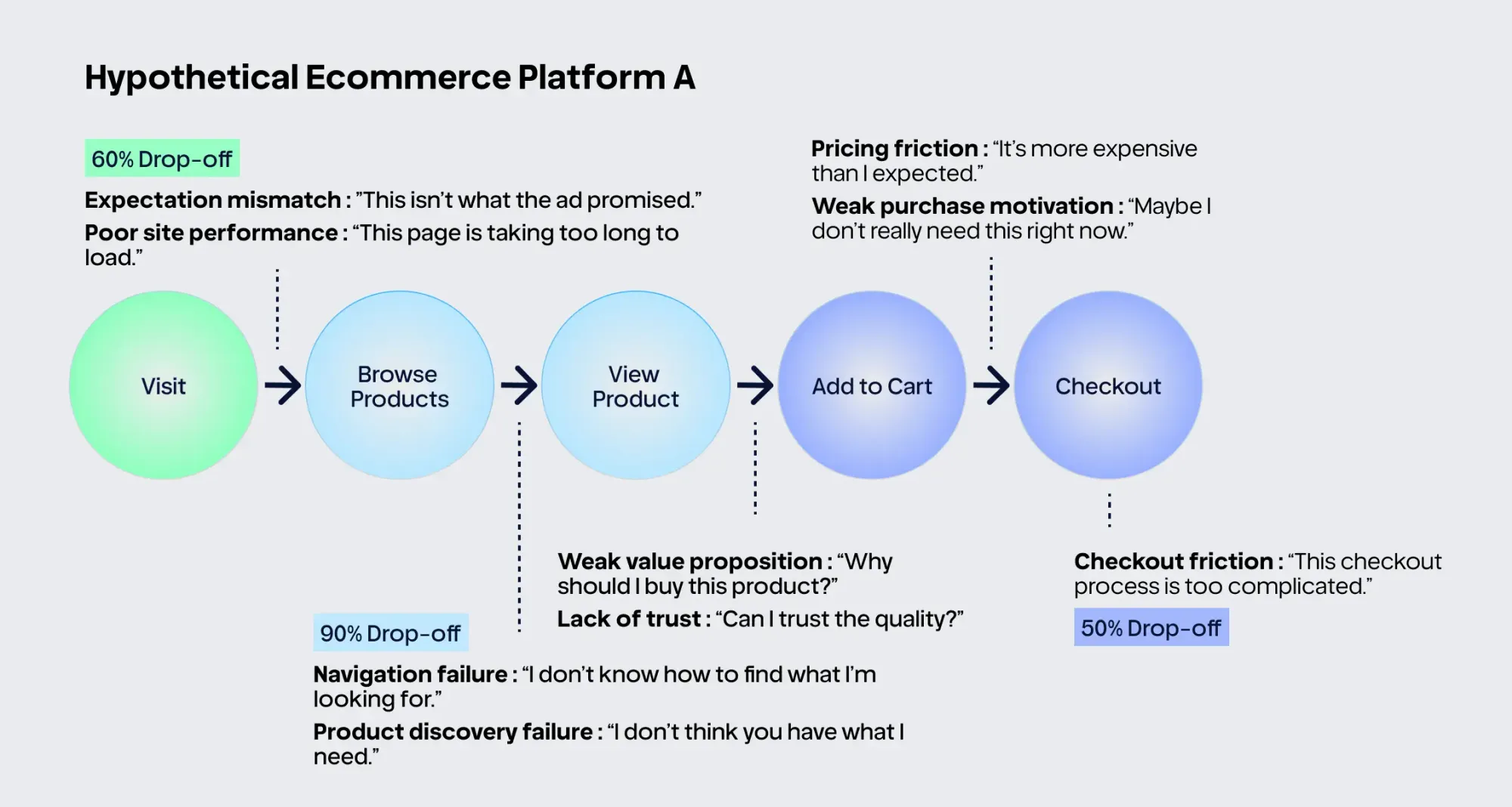
|
Stage |
Common Reason for Abandonment |
|---|---|
|
Visit |
“This isn’t what the ad promised.” (Expectation mismatch) |
|
“This page is taking too long to load.” (Poor site performance) | |
|
Browse Products |
“I don’t know how to find what I’m looking for.” (Navigation failure) |
|
“I don’t think you have what I need.” (Product discovery failure) | |
|
View Product |
“Why should I buy this product?” (Weak value proposition) |
|
“Can I trust the quality?” (Lack of trust) | |
|
Add to Cart |
“It’s more expensive than I expected.” (Pricing friction) |
|
“Maybe I don’t really need this right now.” (Weak purchase motivation) | |
|
Checkout |
“This checkout process is too complicated.” (Checkout friction) |
Each issue may seem minor on its own. But when shoppers encounter several small frustrations throughout the buying journey, their willingness to purchase quickly declines. Eventually, buying begins to feel like work.
So how have some of the world’s leading companies improved customer experience to solve these problems?
3. How Global Companies Improved Customer Experience
Microsoft Bing: A Small Change to Ad Headlines Increased Revenue by 12%
In 2012, the Bing team at Microsoft had a simple idea: What if they made advertising headlines easier to read?
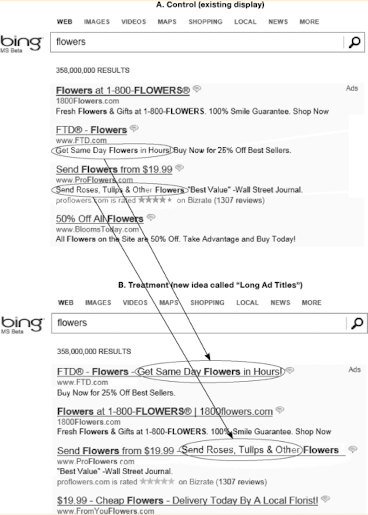
This wasn’t a major search algorithm update or a new product feature. It was simply a small interface improvement designed to make sponsored search results easier for users to scan and understand. Rather than rolling the change out immediately, the team ran an A/B test, showing different versions of the interface to different groups of users and measuring changes in click-through rates and revenue.
The results were far bigger than anyone expected.
Simply changing how ad headlines were displayed increased revenue by 12%, generating more than $100 million in additional annual revenue in the U.S. market alone.
Microsoft later described this experiment as one of the most successful online experiments the company had ever conducted.
1. They reduced cognitive load
By making information easier to read and understand, users could process ad headlines more quickly. Reducing the mental effort required to understand information naturally led to more clicks.
2. They focused on improving everyday interactions.
Instead of building new features, they improved something users saw every day. The experiment showed that making familiar experiences easier to use can often create a greater business impact than launching entirely new functionality.
Expedia: Removing One Form Field Generated $12 Million in Additional Annual Revenue
Once customers have finished evaluating a product, only one step remains: Checkout. Many businesses assume that customers abandon their purchase because of price or shipping costs.
Expedia asked a different question: “Where exactly do customers hesitate during checkout?”
At the time, Expedia noticed that many customers who had already selected a hotel or flight still abandoned their booking during the final checkout process. There was nothing wrong with the pricing. The booking system worked correctly. Yet customers continued leaving before completing their reservation. The team began analyzing customer behavior step by step.
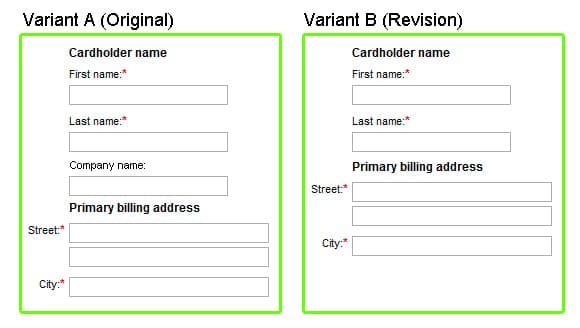
The cause turned out to be surprisingly simple.
It was a single optional field labeled “Company.”
Although the field wasn’t required, many customers paused when they reached it. Should I enter their employer’s name? credit card company? Or should I leave it blank? Others encountered validation errors and abandoned the booking altogether.
Expedia removed the confusing field.
The result was approximately $12 million in additional annual revenue.
1. They relied on customer behavior instead of assumptions.
Rather than assuming price or technical issues were responsible for abandoned checkouts, Expedia analyzed where customers actually stopped.
2. They removed moments of hesitation.
Instead of adding new features, they eliminated a point of confusion that interrupted the purchase journey.
3. They reduced friction.
Every moment of hesitation during checkout increases the chance that customers will leave. By removing unnecessary friction, Expedia increased the percentage of shoppers who completed their purchase.
4. Customer Experience Isn’t Improving at Once—It’s Improving Continuously
Microsoft Bing didn’t stop experimenting after changing its ad headlines once.
Expedia kept studying where customers hesitated throughout the checkout process.
What these companies have in common is that they didn’t treat customer experience as a one-time project. They viewed it as an ongoing process of continuous improvement.
The biggest gains rarely come from a complete redesign. More often, they come from making many small improvements over time. The challenge is that most brands don’t know what they should improve first.
5. The Most Important Thing Is Identifying Where Customers Hesitate
Most brands understand that customer experience matters. The difficult part is figuring out where to begin. Running an ecommerce business already involves managing products, marketing campaigns, inventory, customer support, and order fulfillment. Finding hidden conversion problems often falls to the bottom of the priority list. That’s why more merchants are beginning to use AI to continuously analyze their stores and uncover new optimization opportunities.
Improving the customer experience is no longer something only large companies can do. The key isn’t changing everything at once. It’s identifying, one by one, the moments where customers hesitate and continuously improving them. Over time, those small improvements can increase not only your conversion rate but also long-term customer loyalty.
Today, many Shopify merchants use AI-powered optimization tools to make this process more systematic. Gentoo is one example available on the Shopify App Store. It continuously analyzes your storefront, identifies conversion frictions across the customer journey, and recommends opportunities to improve product pages, mobile UX, SEO, email campaigns, and more.
If you’d like to learn more about Gentoo, you can explore the app on the Shopify App Store.