What Is Ecommerce Conversion Rate? Why It Matters and How to Improve It
Learn what ecommerce conversion rate is, why it is important, and practical strategies for increasing it. Discover how Shopify stores can improve customer experience, reduce customer drop-off, and increase conversion rates.
Many ecommerce merchants increase their advertising budget as their first strategy for growth. The assumption is simple: if more people discover their brand and more visitors come to their store, sales will naturally increase.
In reality, however, this is often not the case.
For example, imagine your store attracts 1,000 visitors a day through advertising. If only 20 of them make a purchase, your conversion rate is 2%. If that conversion rate increases to just 3% while traffic stays the same, the number of orders rises from 20 to 30—a 50% increase. Assuming your Average Order Value (AOV) remains relatively stable, revenue is also likely to increase by a similar percentage.
In other words, attracting more visitors is only half the equation. Turning those visitors into customers is just as important.
This has become even more important in recent years as advertising costs continue to rise and competition for customer acquisition becomes more intense. Simply driving more traffic is no longer enough to achieve sustainable growth.
That’s why many Shopify brands measure not only how many new visitors they acquire, but also how effectively they convert existing visitors into paying customers.
In this guide, i’ll explain what conversion rate is, why it matters, and practical strategies for improving conversion rates on your Shopify store.
What Is Conversion Rate?
Conversion rate is the percentage of visitors to your online store who complete a purchase.
It is typically calculated using the following formula:
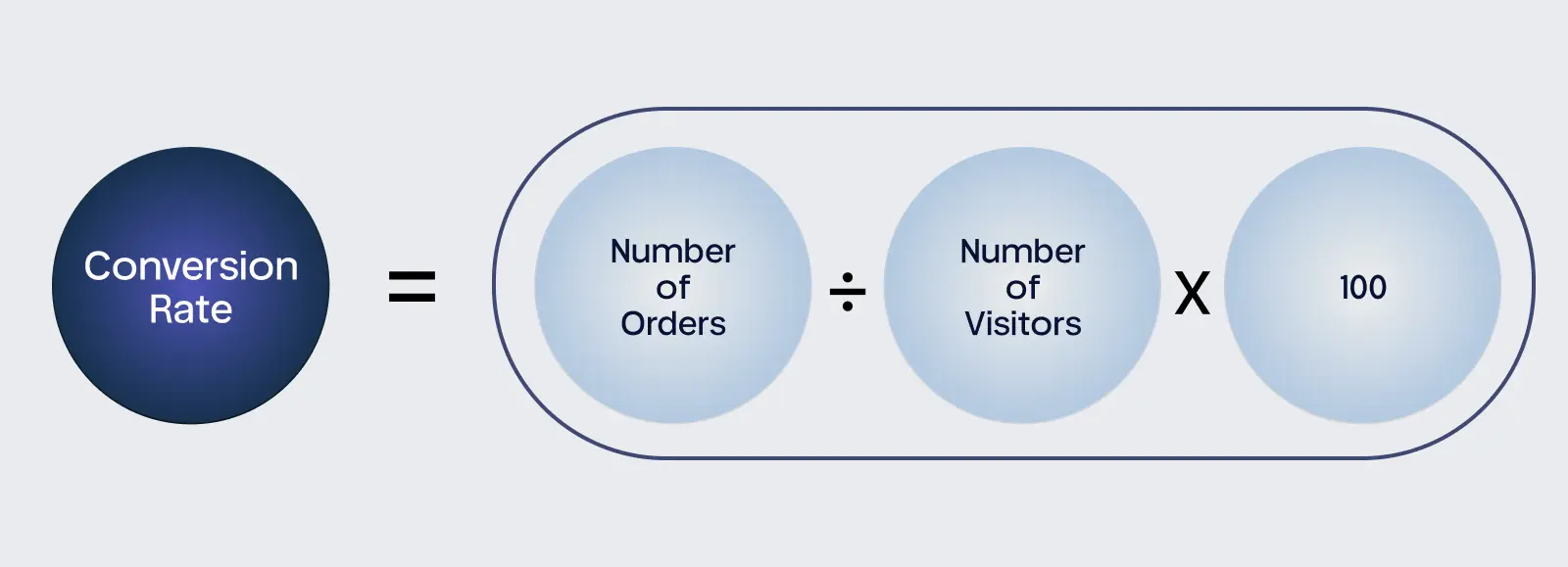
For example, if 5,000 people visit your store in a day and 150 orders are placed, your conversion rate is 3%.
Conversion rate can be measured not only for your entire store but also for individual products.
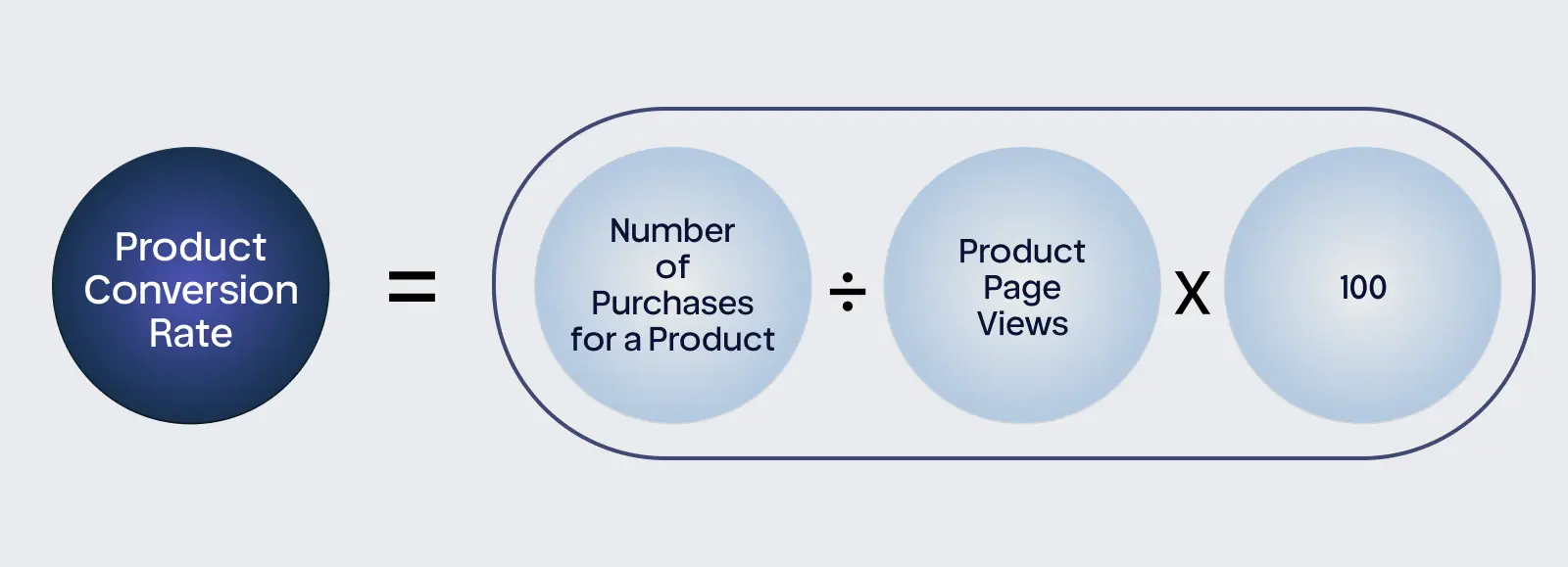
Looking at product-level conversion rates alongside your overall store conversion rate can reveal valuable insights. Some products may attract plenty of interest but generate relatively few purchases, while others may consistently convert visitors into customers at a much higher rate.
This isn’t simply about identifying your best-selling products.
Analyzing conversion data by product helps you understand what may be preventing customers from purchasing. The issue could be pricing, insufficient product information, or a lack of trust signals that help shoppers feel confident in their decision.
For example, if a product receives a large number of page views but has a low conversion rate, shoppers are likely interested in the product but don’t yet have enough confidence to complete the purchase. On the other hand, if a product receives relatively little traffic but has a high conversion rate, the product itself is performing well. In that case, attracting more qualified traffic to that product could be an effective growth strategy.
In this way, conversion rate is more than just a sales metric—it serves as a starting point for understanding customer behavior.
Why Conversion Rate Matters
Conversion rate is more than simply a measure of how many people purchased from your store.
It is one of the most important metrics for understanding how effectively your store guides visitors toward a purchase. It also reveals whether your marketing is attracting the right audience and whether your customer experience is helping—or preventing—customers from buying.
1. You Can Generate More Revenue with the Same Amount of Traffic
Acquiring new visitors is becoming increasingly expensive.
Competition across search engines and social media advertising continues to grow, and the cost of acquiring each customer keeps rising.
In this environment, improving the percentage of visitors who make a purchase often delivers a much higher return on investment than simply increasing your advertising budget.
Imagine a Shopify store that receives 50,000 visitors each month. With a conversion rate of 2%, the store generates 1,000 orders. If the conversion rate increases to 3% while monthly traffic remains exactly the same, monthly orders rise to 1,500. That’s a 50% increase in orders without spending an additional dollar on advertising.
Of course, total revenue is also influenced by factors such as Average Order Value (AOV) and refund rates. However, if your AOV remains relatively stable, increasing your conversion rate will generally lead to a similar increase in revenue. That’s why improving conversion rate is just as important as acquiring new customers.
Example
Imagine two Shopify stores each receive 30,000 visitors per month. The first store has a conversion rate of 1.8%, while the second converts at 3.2%. Although both stores receive the same amount of traffic, the second store generates approximately 78% more orders.
In many cases, this difference doesn’t come from advertising spend—it comes from a better customer experience and a more optimized storefront.
2. Evaluate Your Marketing Strategy More Objectively
Many merchants measure marketing performance by looking at clicks or website traffic. However, a high number of clicks doesn’t necessarily mean a campaign is successful.
What truly matters is whether your marketing attracts people who are actually ready to buy.
For example, imagine your social media ads bring 3,000 visitors to your store in a single day, but your conversion rate is only 0.8%. In this case, your ads may be attracting visitors who have little purchase intent. On the other hand, search ads often generate fewer visitors but can achieve conversion rates of 4–5% because they reach shoppers who are actively looking for a product.
This is why traffic alone doesn’t tell the whole story. By analyzing conversion rate alongside your marketing data, you can answer questions such as:
- Which advertising channels generate the most purchases?
- Which campaigns deliver the highest ROAS?
- Which landing pages convert the best?
- Which products deserve more advertising budget?
Continuously analyzing these metrics allows you to allocate your marketing budget more effectively and focus on campaigns that drive revenue—not just traffic.
Example
Imagine you’re running two Meta ad campaigns with the same budget. One campaign has a much higher click-through rate (CTR), while the other receives fewer clicks. At first glance, the campaign with the higher CTR may appear to be more successful. However, after looking at the conversion rate, you discover that the campaign with fewer clicks generated more than twice as many purchases.
In this case, conversion rate is a much more meaningful performance metric than CTR alone.
3. Identify Problems in the Customer Experience
A low conversion rate doesn’t always mean your advertising is ineffective.
In fact, for many Shopify stores, the biggest obstacles to conversion come from the customer experience—not the marketing.
Advertising brings shoppers to your store. Your storefront is what convinces them to buy.
When customers land on a product page, they may hesitate if:
- they can’t immediately understand what the product is,
- the product’s value isn’t clearly communicated,
- reviews are difficult to find,
- shipping information isn’t easy to locate, or
- buttons are difficult to tap on mobile devices.
Even if shoppers like the product itself, these small points of friction can cause them to postpone their purchase—or leave for another store. Unlike physical retail, online stores don’t have sales associates who can answer questions or explain product benefits in person. Your product pages and overall storefront experience have to do that job instead.
That’s why even small usability issues can have a significant impact on conversion rate.
Example
One Shopify store displayed a discount banner, promotional badges, icons, shipping information, and pop-ups all at the top of its product page. Each element had been added to help shoppers. But together, they competed for attention, making it difficult for visitors to know what to look at first.
After simplifying the page and emphasizing the product’s core value proposition and primary call-to-action, shoppers were able to understand the product more quickly, and the store’s conversion rate improved—without increasing its advertising budget.
In this way, conversion rate isn’t just a sales metric. It’s a reflection of the experience customers have throughout their shopping journey.
How to Improve Conversion Rate
 Official Waddle
Improving conversion rate isn’t about attracting more visitors.
It’s about making it easier for the visitors you already have to make a purchase.
By removing even small points of friction, you can help shoppers understand your products more easily, build trust, and complete their purchase with confidence.
1. Optimize Your Product Pages First
Your product pages have the greatest influence on conversion rate.
Most visitors who arrive through ads or search engines decide whether to buy after viewing a product page. That’s why it’s essential to make important information easy to find and communicate your product’s value clearly.
Start by reviewing the following areas.
- Clearly communicate your product’s value above the fold.
- Shoppers decide within seconds whether a product is relevant to them. If your product title and hero section only describe features, visitors have to keep reading to understand why the product matters.
Instead, lead with the product’s primary benefit so shoppers can quickly understand its value.
- Shoppers decide within seconds whether a product is relevant to them. If your product title and hero section only describe features, visitors have to keep reading to understand why the product matters.
- Establish a clear visual hierarchy.
- When discount banners, promotional badges, icons, and marketing messages all compete for attention, shoppers don’t know where to look first. Guide their attention naturally—from the product title, to the key value proposition, and finally to the Add to Cart button.
- Make trust signals easy to find.
- Before making a purchase, customers often look for reviews, ratings, shipping information, and return policies. If this information is difficult to find or buried too far down the page, shoppers are more likely to hesitate.
- Use product images that answer customer questions.
- Beautiful images are important, but informative images are even more valuable. Lifestyle photos, close-up detail shots, size comparison images, and usage examples help shoppers better understand the product and reduce uncertainty before purchasing.
2. Reduce Friction Throughout the Checkout Journey
Even a great product page won’t convert every visitor. The journey from adding an item to the cart to completing checkout should be as simple as possible.
Review your store for questions such as:
- Do pages load quickly?
- Are buttons easy to tap on mobile devices?
- Is the checkout process unnecessarily complicated?
- Are shipping costs and delivery times clearly explained?
- Are unexpected fees introduced at the final step?
The longer and more complicated the buying process becomes, the more likely shoppers are to abandon their purchase.
Removing unnecessary steps and making every next action obvious can significantly improve conversion rates.
3. Continuously Improve Using Customer Data
Conversion rate isn’t a metric you improve once and forget.
New products are introduced, advertising campaigns change, customer expectations evolve, and competitors continue to improve.
That’s why increasing conversion rate requires ongoing analysis of customer behavior.
For example:
- If a product receives many page views but few purchases, you may need to improve the product information or strengthen trust signals.
- If cart abandonment is high, review your shipping policy and checkout experience.
- If mobile conversion rates are significantly lower than desktop conversion rates, improving the mobile experience should become a priority.
Consistently identifying problems and improving them based on data is what drives long-term growth.
Ai-powered app Can Make This Process Much Easier
Improving conversion rate isn’t a one-time project. New products are added, advertising campaigns change, customer expectations evolve, and the competitive landscape continues to shift. To consistently improve conversion rates, you need to continuously analyze customer behavior and identify the friction points that prevent shoppers from completing a purchase.
Today, AI-powered Shopify apps like Gentoo make this process much easier.
By continuously analyzing your storefront based on real shopper behavior, Gentoo identifies the factors that may be lowering your conversion rate and recommends opportunities for improvement across your product pages, mobile experience, SEO, email campaigns, and more. This continuous optimization helps create a better shopping experience while increasing not only conversion rates but also long-term Customer Lifetime Value (LTV).
If you’re interested in seeing how Gentoo works, you can explore the app on the Shopify App Store.
Closing
Conversion rate isn’t a metric that improves simply by bringing more visitors to your store. It improves when customers can easily understand your products, trust your brand, and complete their purchase without unnecessary friction.
By optimizing your product pages, simplifying the buying journey, and continuously analyzing customer behavior, you can generate more revenue from the same amount of traffic.
If you want to make this optimization process continuous and scalable, store optimization tools can help you uncover opportunities that might otherwise go unnoticed.