On this page
How Gentoo Helped Drive 207% QoQ Revenue Growth Through Better Spare Parts Discovery
See how Gentoo helped Last Mile SF & Marin improve spare-parts discovery and navigation, contributing to 207% QoQ revenue growth and 116% more orders.


Last Mile SF & Marin improved its e-scooter and bike parts shopping experience with Gentoo, using better collection filters, navigation, and product information to make it easier for shoppers to discover the right products. During the same period, the store saw substantial growth in traffic, orders, and online revenue.
Store: Last Mile SF & Marin
Industry: E-scooter / Bike Retail
🎯 Key Performance Metrics
Q2 2026 vs. Q1 2026
- Online Revenue: +207%
- Online Orders: +116%
- Sessions: +48%
First Month After Installing Gentoo – March 2026 vs. February 2026
- Sessions: +64%
- Online Revenue: +91%
- Online Orders: +81%
See how Gentoo finds growth opportunities in your store →
The figures describe store performance during the work. Several changes ran alongside changes in traffic and demand, so this comparison does not isolate the revenue contribution of any single action.
The Challenge
In bike and e-scooter ecommerce, spare parts can be an important revenue driver. But shoppers often need to find products for a specific vehicle or brand, making product discovery more complex than in a typical online store.
For Last Mile SF & Marin, increasing spare-parts purchases was a clear business priority. Improving how shoppers navigated a large, multi-brand catalog was therefore an important growth opportunity.
If shoppers cannot quickly narrow down the catalog and identify relevant products, even high-intent traffic can struggle to turn into purchases.
The Solution
In Q2 2026, Gentoo deployed 16 targeted actions focused on product discovery, collection-page optimization, navigation, and the path to purchase.
Representative examples included:
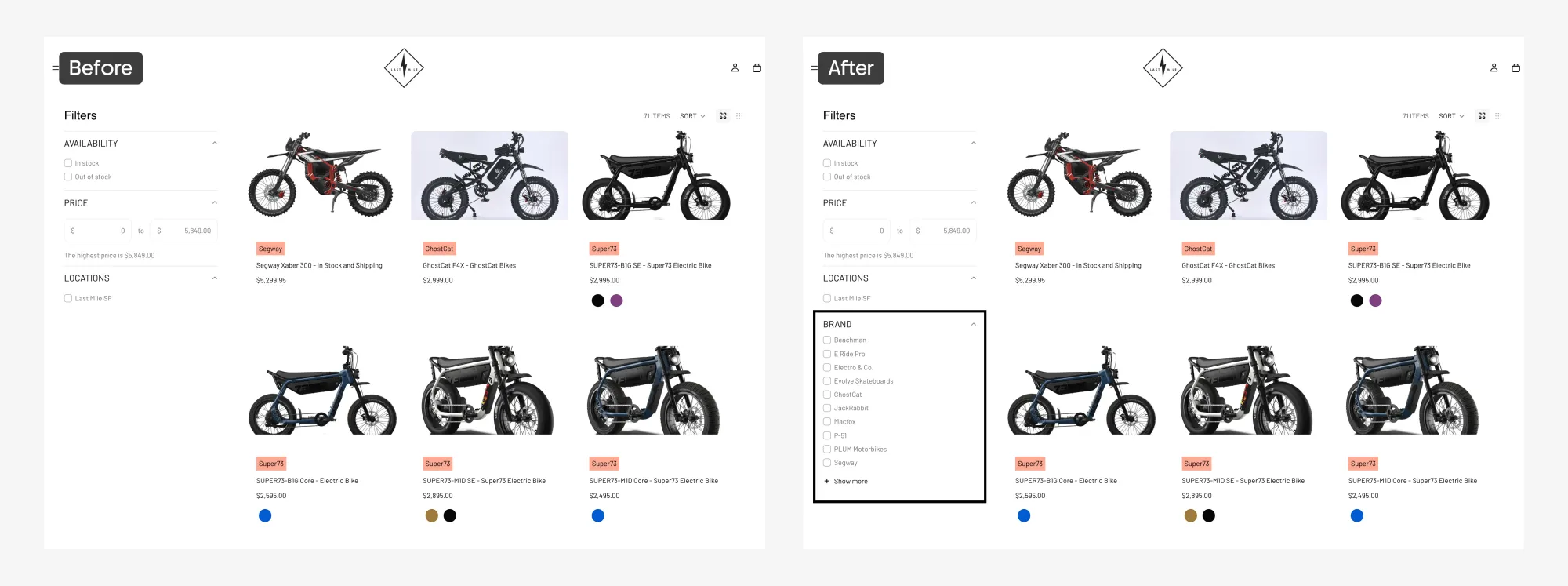
- Action 1 : Add a Brand Filter to Collection Pages
Gentoo added brand filtering across collection pages so shoppers could narrow a large product catalog and find relevant products faster.
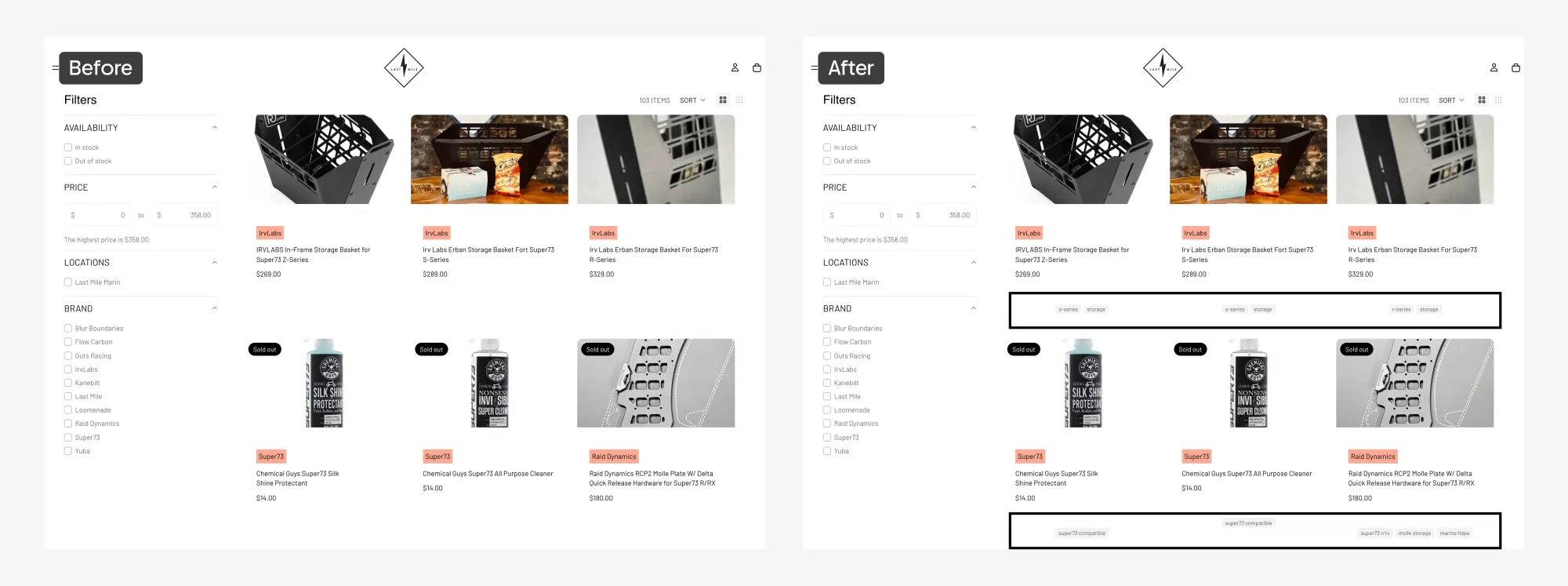
- Action 2 : Surface Key Product Information on Collection Pages
Gentoo surfaced important product information directly on product cards, helping shoppers evaluate and compare products while browsing.
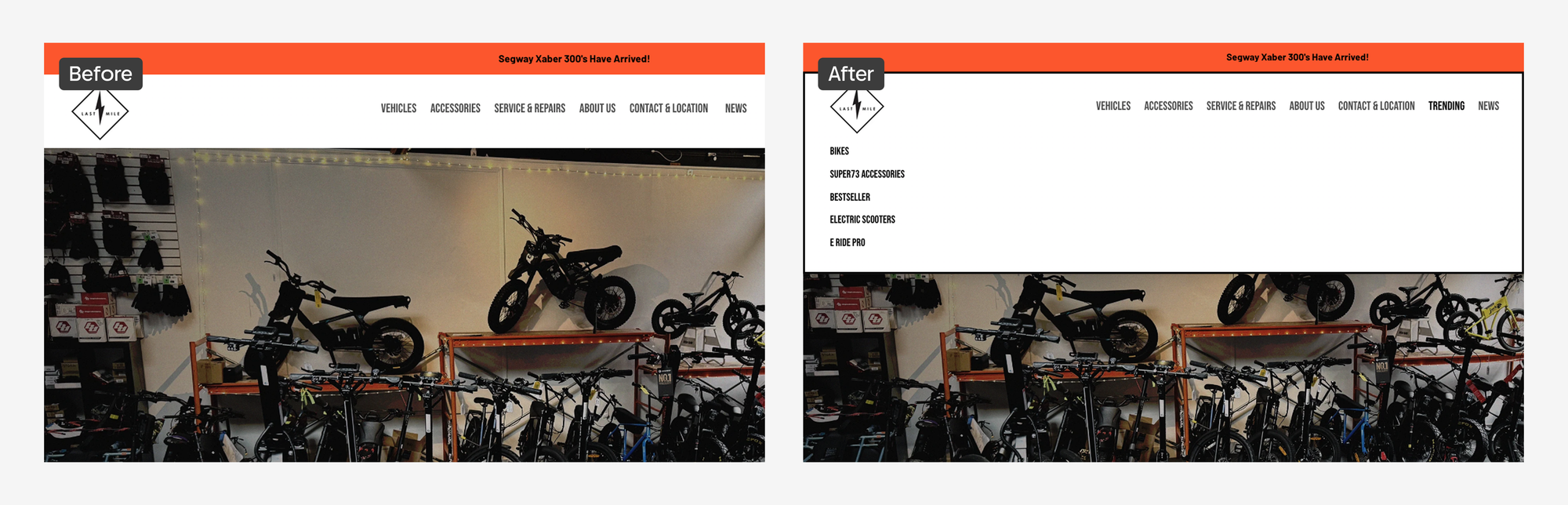
- Action 3 : Surface Trending Collections in the Main Navigation
Gentoo analyzed the previous 14 days of real shopper behavior and surfaced high-interest collections such as Bikes, Super73 Accessories, Best Sellers, Electric Scooters, and E Ride Pro in the header navigation.
Across the broader set of 16 actions, Gentoo also worked on SEO and Frequently Bought Together opportunities to improve discoverability and create additional paths to purchase.
Together, these changes made it easier for shoppers to discover, narrow, and evaluate products across the store.
Why product discovery was the focus
The merchant’s priority and the catalog pointed to a specific shopping task: find the right part for a bike or e-scooter. Collection filters, visible attributes and navigation addressed different parts of that task.
Gentoo addressed that journey at multiple points:
- Filters and navigation made relevant products easier to find
- Collection-page information made products easier to evaluate
- SEO improvements supported discoverability
- Frequently Bought Together created additional product-discovery opportunities
The results extended beyond traffic. Sessions increased 48% QoQ, while online orders increased 116% and online revenue increased 207%.
In other words, orders and revenue grew substantially faster than the increase in store traffic.
Many factors can influence ecommerce performance, but Gentoo's actions during this period were specifically designed to reduce friction between product discovery and purchase.
How to inspect a similar spare-parts journey
- Start with a real vehicle or brand and a part the store carries. Enter through the collection or navigation route a shopper would use.
- Apply the relevant filter and check the result set, selected state and path back to the wider catalog.
- Read the card attributes, then open the product. Confirm that the displayed information agrees and the shopper can verify suitability.
- Add the correct available option and check the cart. Record any point where the shopper must guess or leave to find an answer.
These are suggested checks for another store, not additional actions or results reported for Last Mile. They turn the discovery problem into an implementable task. Use the product-page inspection guide when the remaining uncertainty is fit or option selection, and mobile testing when a control fails on a phone.
What another merchant can take from the case
Before redesigning a technical catalog, check whether shoppers can narrow the selection and confirm suitability. A navigation improvement is easier to evaluate when you can name the product-finding task it is meant to support.
For the diagnosis and prioritization process, see the Shopify CRO framework. The store optimization guide covers the wider journey.
Want to uncover growth opportunities in your Shopify store? →