On this page
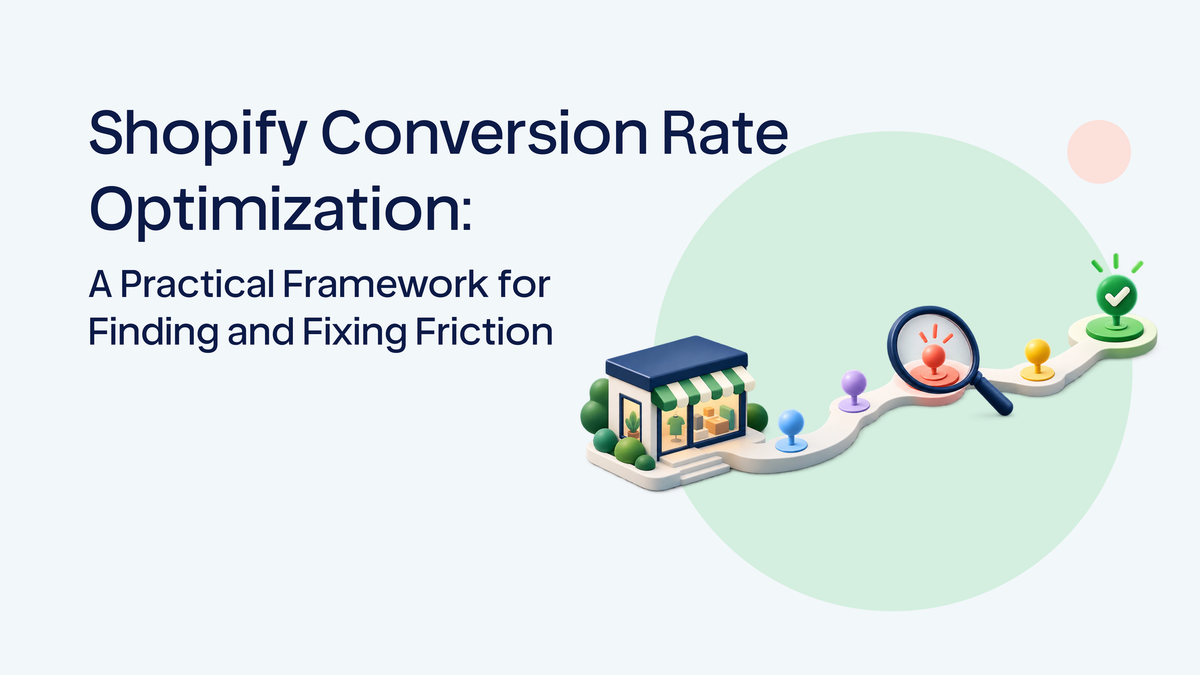
Shopify Conversion Rate Optimization: A Practical Framework for Finding and Fixing Friction
Learn how to find, prioritize, and fix Shopify conversion friction using store evidence, shopper journeys, business context, and continuous learning.

Shopify CRO is more than A/B testing
Shopify conversion rate optimization is often presented as a list of experiments:
- change the button color;
- rewrite the headline;
- add more reviews;
- simplify the checkout;
- run an A/B test.
These tactics can be useful. But they do not answer the most important question:
What should this store work on next?
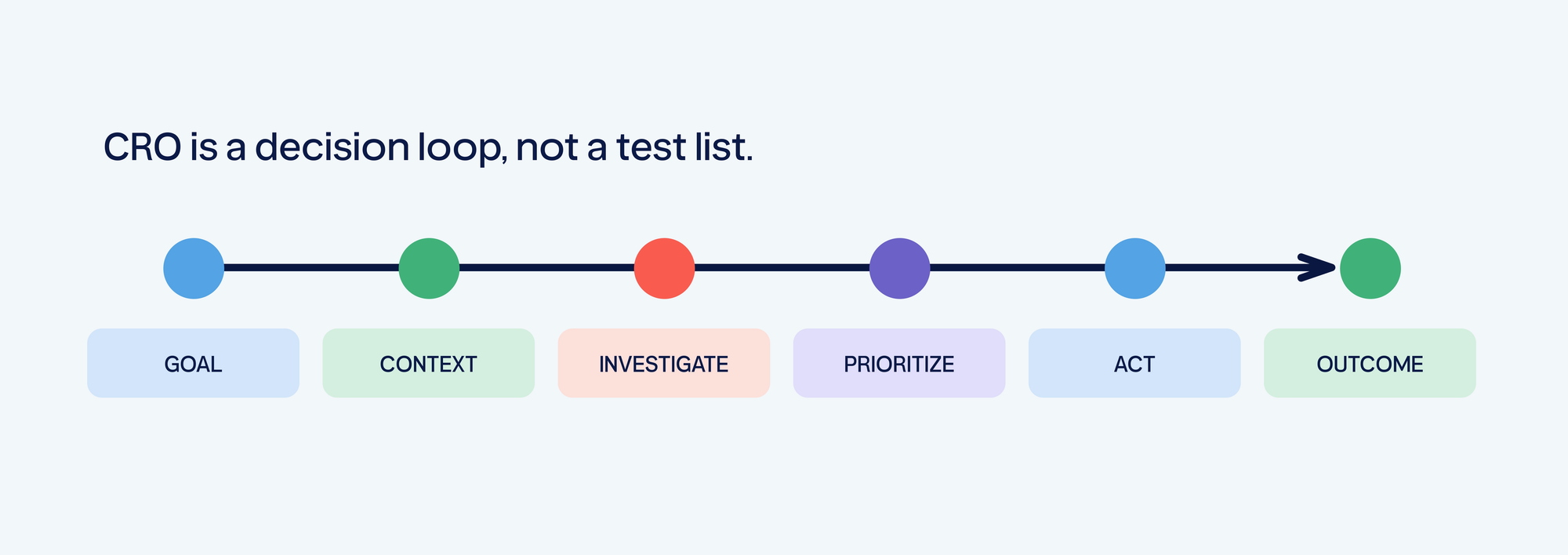
A checklist tells you what to inspect. CRO should also help you decide which issue deserves attention first and whether the action improved the business outcome. A Shopify merchant may have a strong product, steady traffic, and several possible improvements. The difficulty is knowing which problem is most connected to the business goal—and which action is worth taking first. Effective Shopify CRO starts with understanding the merchant’s goal, the store’s current situation, and the friction that prevents shoppers from moving toward that goal.
What Shopify conversion rate optimization actually means
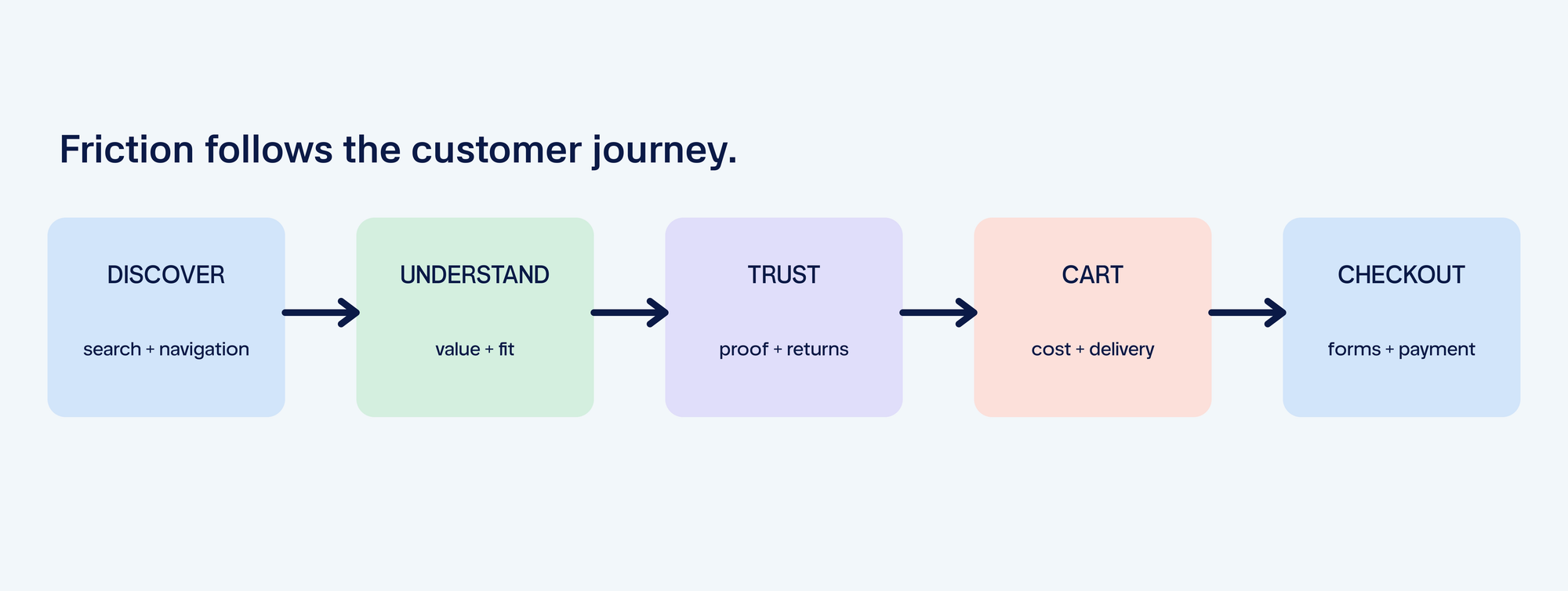
Conversion rate optimization is the process of improving the percentage of qualified visitors who take a valuable action, such as purchasing a product. On a Shopify store, that action can be affected by the entire customer journey:
- A shopper discovers the store.
- They find a relevant product.
- They understand what makes it valuable.
- They decide whether to trust the store.
- They add the product to their cart.
- They complete checkout.
- They return for another purchase.
A problem at any stage can affect conversion. This is why CRO should not be reduced to a single landing page or a collection of isolated A/B tests.
Start with the merchant’s goal
The right CRO strategy depends on what the merchant is trying to achieve. A merchant may want to:
- increase revenue;
- improve conversion rate;
- increase qualified traffic;
- sell more of a particular product category;
- improve average order value;
- reduce cart abandonment;
- increase repeat purchases.
The same store can require a completely different strategy depending on the goal. For example, if the goal is improving conversion, the first question should not be “Which page should we redesign?” It should be:
Where should this store focus to get closer to the goal?
That requires understanding the store and the context that makes one opportunity more important than another.
How to find conversion friction
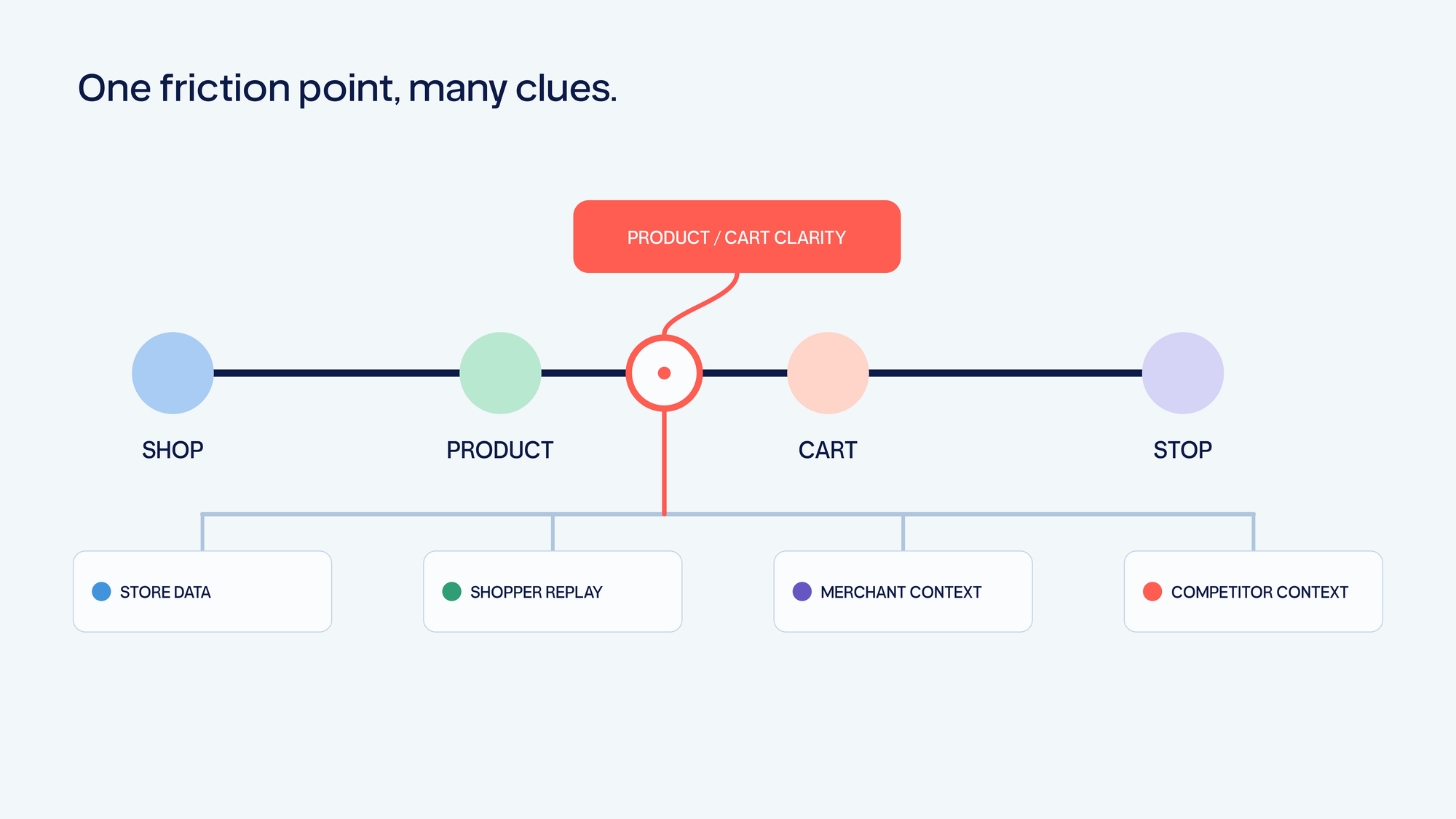
Gentoo combines several types of evidence instead of relying on one report or metric.
Shopify data
Shopify provides useful signals about product views, traffic, carts, orders, and conversion behavior. These metrics do not automatically explain why shoppers behave a certain way, but they help reveal where further investigation is needed.
Virtual shoppers
Gentoo can simulate shopper journeys informed by store data to investigate how customers may experience a store. These journeys can help investigate questions such as:
- Can a shopper find the right product?
- Is the navigation understandable?
- Can they identify which product fits their needs?
- Does the product page provide enough confidence?
- What prevents them from moving toward the cart?
This is useful because conversion friction is often difficult to see from analytics alone. A metric may show that shoppers leave, but a simulated shopper can help investigate what they encounter before leaving.
Competitive comparison
Competitor research provides another source of context. The point is not to copy competitors automatically. It is to understand how other stores handle:
- navigation;
- product comparison;
- product information;
- trust;
- category structure;
- search and discovery.
A competitor may solve a problem differently, but that does not mean the same solution is right for every merchant.
Merchant context
Data is only useful when interpreted in context. A merchant may have business decisions and constraints that change what should be optimized. That is why a finding that looks important in isolation may not be the right opportunity for that store.
Common types of Shopify conversion friction
Although the priority differs by merchant, some types of friction appear frequently.
Product discovery friction
Customers cannot find the product they need because collection hierarchy, navigation, search, or filtering is difficult to use.
Product understanding friction
Customers reach the product page but do not understand the product’s value, use case, quality, compatibility, or difference from alternatives.
Trust and decision friction
Customers have unanswered questions about reviews, delivery, returns, guarantees, payment, or product performance.
Cart and checkout friction
Customers add a product but do not have enough confidence or motivation to continue, or they encounter unexpected costs and effort during checkout.
Traffic-to-store friction
SEO, advertising, or product feeds may bring visitors who do not match the store’s offer or intent. In that situation, increasing traffic may increase the volume of non-converting sessions rather than solve the underlying problem.
How Gentoo prioritizes CRO opportunities
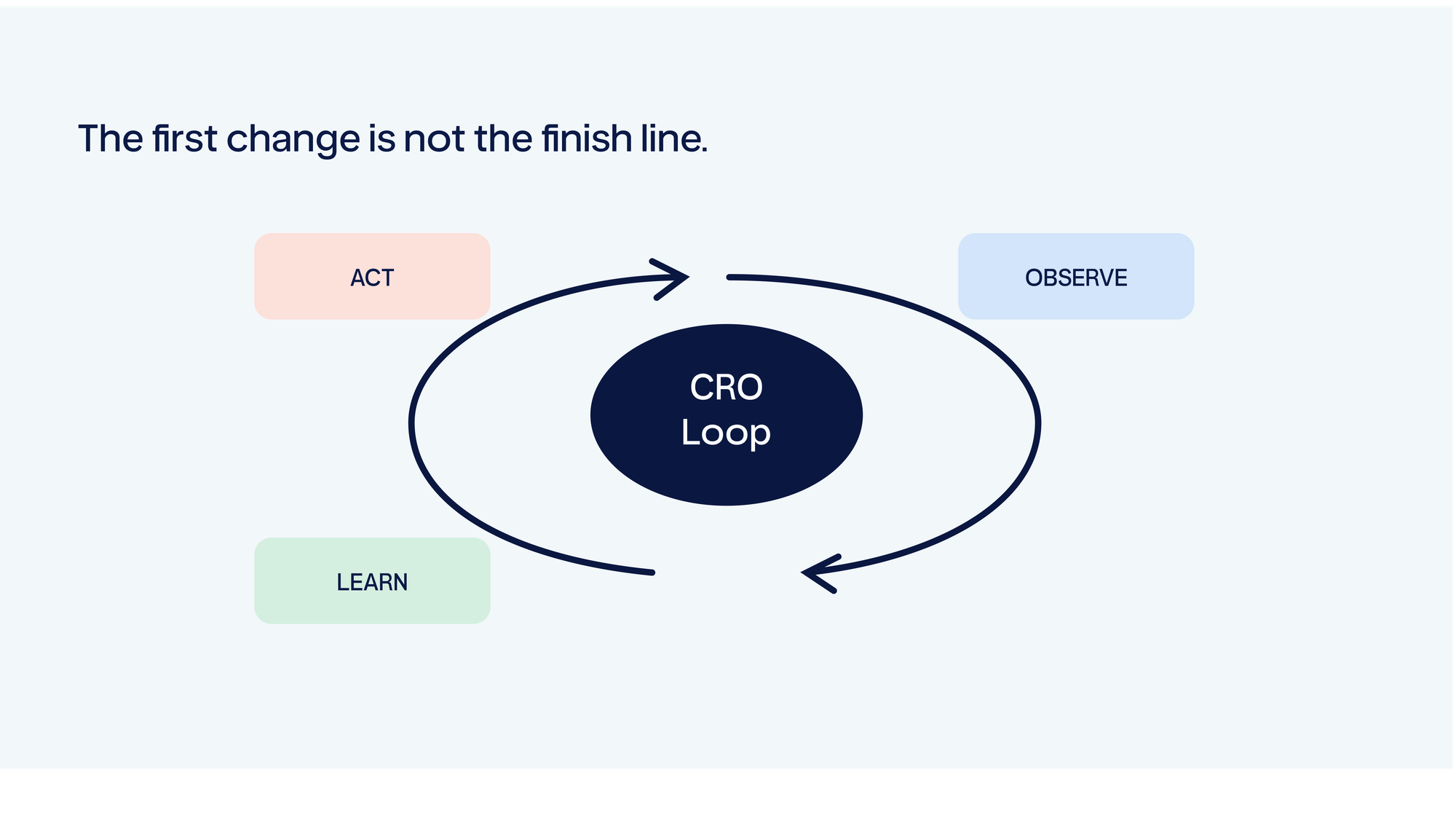
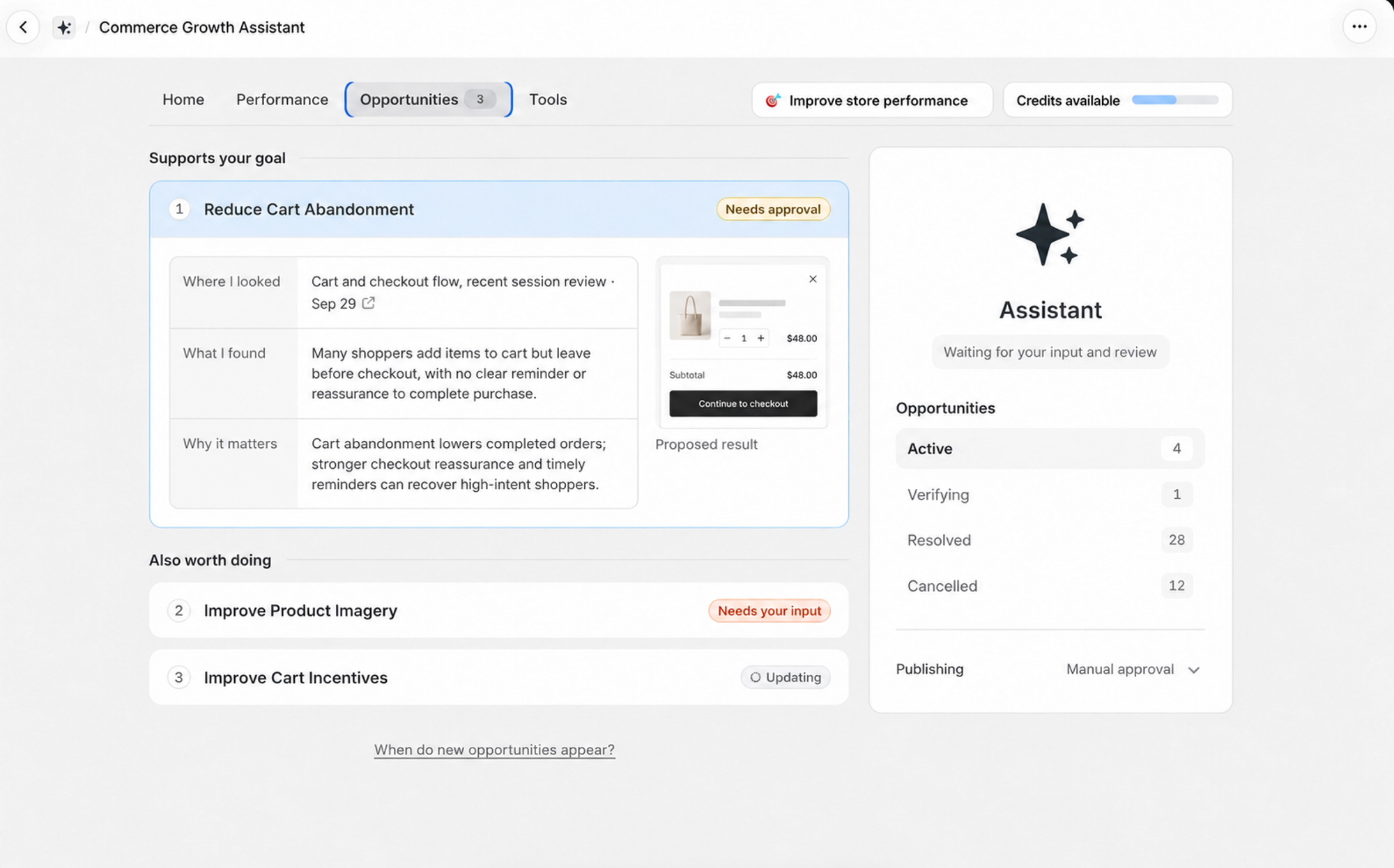
Gentoo does not simply generate a long list of possible improvements. It considers the merchant’s goal, the store experience, shopper behavior, and the surrounding business context to determine where attention is most valuable. The recommendation is then evaluated against the business outcome so future recommendations can become more useful.
From opportunity to action
A useful CRO process connects diagnosis to execution. Gentoo helps the merchant move from understanding the problem, to selecting a focused opportunity, to acting on it and learning from the result. A/B testing can be part of this process, but it is not the entire process. The important question is not whether a test was run. It is whether the store is learning which work is most likely to improve the business outcome.
Example: improving product discovery for Last Mile
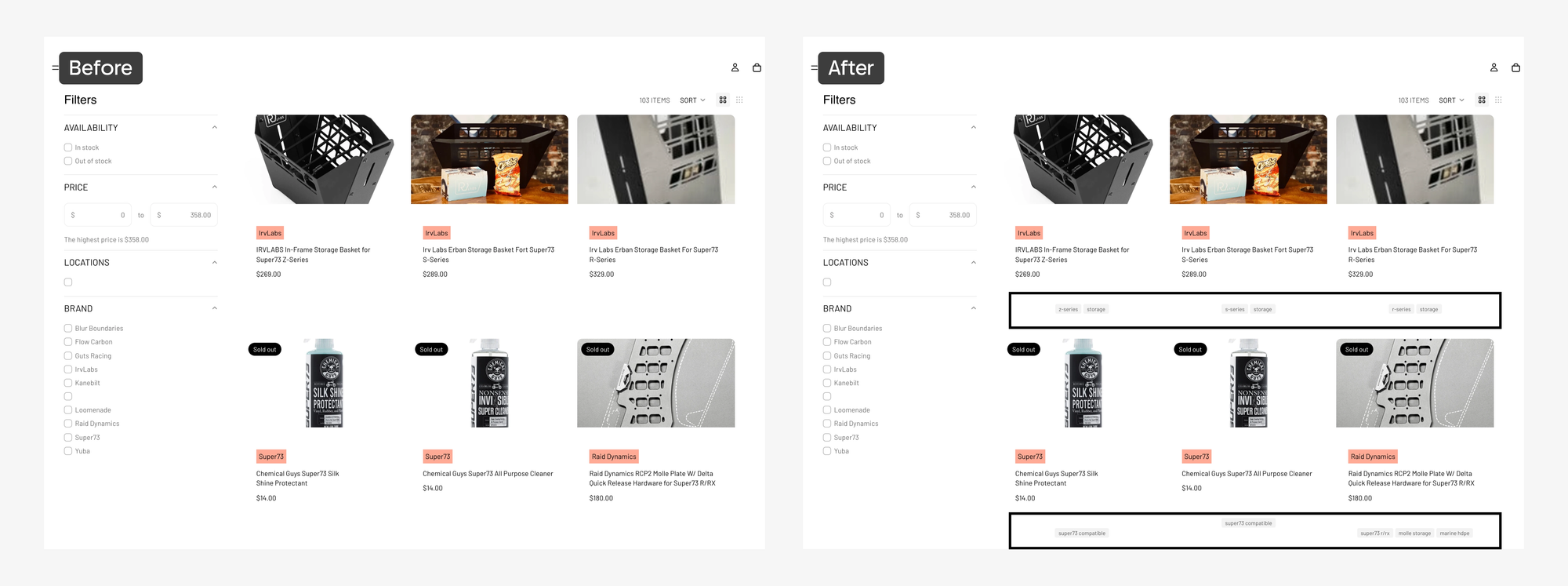
Last Mile had several possible conversion problems. The most valuable opportunity was not found by asking which page looked least polished. Gentoo identified that shoppers were struggling to find spare parts compatible with their bicycles. The conversion opportunity was product navigation. Gentoo reorganized search tags and categories to make product discovery easier. After the change, product-discovery drop-off decreased and conversion increased. The important connection was:
Action → focus area → business outcome.
This example is explained in 🔗 Gentoo’s Last Mile case study.
Why CRO needs to be continuous
A one-time audit can identify potential issues. An A/B test can answer a specific question. A developer can implement a requested change. But none of these automatically decides what the merchant should investigate next. Stores change. Products change. Traffic sources change. Customer expectations change. Previous actions also create new information. Continuous Shopify CRO means using previous decisions, merchant feedback, and business outcomes to improve future prioritization. The goal is not to produce more findings. The goal is better business outcomes with less effort spent operating the growth process.
🎯 Want to know what matters most on your store? Gentoo analyzes your store, identifies the three opportunities most relevant to your current Goal, and explains why they deserve attention. See My Top 3 Opportunities
Shopify CRO should lead to a better next decision
Shopify conversion rate optimization is not just a collection of experiments or a report full of recommendations. It is a process for understanding the merchant’s Goal, finding the most relevant friction, prioritizing the next Action, and learning from the business outcome. The best CRO strategy is not the one that produces the most ideas. It is the one that helps the merchant focus on the work most likely to unlock growth.