On this page
5 Growth Opportunities We Found Across 110 Beauty Ecommerce Stores
Five recurring opportunities from our analysis of 110 beauty stores, with anonymized examples and practical checks for your own Shopify business.

You have a product you believe in. People visit the store, look at it, and leave. Before spending more to bring them back, it is worth checking what they needed to understand before they could buy.
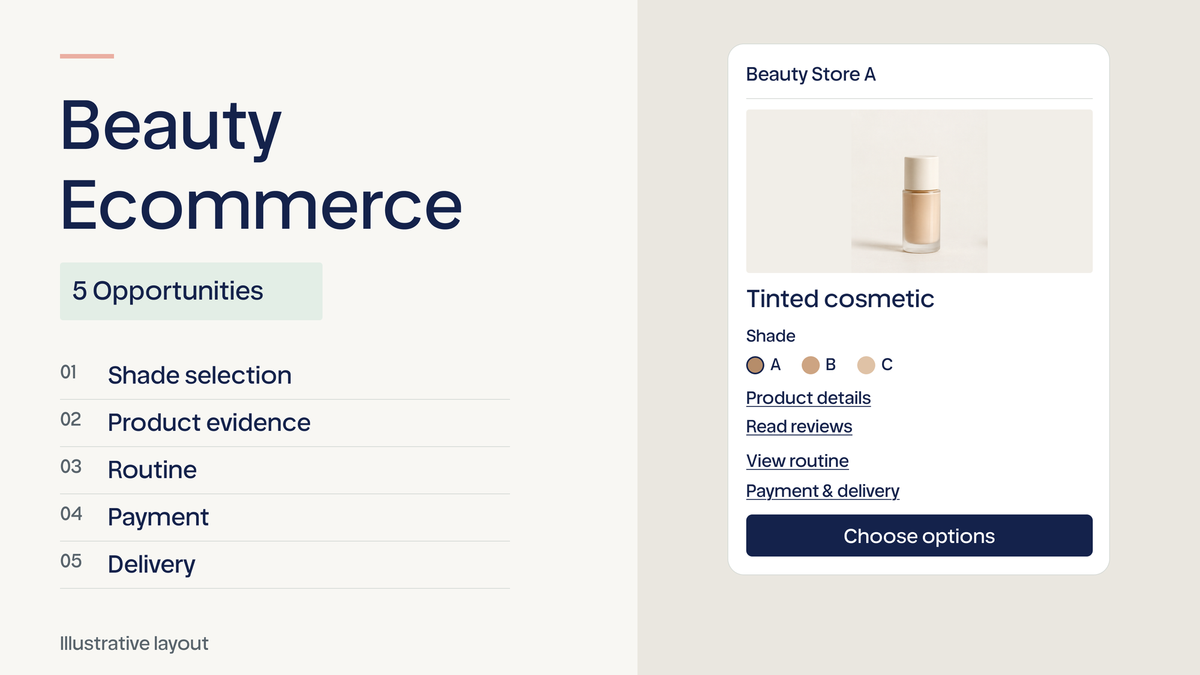
In our analysis of 110 beauty, personal-care, and wellness stores, we found recurring opportunities around product choice, trust, routines, subscription terms, and delivery. Sometimes information needed to be added. In other cases, useful reviews, specifications, or policies already existed but were difficult to find while choosing a product.
Beauty ecommerce conversion optimization starts with understanding those purchase decisions. A shopper choosing a shade needs different help from someone considering a beauty device or a recurring delivery.
The examples below use anonymized store names. Each shows an opportunity to investigate in your own business, along with a practical first change.
Why these questions recur in beauty ecommerce
Online shoppers cannot try a shade on their skin or experience a product's texture through the screen. Your storefront has to help them judge suitability and understand the purchase.
These concerns extend beyond our store reviews. Shopify's beauty ecommerce guidance highlights shade selection, ingredient transparency, reviews, educational content, and clear purchase conditions as elements of the beauty shopping experience.
The useful question for a merchant is where that information belongs. A detailed page can still leave a customer unsure if the answer they need sits several steps away from the decision.
1. Make it easier to choose the right product
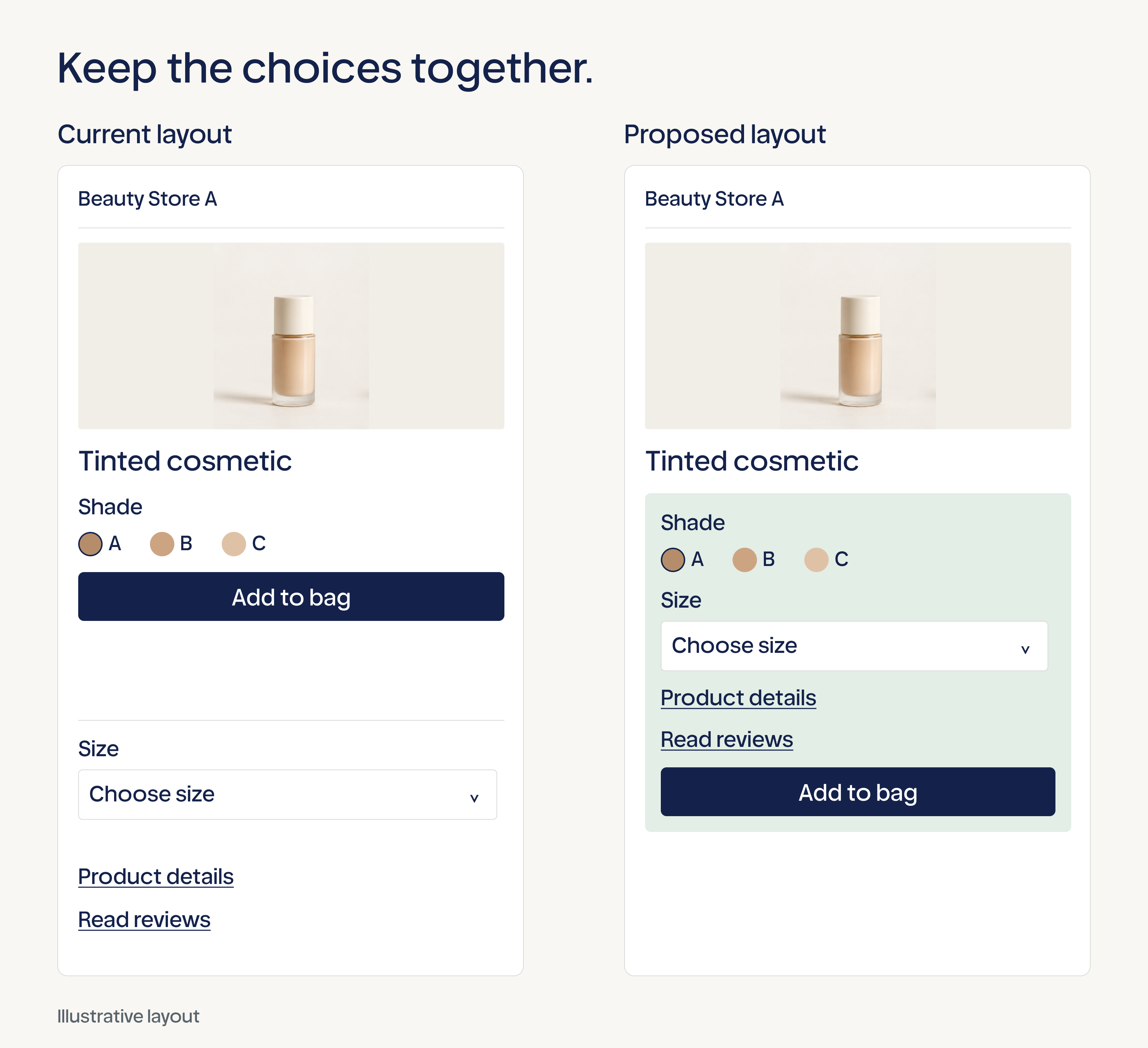
At Beauty Store A, shade selection and product information were opportunities for improvement. Customers could see options, but the differences between them needed clearer explanation. Ingredients and pack size also needed more useful presentation.
A customer comparing shades should be able to connect the option name to the image, see what is selected, and understand the relevant differences. For skincare, that comparison may depend on verified ingredients, format, or usage information. A device requires its own specifications.
Start with one important product page on a phone. Select every option and check whether the picture, label, price, and stock status stay consistent. Then find the pack size and the information a customer would need before choosing.
Where the information already exists, bring a short summary or a direct link into the selection area. Keep the full explanation available without making shoppers read it all before identifying the basics.
After the change, look at option-selection questions and purchase progress. An attractive swatch is useful only if it helps someone choose accurately.
2. Put credible product evidence where shoppers decide
Beauty Device Store B already had customer reviews and technical specifications. Our review identified an opportunity to make that evidence more visible around the title and buying area.
This is a useful distinction when deciding what work to commission. Gathering more reviews takes time. Making existing, relevant reviews easier to reach may be a more immediate opportunity.
Place a product-specific review link near the main product information. Summarize the specifications that matter to the decision, with access to the full details. Keep customer experiences, technical facts, and the brand's own claims clearly identified.
For example, a review describes an individual's experience. A specification describes the product. The two help a buyer in different ways.
Shopify's skincare marketing guide also discusses reviews that include relevant usage context. That context can help readers assess whether an experience resembles their own needs.
Review visits can help you understand engagement. Purchase progress, questions, and returns give you a fuller view of whether the information is doing its job.
Which of these opportunities applies to your store? Run a quick analysis with Gentoo to see what deserves a closer look.
3. Turn routine advice into a clear shopping path
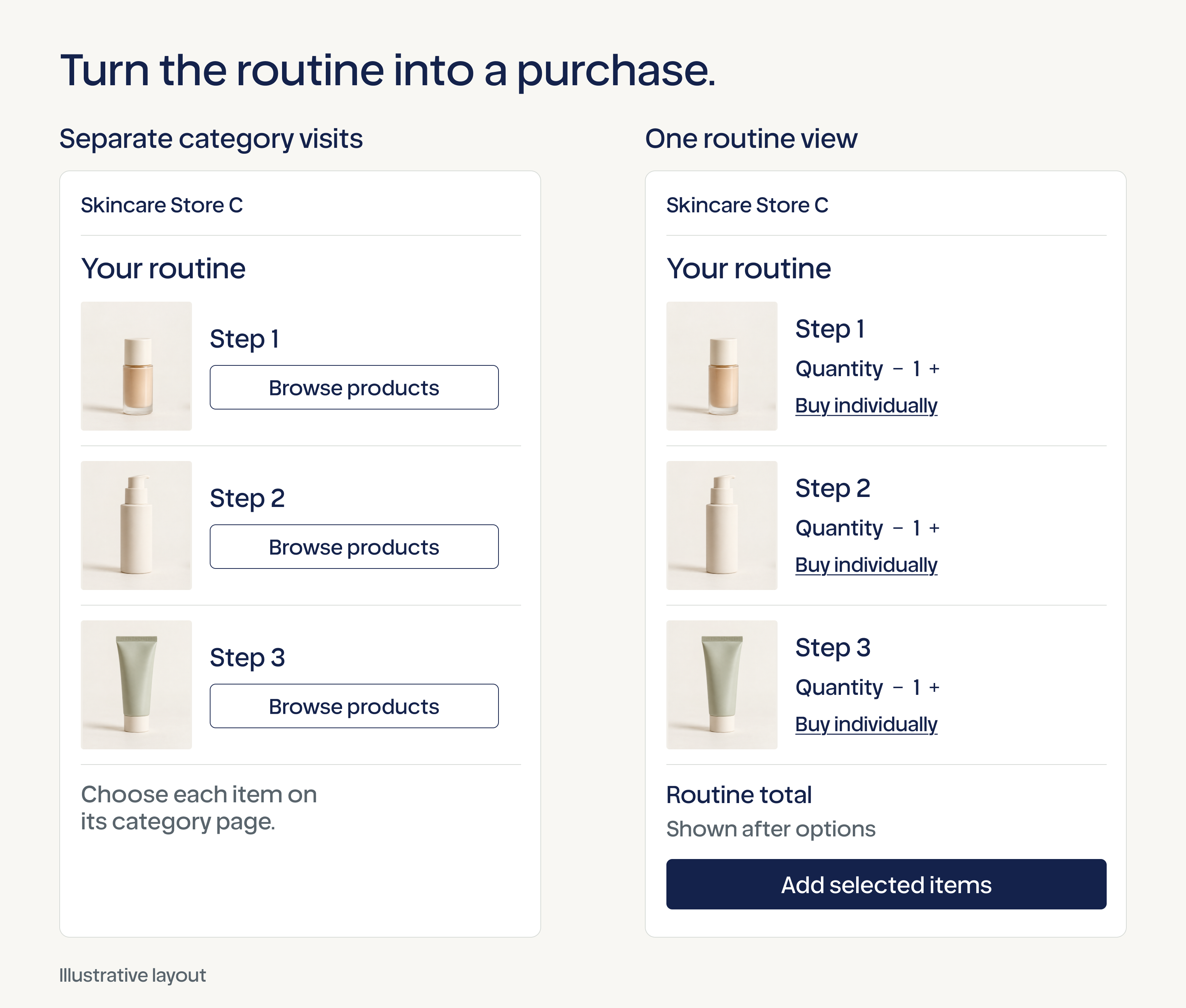
Skincare Store C explained a multi-step routine but sent customers to individual categories to find the products. The educational content existed; assembling the order still required more work.
A shopper following that advice needs to identify the products, confirm the sizes, see the total, and decide which items they want. Every separate category visit adds another task.
Connect the routine to a view of its actual products and available options. Show what each step includes and let customers add the full selection or individual products. If something is unavailable, give them a clear way to continue.
A routine does not need a discount to become easier to buy. First, make its contents and purpose understandable. Then check whether a bundle offer fits the business.
Measure routine-to-product visits, purchases, and the items bought together. Average order value is one part of the result. The cost of any discount and the customer's ability to buy only what they need also matter.
4. Make the first and recurring charges easy to understand
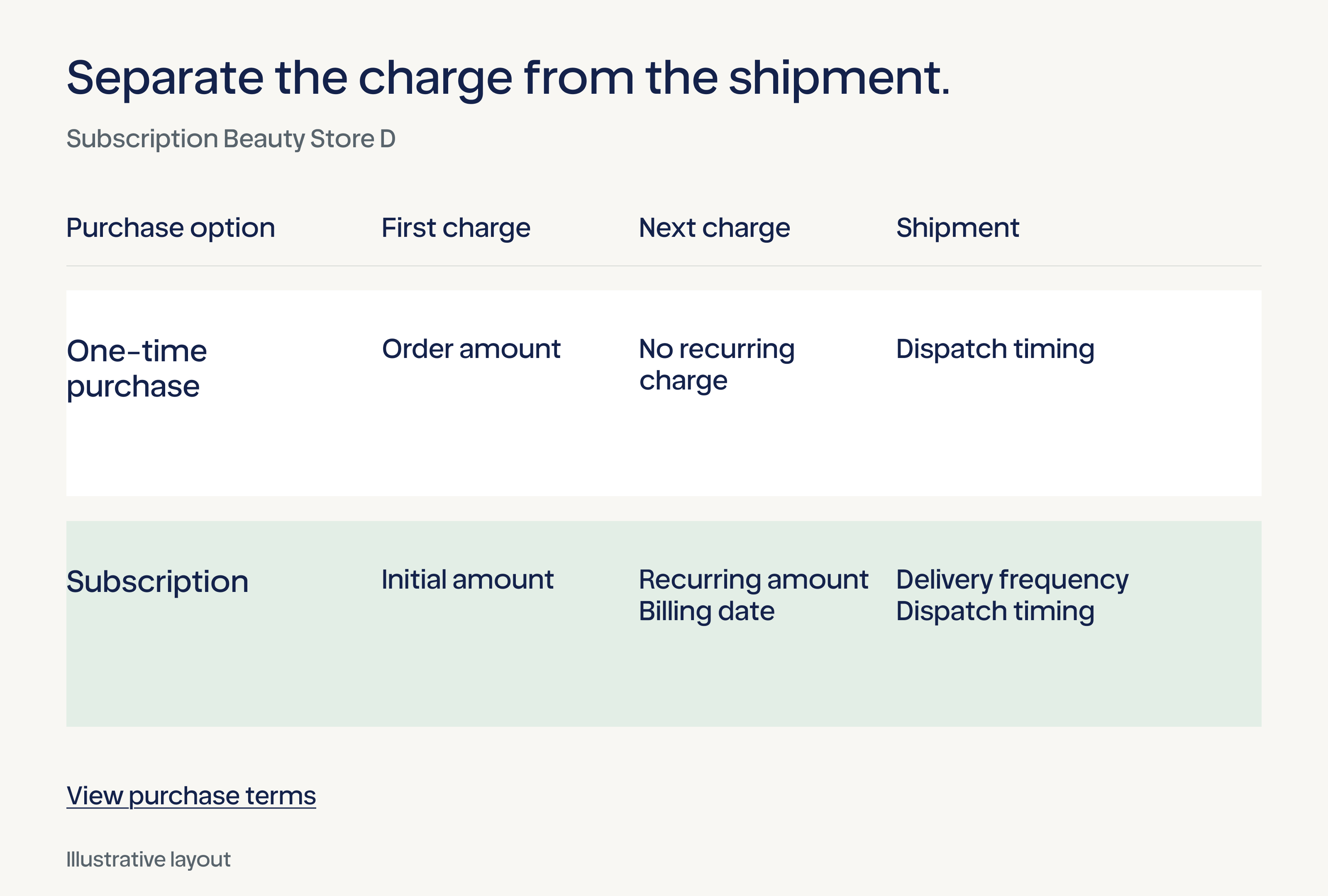
At Subscription Beauty Store D, the relationship between the first payment, subsequent charges, and delivery timing needed clearer explanation.
Customers should be able to answer four questions before selecting the offer: what arrives first, what they pay today, when they pay again, and how often products arrive.
This becomes particularly important when a program's duration, shipment schedule, and billing cycle differ. A headline price on its own cannot explain all three.
Put those details together in the purchase area. Make one-time and recurring options comparable, and provide a direct route to the actual change or cancellation terms.
Use customer questions and cancellation reasons to evaluate the change. If customers continue asking when the next payment happens, the revised presentation still needs work.
For a merchant, clearer terms can support both the first purchase and the relationship afterward. An order that begins with a misunderstanding can create avoidable support work.
5. Resolve delivery and return questions before checkout
Small beauty products can make the shipping decision feel disproportionate to the item being purchased. Across our reviews, delivery information, shipping incentives, and purchase conditions offered repeated opportunities for improvement.
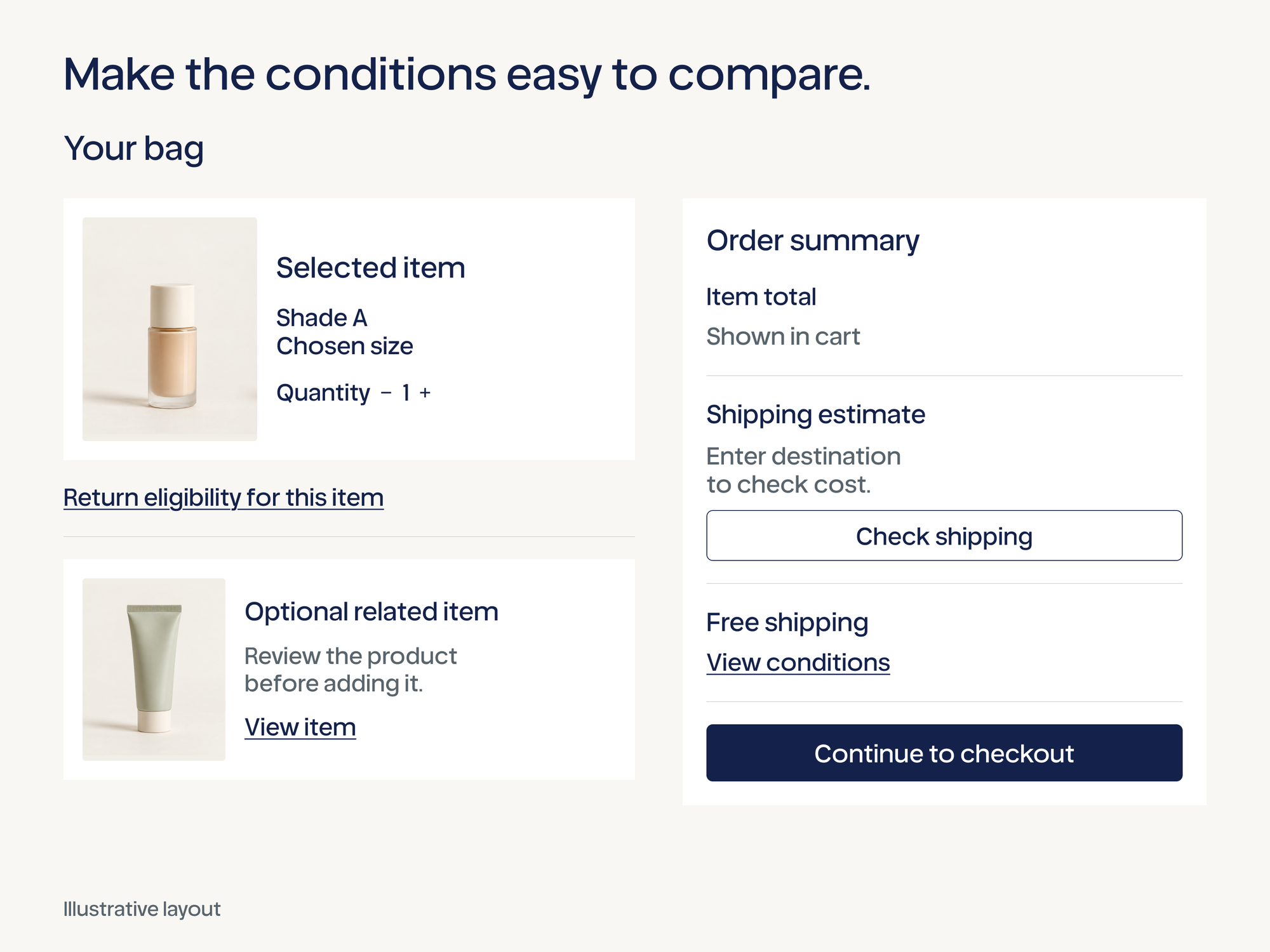
A customer buying one product may want to know the delivery cost immediately. Someone considering an additional item needs to understand what it adds to the order and whether it changes shipping.
Make the available information visible in the cart. If the final cost requires a destination, explain what the customer needs to enter to check it. Offer related products when they make sense alongside the current item.
Return conditions also need to match the product. An opened cosmetic, an unopened refill, and a device may have different eligibility. Summarize the applicable policy and link to the full terms.
Evaluate shipping-threshold changes against margin and delivery costs. A higher order value can still leave less profit once discounts, fulfillment, and shipping are included.
Choose the first improvement for your store
You may recognize several of these problems. The next step is to identify which one most closely connects to the outcome you want.
Customer questions can be a useful starting point:
| What you are seeing | What to investigate first |
|---|---|
| Repeated questions about shades or product differences | Option guidance and the information shown while selecting |
| Questions about product evidence despite existing reviews | Review access and the explanation of verified product details |
| Routine content gets attention but buying requires several category visits | The path from advice to an actual product selection |
| Customers misunderstand the next subscription charge | The relationship between payment and delivery terms |
| Shipping or return questions interrupt purchases | Cost visibility and the applicable purchase conditions |
Combine those signals with store data and your own knowledge of the business. A customer asking a question is a reason to investigate; it does not establish the cause of every abandoned purchase.
Choose a focused change, record what it is intended to improve, and check the affected journey afterward. Look at purchases alongside questions, cancellations, and returns. Note promotions, stock changes, and traffic shifts that could influence the comparison.
Get help deciding what to do next
Recognizing an opportunity still leaves a merchant with work: deciding its priority, preparing the change, getting it live, and checking the result.
Gentoo considers your goals, constraints, guidelines, store data, and industry context to help make those decisions. You review proposed work before it goes live. Gentoo executes approved changes and uses actual business outcomes to refine what it recommends next.
It also follows up proactively, including through email and iMessage, so you can review progress and adjust direction without managing every next step yourself.
Start by finding out which opportunities are relevant to your business. Analyze your beauty store with Gentoo.
When you are ready for ongoing help with decisions, execution, and learning, install Gentoo on Shopify.