On this page
How to Increase Average Order Value on Shopify Without Blanket Discounts
Increase Shopify AOV with relevant bundles, clearer premium options and useful cross-sells. Check revenue per session and margin, not AOV alone.

Increasing average order value on Shopify does not require turning every product page into a discount board. A higher average order value can come from a more useful product choice, a relevant bundle, a better discovery path, or a clearer reason to buy complementary products together. The goal is not to persuade every shopper to spend more. It is to help the right shopper find a purchase that creates more value for them and the business.
Start with the economics
Shopify’s standard AOV metric is (gross sales − discounts) ÷ orders. This is not the same as total sales, which can include taxes and shipping. Check the exact report definition before comparing periods or tools. See Shopify’s analytics fields.
AOV is useful, but it is not the whole commercial outcome. Before choosing an upsell tactic, understand:
- Gross margin by product and category
- Shipping and fulfillment constraints
- Refund and return rates
- Existing bundle or accessory behavior
- New versus returning customer mix
- Revenue and profit goals
A higher AOV with lower margin or more returns may not be an improvement. Set a guardrail before testing so the team knows which outcomes matter.
Improve product discovery first
Upsells work only when shoppers can understand what is relevant. Start by making it easier to find:
- Accessories that complete the main product
- Replacement or replenishment items
- Products used together
- Higher-value versions with meaningful differences
- Bundles that solve a complete use case
The right recommendation depends on the shopper's task. A related product that is technically connected but irrelevant to the current decision adds noise. This is especially important for stores with complex catalogs. Better collection structure, search, filters, and compatibility information may increase order value without adding a new widget.
Use bundles to reduce decision effort
A bundle can increase AOV because it makes a larger purchase easier to understand. Good bundles usually have a clear reason to exist:
- The products are commonly used together.
- The bundle saves the shopper time.
- The bundle supports a complete outcome.
- The contents are easy to understand.
- The price and savings are transparent.
Avoid creating bundles simply because products have spare inventory or because the bundle price looks attractive. If the shopper cannot see the use case, the offer becomes another decision to evaluate.
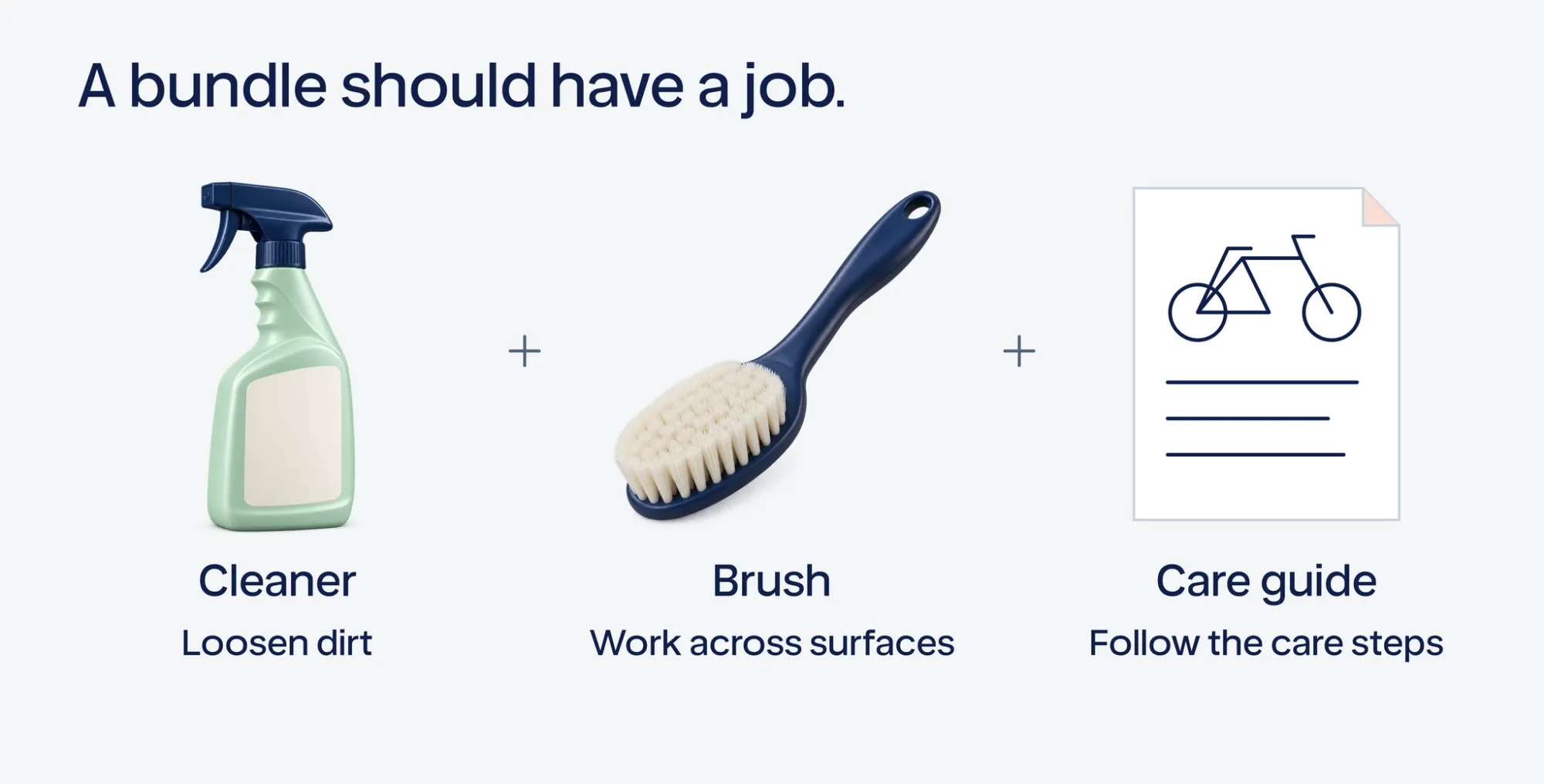
A useful bundle has a specific job
At Palace Beauty Galleria, Gentoo added Frequently Bought Together pairings such as eyelashes with glue, and shampoo with a matching treatment. Each has a clear use case: the extra item helps complete or maintain the main purchase.
Before offering a similar set, confirm suitability, availability and the total price. Track whether shoppers add the relevant accessory and complete their purchase, alongside margin and returns.
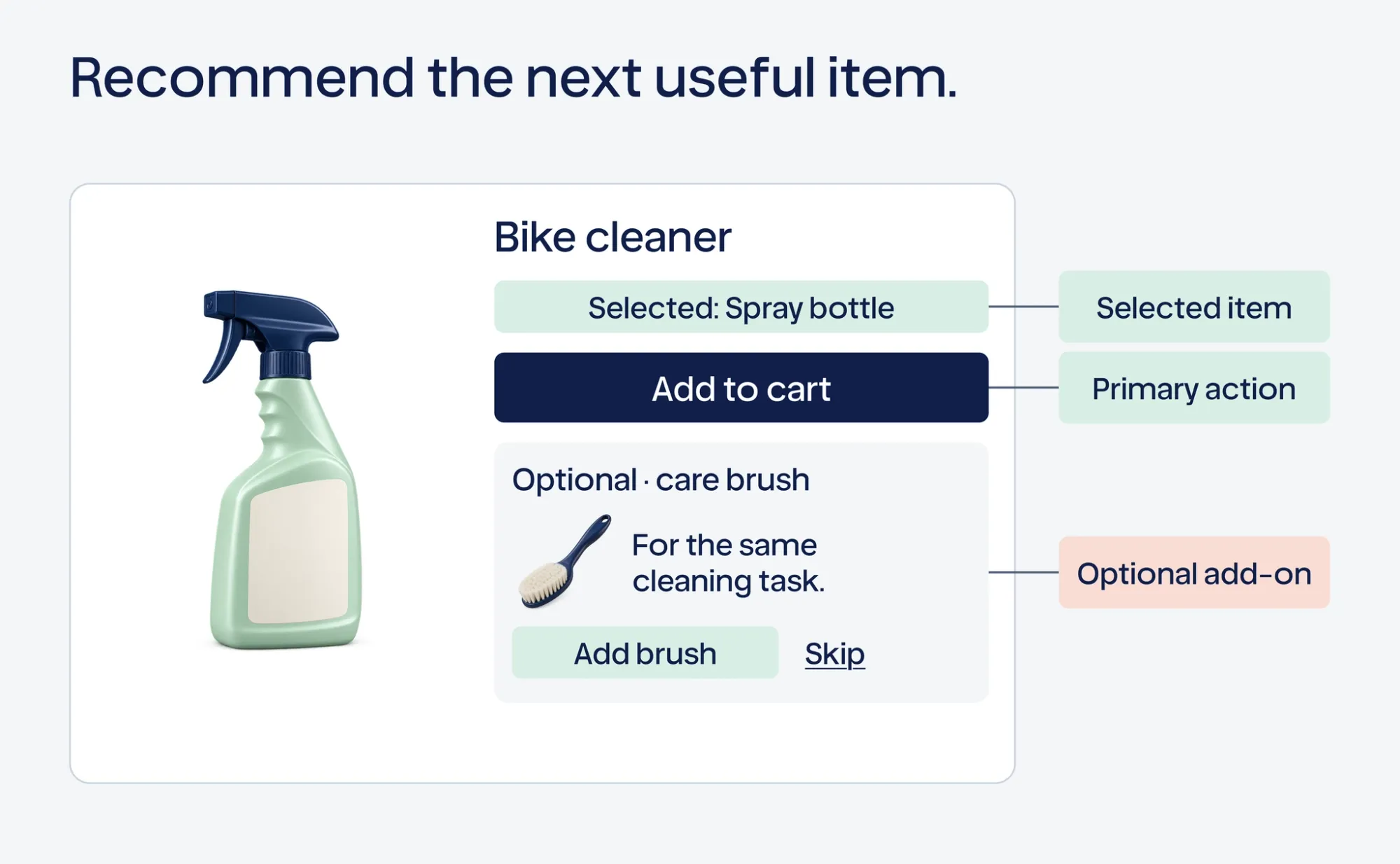
Recommend complementary products carefully
Cross-sells should answer a natural next question. After selecting the main product, the shopper may need to know:
- What protects or maintains it?
- What makes it compatible with their setup?
- What completes the intended use?
- What should be replaced later?
- What is the most useful upgrade?
The recommendation should appear at a moment when it helps. It should not interrupt product understanding, hide shipping information, or compete with the primary purchase action. Relevance matters more than volume. A small number of useful recommendations can outperform a larger list that feels generic.
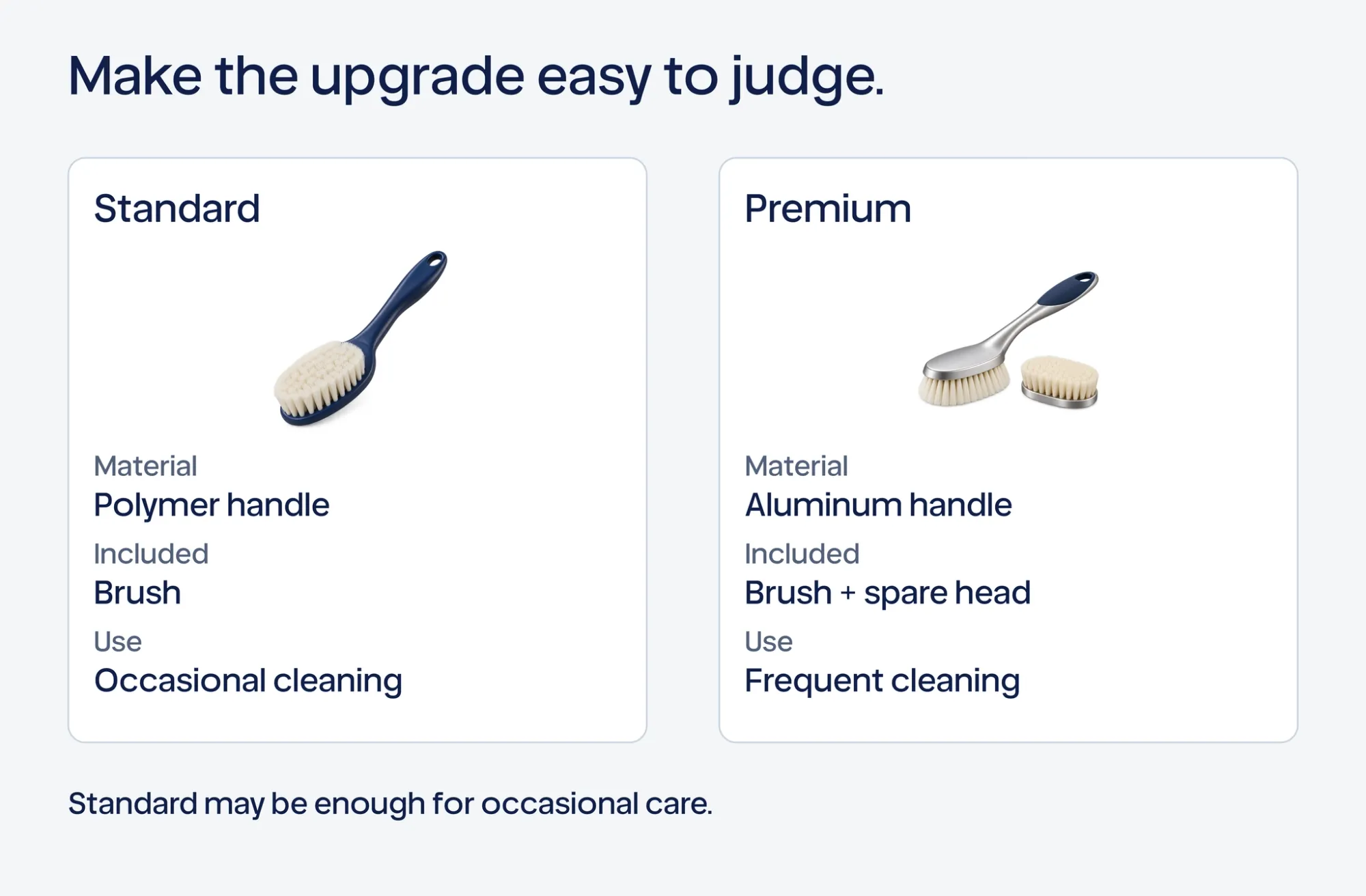
Make premium options easier to compare
AOV can also improve when shoppers understand why a higher-priced option is different. For each premium option, clarify:
| Question | What a useful comparison shows |
|---|---|
| Who is each option for? | The use case and any important limits |
| What changes at the higher price? | Specific materials, capacity, service or included items |
| What stays the same? | Features that do not justify paying more |
| What should the shopper verify? | Fit, warranty, stock and delivery terms |
Use facts from the products you actually sell. A longer feature list does not explain the tradeoff if the shopper cannot tell which difference matters to them.
Place offers in the journey
There is no universally correct location for an upsell. Consider the shopper's stage:
- On the collection page, help shoppers compare product families.
- On the product page, clarify fit and useful complements.
- In the cart, confirm whether an additional item completes the purchase.
- After purchase, recommend replenishment or a next logical product.
- In lifecycle messaging, use prior behavior to make a relevant follow-up.
The same recommendation can help in one context and distract in another. Placement should follow the decision, not the availability of an app block.
Check the economics of a shipping-threshold offer
A shipping threshold should fit the actual order economics. In a hypothetical offer, adding a $15 item at a 60% product margin contributes $9 before other variable costs. If that addition unlocks an $8 shipping subsidy that would not otherwise apply, only $1 remains before payment fees, handling, returns or any extra fulfillment cost.
That example is arithmetic, not a recommended threshold. Model the orders that qualify already as well as the shoppers who add an item. Giving a shipping benefit to existing large orders can cost money without changing their baskets.
Compare contribution per order, purchase conversion and revenue per session alongside AOV. For products bought in routines, see the beauty ecommerce examples. For pack sizes and delivery economics, see the food ecommerce examples. Both help choose a relevant offer before testing its value.
Protect margin and customer trust
Blanket discounts are attractive because they are simple. They can also weaken the economics of the store. Use guardrails such as:
- Minimum margin thresholds
- Exclusions for low-stock or low-margin products
- Limits on combining promotions
- Clear bundle contents and terms
- Monitoring for returns and support issues
A good AOV strategy improves the purchase without creating regret. If customers feel pressured into an irrelevant add-on, the short-term order value may be offset by lower trust and repeat purchase behavior.
Test the right outcome
A/B tests can be useful, but the winning variant should not be selected by AOV alone. Measure a balanced set of outcomes:
- Average order value
- Revenue per session
- Contribution margin
- Primary product conversion
- Attach rate for recommended products
- Refunds and returns
- Repeat purchase rate
- Customer support contacts
A recommendation that increases AOV by reducing conversion may be a poor trade. A bundle that slightly increases AOV while improving product fit and lowering support questions may be a stronger result.
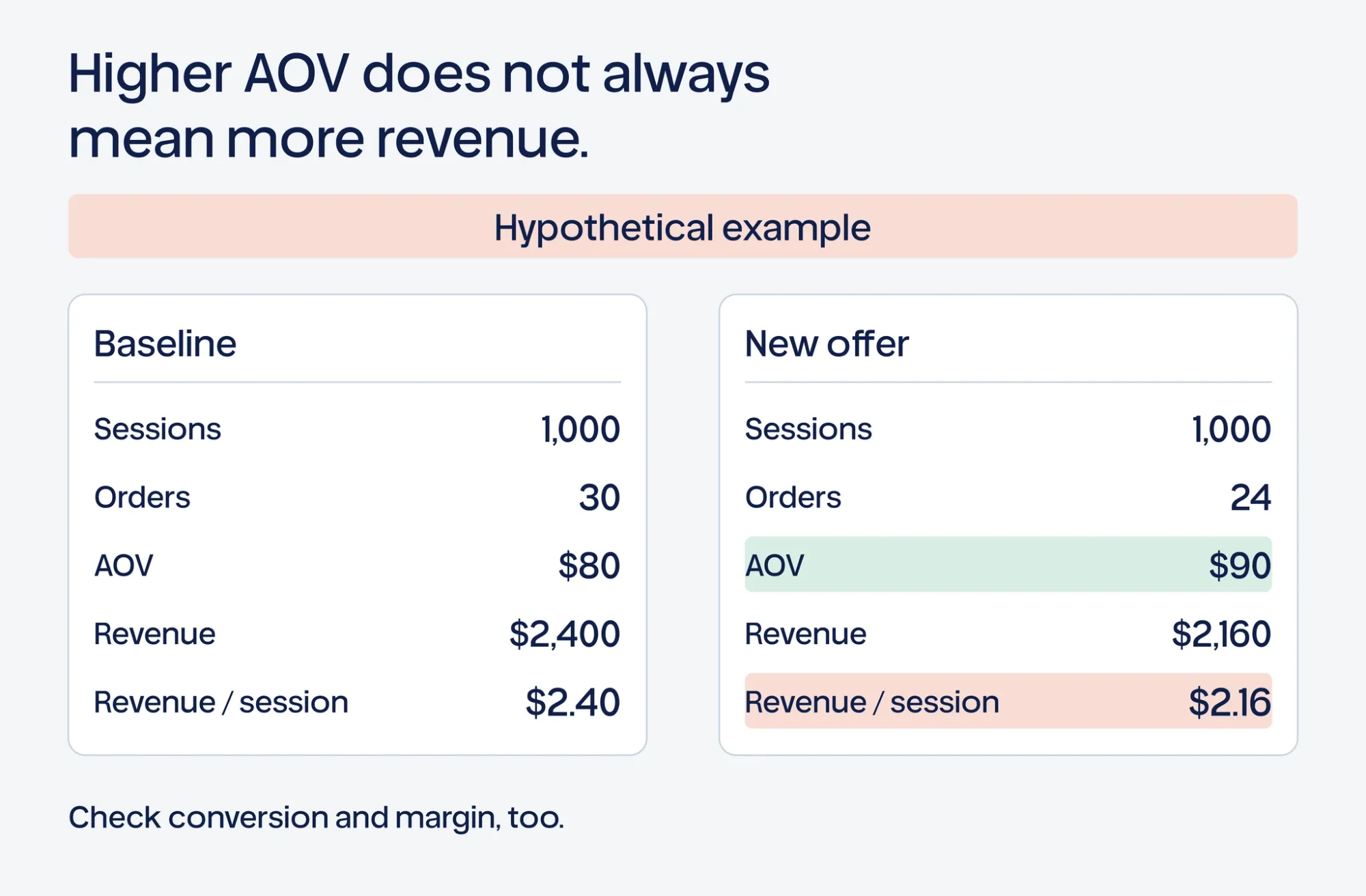
Check revenue per session when AOV rises
Suppose 1,000 sessions generate 30 orders at an AOV of $80: revenue on that basis is $2,400, or $2.40 per session. A new offer that produces 24 orders at $90 generates $2,160, or $2.16 per session. AOV rose while revenue per session fell.
These are hypothetical figures, not Gentoo customer results. Compare margin as well: discounts, shipping subsidies, and fulfillment costs can change the decision even when revenue improves.
Build a prioritized AOV backlog
Instead of launching every upsell idea, rank opportunities by:
- Customer relevance
- Expected commercial impact
- Ease of implementation
- Margin risk
- Evidence available
- Ability to measure the result
Start with the opportunity closest to the store's current goal. A store focused on first-purchase conversion may need better product clarity before it needs an advanced upsell system. A store with strong conversion and low repeat behavior may have a different priority.
When Gentoo would work on AOV
Gentoo checks whether a larger basket is a useful priority for the store. A merchant with healthy purchase completion and relevant accessory demand has a different opportunity from one whose shoppers cannot yet choose the main product.
When an offer is worth trying, Gentoo prepares it for approval, implements the agreed change and checks the business result. Revenue per session and margin can change the decision even when AOV rises.
Before adding an upsell block, check whether the product page answers the shopper’s questions and whether the cart and checkout remain easy to complete.
Find your next Shopify growth opportunity. Run Gentoo’s Quick Analyzer to review the top three opportunities it finds in your store and the reasons to consider them.