On this page
Gentoo vs Codex/ChatGPT: Who Keeps Shopify Growth Moving?
Compare Gentoo and Codex for Shopify growth. Understand investigation, execution, review and who owns the next business priority.


If you are comparing Gentoo vs Codex/ChatGPT for Shopify, ask who keeps the growth work moving after the first conversation. Gentoo helps find a useful goal, carries it across weeks, brings proposed solutions to you through iMessage and email, executes approved improvements and uses the business results to choose what comes next.
A capable coding workflow can make implementation easier. You may still want less responsibility for spotting the next opportunity, weighing it against other priorities and following up on the business result.
What Codex and ChatGPT can do for a Shopify team
OpenAI presents Codex as an agent for engineering work, including debugging, building features, reviewing code, and working across connected tools. It is not limited to typing out a specification. With the right context and access, it can help investigate an unclear problem and propose a plan.
Shopify’s AI Toolkit supports Codex and other development tools with Shopify guides, live store data, and admin tools. Permissions and configuration determine what your workflow can actually read or change.
That can make Codex useful for a theme issue, application work, or a custom store workflow. It does not mean every store is connected automatically, or that a technically correct change will increase revenue.
Codex and ChatGPT are not identical products. Codex focuses on technical work, while ChatGPT supports broader analysis and connected workflows; available actions depend on the tools and permissions in that setup.
They can carry context through memory, and supported scheduled tasks can run recurring work. Codex also has persistent goals for multi-step tasks. It would be inaccurate to say they always forget the goal, require a prompt for every step or stop at code changes.
The practical comparison is how much of an ongoing Shopify growth role you want to define, supervise and maintain yourself.
How Gentoo makes Shopify growth decisions
Gentoo combines store performance and shopper behavior with the merchant's operating limitations, business guidelines, industry trends and competitor context. It uses that understanding to work out what growth is worth pursuing now.
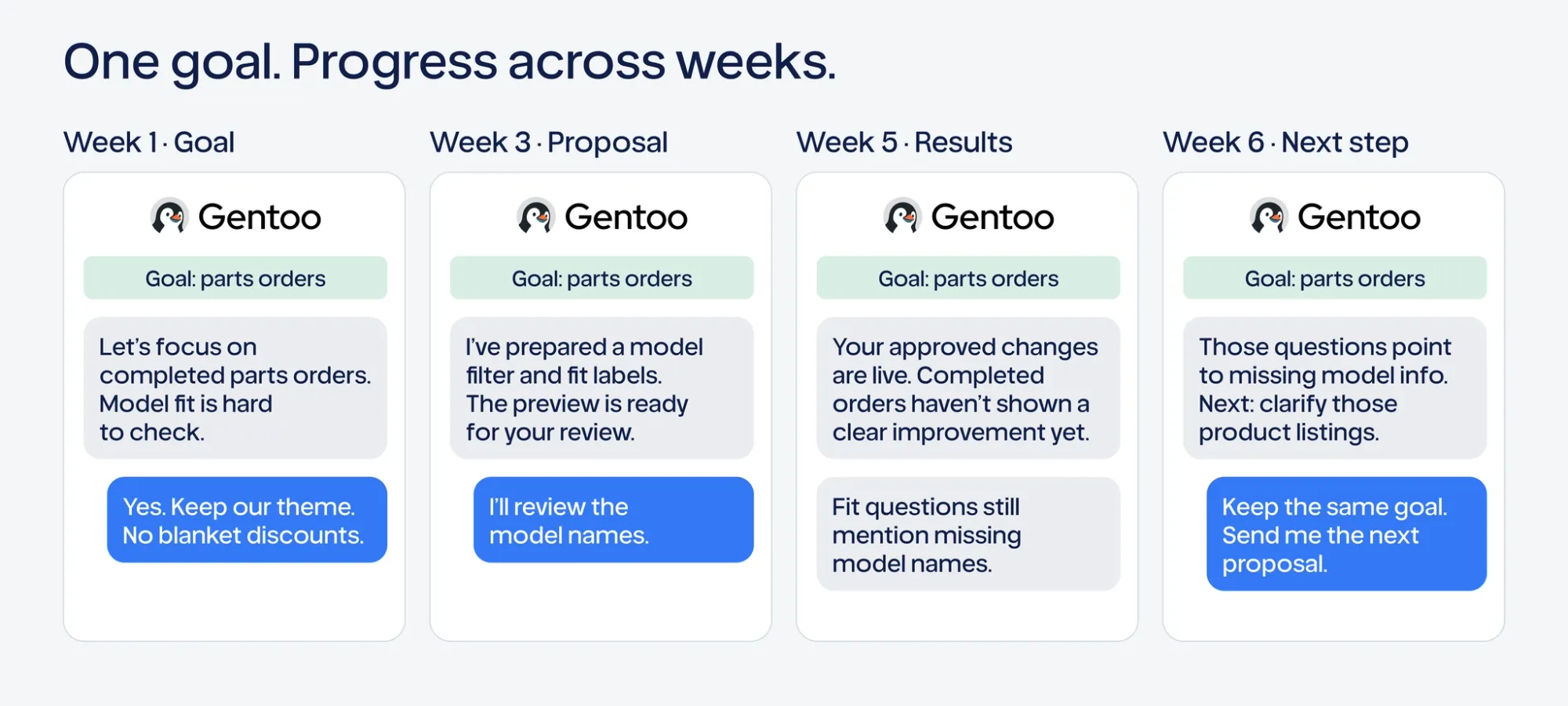
A goal you do not have to keep restating
You do not need to turn an unclear growth concern into a complete project brief first. Gentoo helps uncover and propose a relevant goal from the store's situation and your business context. You confirm the direction and constraints.
It then carries that goal across weeks, alongside previous actions and results. If the agreed focus is more spare-parts orders without discounting, the next proposal should advance that focus rather than begin a fresh conversation disconnected from earlier work. This is an illustrative business direction.
Proactive contact and a solution ready to review
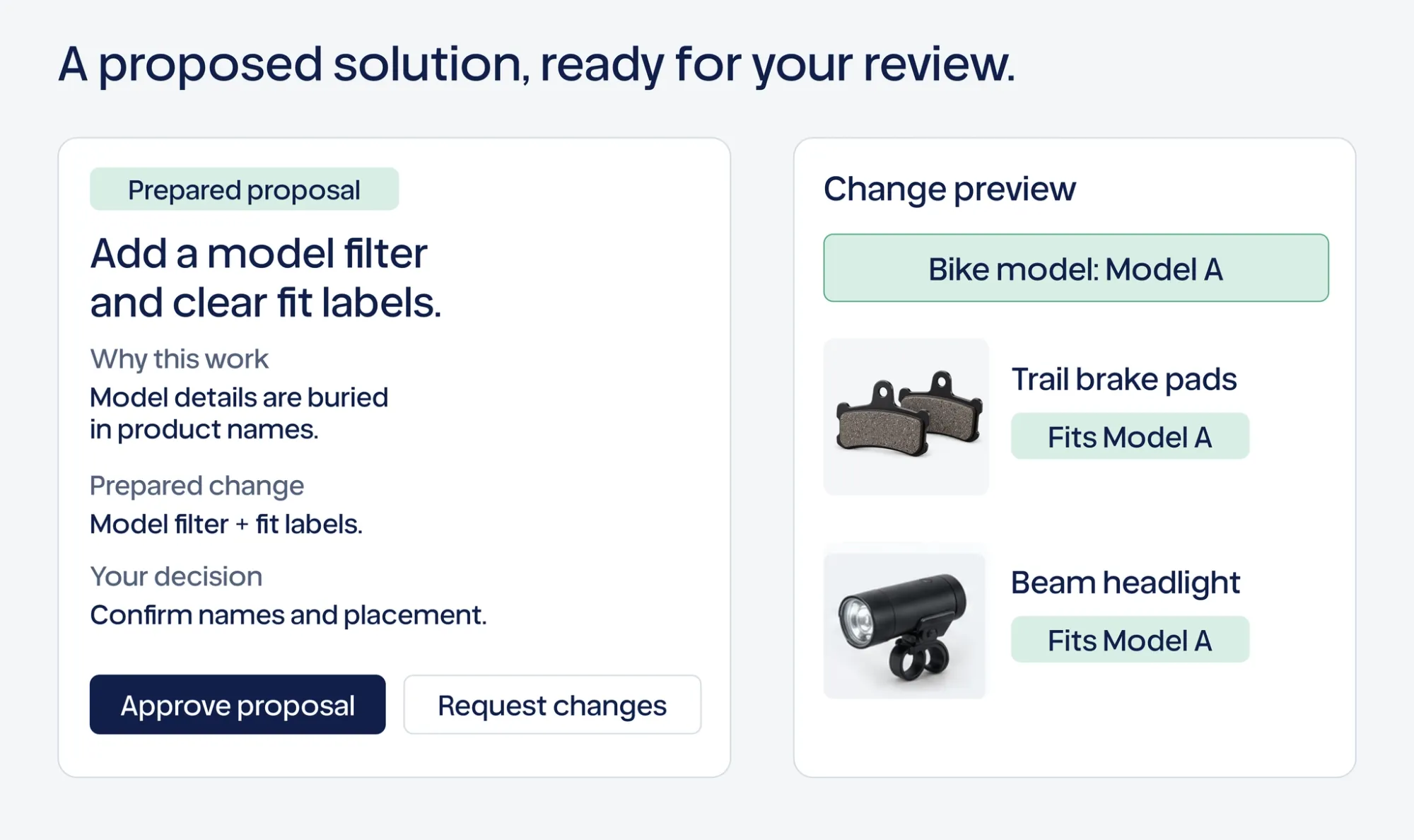
Gentoo reaches out through iMessage and email when there is useful work to consider. It investigates and prepares a proposed solution, so you can review the decision instead of sitting in a chat directing each step.
Through iMessage, you can assign Gentoo work, receive reports and adjust the strategy. It still needs your approval for supported changes and your input when a material business constraint is missing.
Control over execution
You can review the evidence and preview changes, request revisions or decline before work goes live. The app listing also describes rollback for published work. Gentoo carries out approved actions within its supported scope; proactive work does not mean unrestricted publishing.
The business result determines what comes next
Gentoo checks the relevant outcome after execution, including revenue and orders when they match the goal. Those results inform the next priority. Shipping successfully or completing a test does not establish that the store benefited.
Codex/ChatGPT can also investigate commercial results with the right context and tools. Gentoo's value is carrying the store-growth responsibility from goal discovery through prepared solution, approved execution and the next evidence-based decision, with less ongoing direction from the merchant.
A shipped change needs two kinds of review
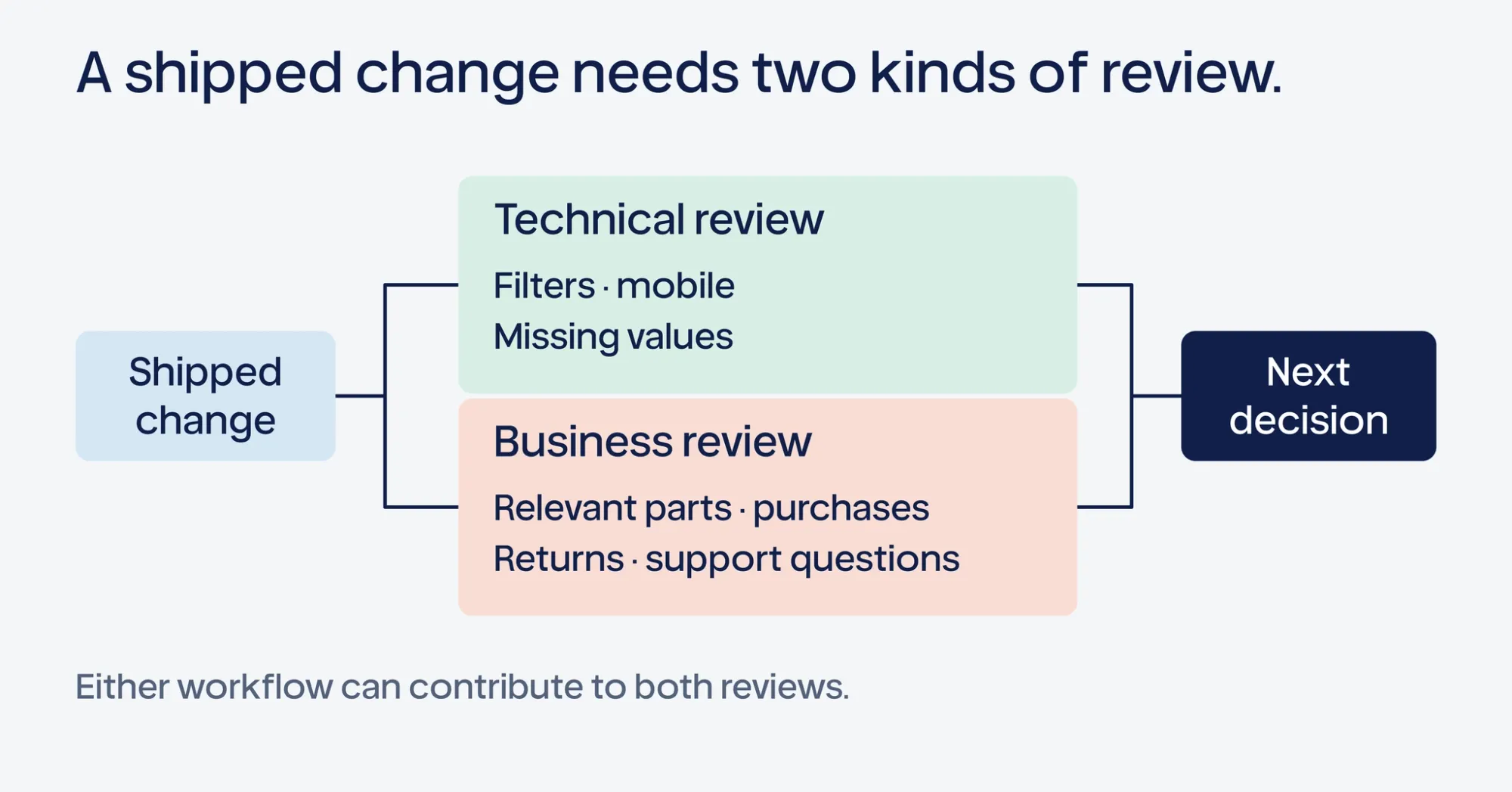
Consider a hypothetical bike-parts store where customers struggle to find parts for a particular model. A team might ask Codex to investigate the catalog and implement a filter.
The technical review would ask whether the filter uses valid attributes, behaves correctly on mobile, and handles missing values. The commercial review would ask whether shoppers find relevant parts more easily and whether purchases improve without creating new confusion.
Both reviews matter. A working filter is not evidence that the business problem is solved. A promising metric does not justify shipping a broken interface.
Codex can help with either investigation if the team supplies the context and tools. The distinction is who has set up and owns the recurring process, rather than whether the agent can discuss business outcomes.
The Last Mile case grounds the growth question
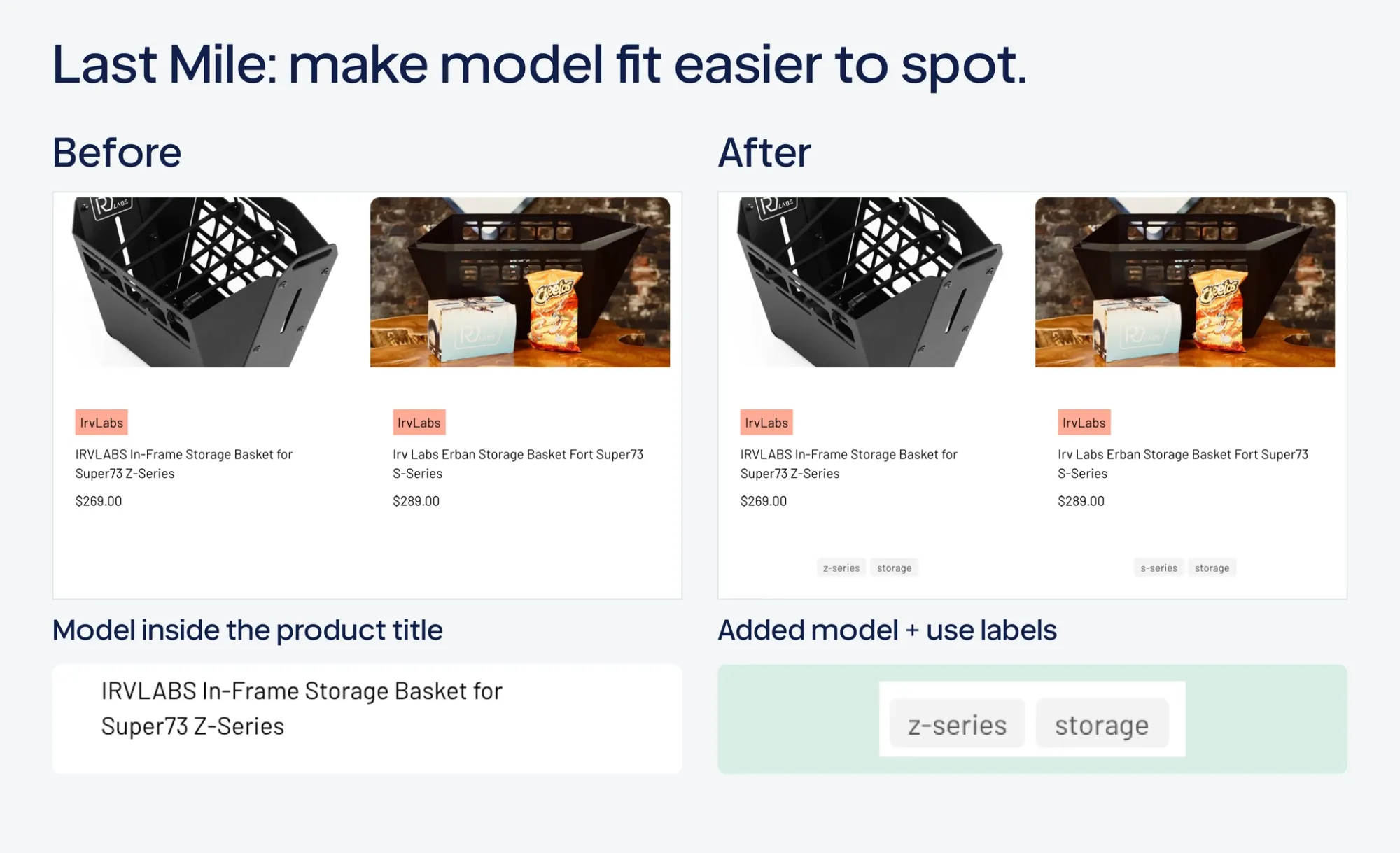
At Last Mile SF & Marin, Gentoo used sales history and the merchant’s insight to focus on spare-parts discovery. The work included collection filters, product information, and navigation.
The public case study reports Q2 2026 online revenue up 207%, online orders up 116%, and sessions up 48% compared with Q1. There were 16 actions during the period, including discovery, SEO, and purchase-path improvements.
The case supports the importance of a category-specific priority. It does not isolate a single action’s revenue effect or establish that Codex was used to implement the work. The filter example above is hypothetical.
Gentoo and Codex/ChatGPT compared
| Decision | Gentoo | Codex/ChatGPT |
|---|---|---|
| Starting point | Store and merchant context help identify a goal; the merchant confirms direction and limits | A problem or task, supported by the context and access you provide |
| Investigation | Finds opportunities relevant to the goal | Can investigate with code, data, and connected tools |
| Execution | Carries out approved growth actions within supported scope | Codex can make reviewed technical changes; ChatGPT actions depend on connected tools and permissions |
| Success measure | Revenue, orders or another goal-relevant result guides the next action | The team defines technical and commercial acceptance criteria |
| Ongoing work | Gentoo brings opportunities and reports back; merchant feedback and business outcomes shape the next decision | The team configures and maintains its task and review workflow |
| Specialist work | Executes supported growth work; complex engineering may still need a specialist | Codex suits reviewed engineering work; ChatGPT supports broader analysis and connected tasks |
| Merchant-specific judgment | Goal, operating limits, guidelines and market context shape the next action | Can reason over this context when the workflow supplies it |
| Proactive follow-up | Growth recommendations and reports through iMessage and email | Recurring work is supported through scheduled tasks; the team configures the task and reporting workflow |
| Day-to-day direction | Assign work, get reports and adjust strategy through iMessage | Use Codex with the context, connected tools and review process your team chooses |
| Goal continuity | Gentoo helps identify the growth goal and carries it, previous work and results across weeks | Memory, scoped Codex goals and recurring tasks can support continuity; configuration and scope matter |
| Solution preparation | Gentoo prepares supported improvements for merchant review without step-by-step supervision | Can plan and execute multi-step work; the team defines the broader growth role and acceptance criteria |
Neither option makes merchant goals, approvals, or constraints optional.
When Codex is the practical choice
Start with Codex when the bottleneck is a technical project and your team wants flexibility over how to solve it. You might need to diagnose a theme regression, build a custom integration, review a change, or test a new feature.
You do not need to know the exact fix in advance. A good request describes the symptom, relevant context, constraints, and what a successful result would look like.
For example: “Mobile shoppers lose their selected model filter when returning from a product page. Investigate the cause in the preview theme, propose a fix, and test filter persistence.” That is a clear investigation request, not a predetermined solution.
Someone still needs to approve production changes and check the store after release.
When Gentoo is the practical choice
Consider Gentoo when you want growth work to keep moving without personally initiating every investigation, checking on progress and deciding what should follow.
You may already have developers and effective AI tools. The remaining burden can still be commercial: choosing between clearer product information, better discovery, search visibility and cart improvements while respecting the store's limits. Gentoo is built to help carry that responsibility, not only to fill an engineering gap.
Gentoo connects that priority to execution and learning. For the broader decision process, see the Shopify conversion rate optimization framework.
What remains when you already use Codex/ChatGPT?
Suppose your team uses Codex for technical work and ChatGPT to discuss growth. You may still be the person connecting those discussions: choosing the goal, deciding whether a theme change matters more than product discovery or SEO, and asking what happened after release.
Gentoo offers an ongoing growth relationship around those decisions. It can bring an opportunity to your attention, explain why it fits, execute the approved action within its scope and report back. You can keep directing it through iMessage while your team continues to use its existing tools.
If both touch the same store, coordinate scope, approvals and measurement. Gentoo does not require Codex to execute every action, and this is not a claim of a native integration between them.
The choice to make
Compare both the work your team can do and the attention it takes to keep doing it. A team may prefer to operate the whole growth process with Codex and its other tools. Another may want Gentoo to take more of the ongoing prioritization, outreach, execution and reporting off its hands.
The useful test is whether you can make sound growth decisions with less effort, while retaining the goals, business limits and approval rights that belong to you.
Find a Shopify growth opportunity worth acting on. Run Gentoo’s Quick Analyzer to review the top three opportunities it finds in your store.