On this page
Gentoo vs Claude Code: What Shopify Merchants Need Beyond Coding
Compare Gentoo and Claude Code for Shopify: store access, investigation, approved execution, merchant effort and business-outcome measurement.


Comparing Gentoo vs Claude Code for Shopify is partly about capability and partly about who keeps the growth work moving. Gentoo helps identify the goal, carries it across weeks, reaches out with a proposed solution, executes approved work and uses the business result to choose the next action. You do not have to stay in a chat directing every step.
You may already have good development tools and still spend too much time deciding what deserves attention, asking for progress and working out what to do after a change. That is the burden Gentoo is built to reduce.
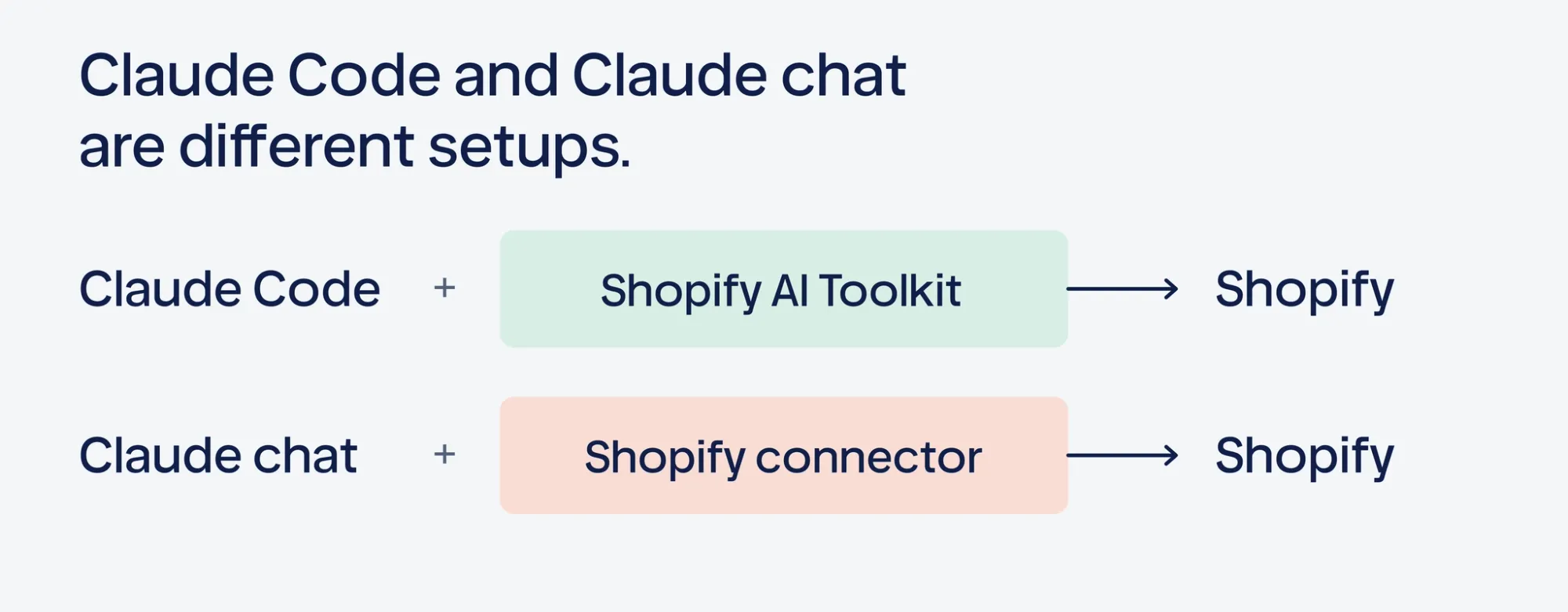
Claude Code, Claude chat, and Shopify are not the same setup
Claude Code works with code, commands, and connected tools. Anthropic’s current documentation describes planning, debugging, implementation, testing, and external-tool connections. With suitable access and instructions, it can investigate store-related questions rather than merely follow a specification.
Shopify’s AI Toolkit gives supported development tools, including Claude Code, access to Shopify guides, store data, and admin tools. What a particular setup can do still depends on its configuration and permissions.
There is also a separate Shopify connector for Claude in chat. Shopify describes product, collection, inventory, order, customer, discount, and analytics tasks through that connector. It is not interchangeable with a Claude Code development workflow.
If a merchant says “I already connected Claude to Shopify,” ask which connection they mean before comparing capabilities. Advice for an engineering repository may not apply to the chat connector they are using.
Claude Code supports memory across sessions and recurring tasks. It can plan and carry out multi-step work, not just make an edit and stop. The distinction is not that Claude forgets everything or cannot work independently. It is whether you want to operate your own store-growth process or have Gentoo carry more of that ongoing responsibility.
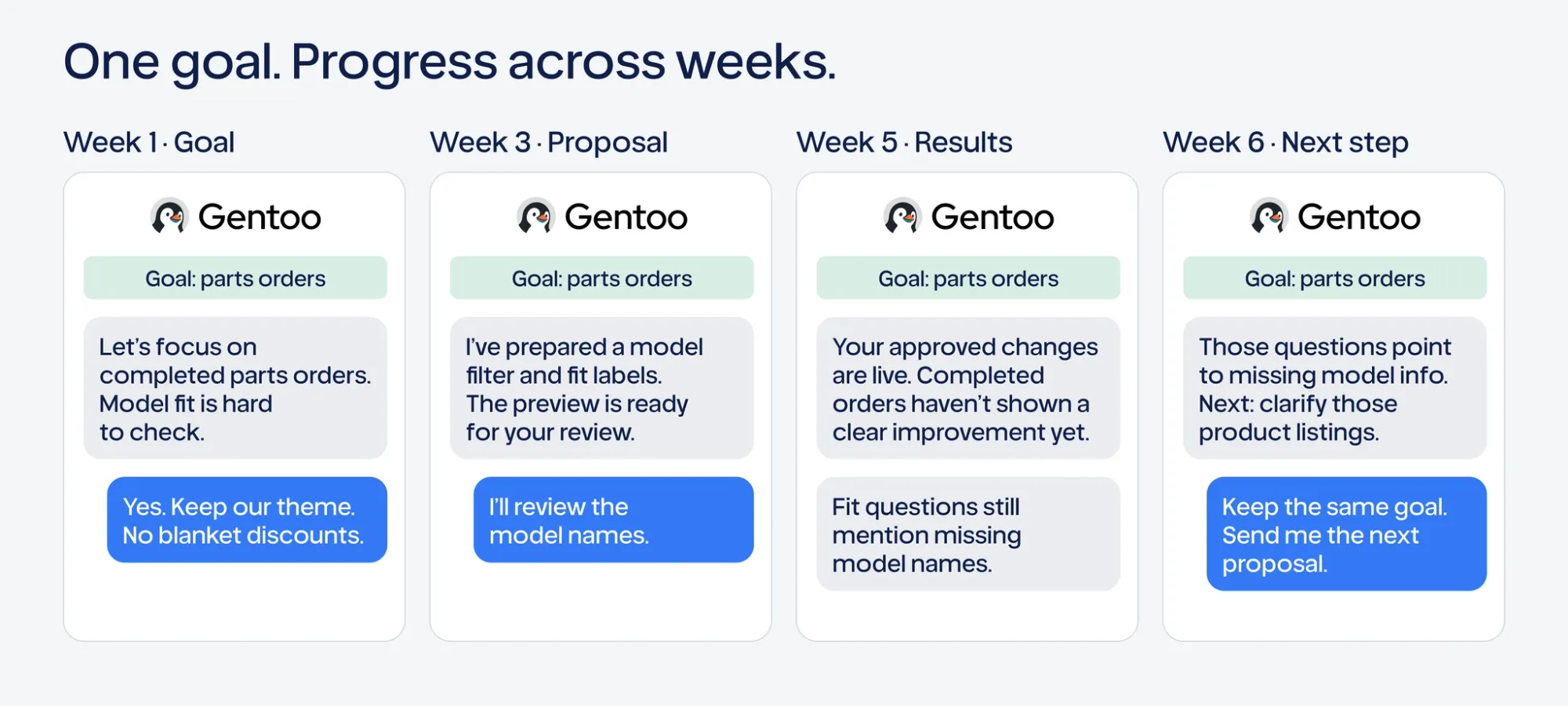
How Gentoo chooses Shopify growth priorities
Gentoo considers store performance, the shopper journey, operating limitations, brand guidelines, industry trends and competitor context. That understanding matters when it changes which growth problem is worth solving.
Find the goal and keep it in view across weeks
You do not need to arrive with a finished brief. Gentoo helps identify and propose a growth goal from the store's situation and your business context, then works within the direction you confirm. “More sales” might become a focus on completed spare-parts orders without broader discounts. This is an illustrative example.
Gentoo carries that goal, your constraints and previous work across weeks. A conversation ending does not end the growth work. The next recommendation should advance the same goal, unless your direction or the business evidence calls for a change.
Reach out with a proposed solution
When there is worthwhile work to consider, Gentoo proactively contacts you through iMessage or email. It investigates the opportunity and prepares a proposed solution with the reason to consider it, rather than asking you to direct every analysis and edit.
You can assign work, receive reports and adjust the strategy through iMessage. You do not have to sit in a long back-and-forth chat to turn each observation into a task. Your input still matters when a missing business fact or a change in direction affects the decision.
Keep approval with the merchant
The Gentoo app listing describes evidence review, previews, approval, requested changes and rollback. Gentoo executes approved actions within its supported scope. Reducing your involvement in preparation does not remove your control over what goes live.
Let business results choose the next action
After execution, Gentoo measures the relevant business result, including revenue or orders when those match the goal. It uses that evidence to decide what deserves attention next. An approved change, successful deployment or positive-looking interface is not proof that the business improved.
You review decisions and exceptions instead of having to remember every follow-up. Gentoo does not need Claude Code to execute each supported improvement, and the point is not to keep you working in another chat window.
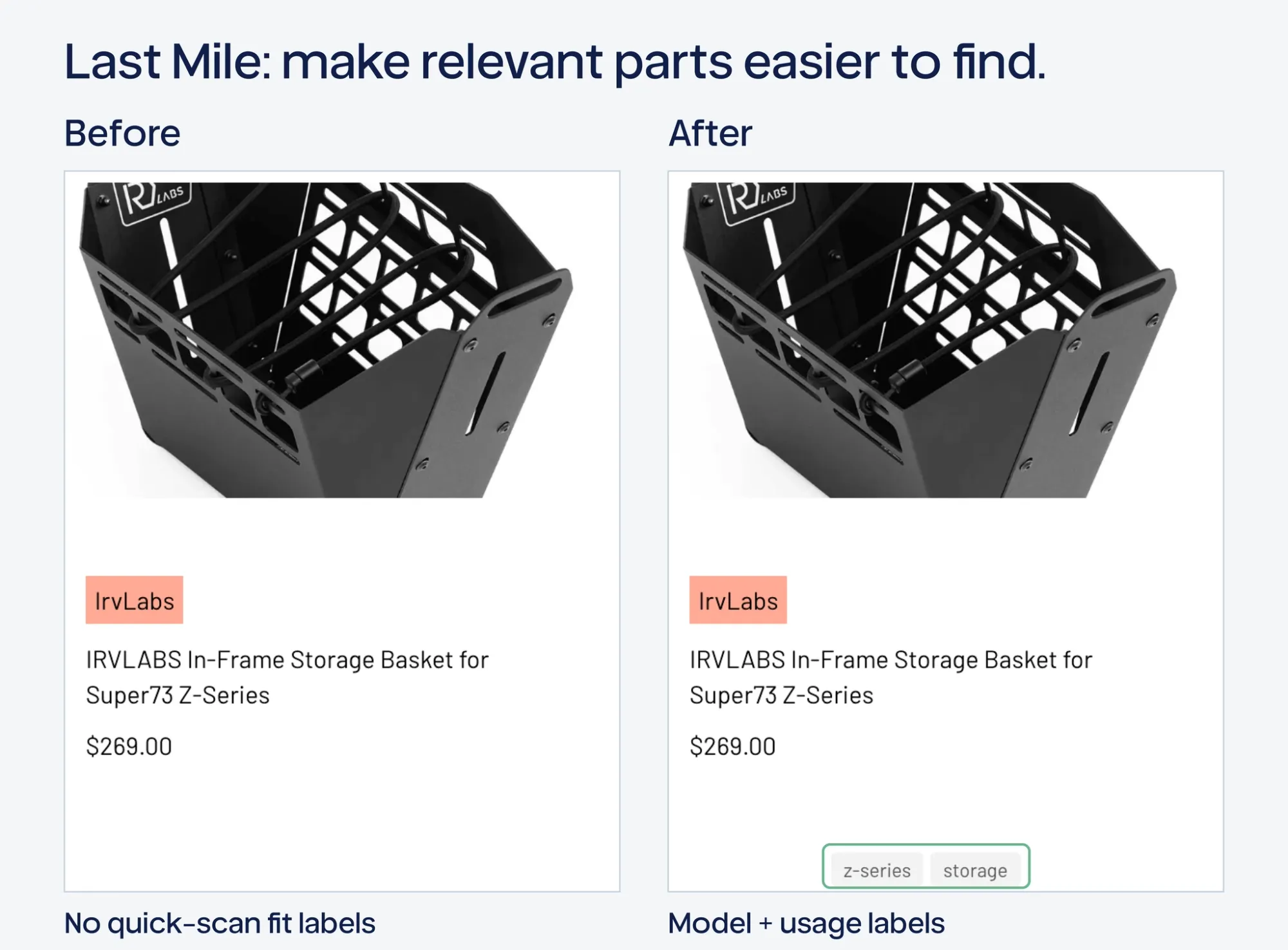
A Shopify example: finding the right spare part
At Last Mile SF & Marin, Gentoo reviewed sales history and listened to the merchant’s insight. Finding spare parts for a particular bike was a useful place to focus.
The work included collection filters, clearer product information, and navigation. The Last Mile case study reports online revenue up 207%, orders up 116%, and sessions up 48% in Q2 2026 versus Q1. The period included 16 actions spanning discovery, SEO, and the path to purchase.
Those numbers are not a controlled estimate of one filter’s effect. Nor is this a Claude Code case study: the published account does not establish that Claude Code implemented the work. It shows why store context and a specific business priority mattered.
A team could use Claude Code to investigate and implement a comparable navigation task. It would need the relevant catalog access, merchant context, permission to make changes, and a way to evaluate the outcome.
Compare the workflow, not just the feature list
| Question | Gentoo | Claude Code |
|---|---|---|
| What do you start with? | Store and merchant context help identify a goal; the merchant confirms direction and limits | A task or problem, with access and instructions you provide |
| Can it investigate? | Yes, using store evidence, merchant context and industry knowledge | Yes, using available context and connected tools |
| Can it execute? | Executes approved growth actions within its supported scope | Can edit code and use permitted tools; the setup determines scope |
| How are results judged? | Revenue, orders or another goal-relevant result determines what to pursue next | Your task, tests, reporting, and review process define success |
| What does the merchant still own? | Goals, business limits and approvals; Gentoo brings opportunities, executes supported work and reports back | Those decisions plus the surrounding setup and operating process |
| How does store understanding improve? | Merchant feedback refines fit; executed outcomes refine future judgment | Memory and stored instructions can retain context; the team defines how commercial outcomes guide the growth workflow |
| Who brings work back to your attention? | Gentoo initiates contact through iMessage or email with worthwhile opportunities and proposed solutions | Recurring tasks are supported; their scope, connections and reporting follow the workflow you configure |
| How can the merchant direct the work? | Assign Gentoo work, receive reports and adjust strategy through iMessage | Work through Claude Code and its configured tools, instructions and review process |
| What continues across weeks? | The agreed goal, business limits, earlier work and results shape the next proposal | Memory and recurring workflows can carry context; the team defines scope and commercial review |
| Who prepares the solution? | Gentoo investigates and prepares supported improvements for review rather than asking for step-by-step direction | Claude Code can investigate, plan and implement; the team defines the broader store-growth workflow |
This compares product workflows, not a claim that one model is incapable of a particular reasoning task.
When Claude Code is a good first choice
Claude Code fits a team that wants control over a technical project and can review the work. Examples include a theme defect, a custom application feature, or a store integration that needs diagnosis and testing.
It can also be useful before a specification is complete. A developer can ask it to investigate alternatives and propose an approach. The team still needs to decide which store access is appropriate and how the result will be checked.
Before allowing changes, establish a preview or development workflow, a review owner, and a rollback plan. Passing technical checks answers whether the change works as intended. Store performance answers whether that intention was commercially useful.
When Gentoo is a good first choice
Gentoo is useful when you want a partner to keep the store's growth priorities moving, not another process to manage. The question may involve navigation, product information, search visibility, cart confidence or checkout.
This can matter whether you run the store yourself or already work with developers. Being able to build a change does not remove the effort of weighing opportunities, keeping them within business limits and revisiting the result. Assess how much of that work Gentoo would take off your team.
For a starting diagnosis, see why a Shopify store is not converting.
Can you use both?
Having Claude Code in your toolkit does not settle who keeps an eye on the store's growth priorities. You may be able to investigate and build quickly while still wanting someone to bring back the next worthwhile opportunity, explain the trade-off and report what happened.
Gentoo can take on that ongoing role, including executing its supported actions, while you continue using your existing tools for the work they suit. Its value is not limited to finding technical tasks for a developer.
If work overlaps, agree on scope, approvals and measurement so two changes do not interfere. This describes an operating choice, not a built-in Gentoo-to-Claude Code integration.
Questions before choosing
Ask who will bring the next opportunity to your attention, explain why it fits the business, get the approved work done and return with a result. Then compare the decisions and follow-up your team will still have to manage, alongside the technical capabilities you need.
Choose a Shopify growth priority that fits your business. Run Gentoo’s Quick Analyzer to review the top three opportunities it finds and the reasons to consider them.