On this page
Shopify Store Optimization: 12 Changes That Can Improve Conversion Rate
Learn how to prioritize Shopify store optimization across product discovery, product pages, SEO, Merchant Center, cart, and checkout.

Shopify store optimization starts with the right problem
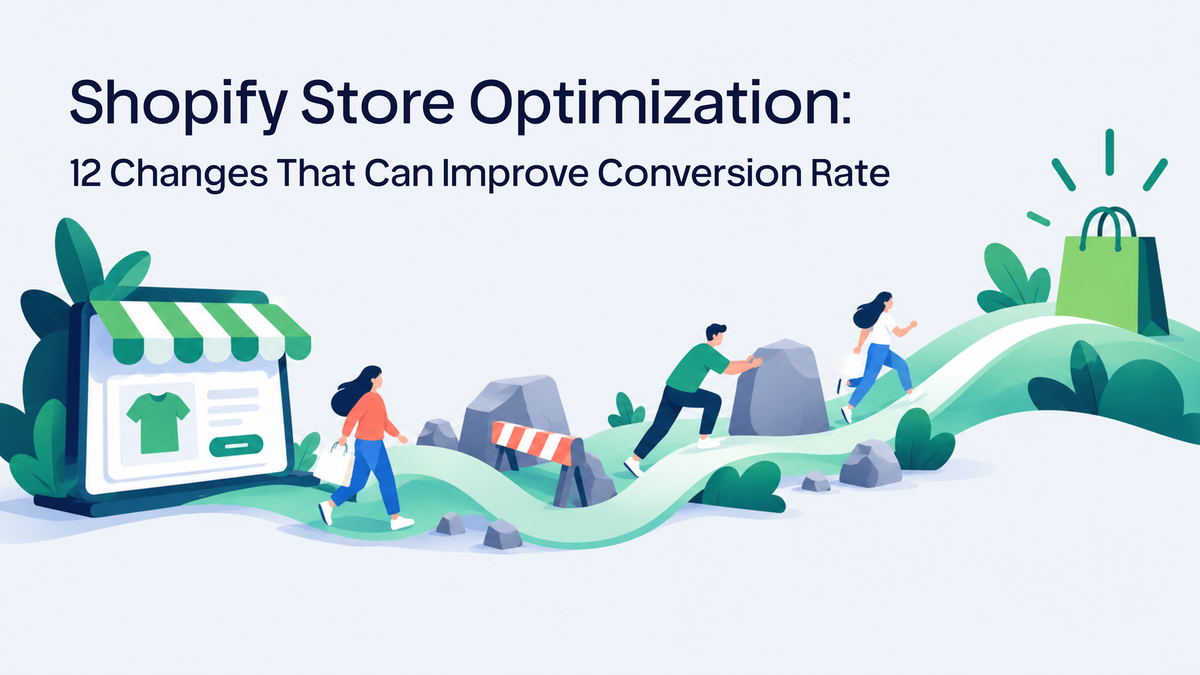
You may have a strong product, reliable suppliers, and a growing advertising budget. Your Shopify store may still struggle to generate the sales you expect. The problem is not always the product. It is often that customers cannot find the right product, understand its value, trust the purchase, or complete the journey easily. Shopify store optimization means finding and fixing the parts of the store that keep customers from buying. That does not mean every store needs the same checklist. A premium product may need better information to justify its price. A bicycle-parts store may need better navigation so customers can find compatible products. Another store may have strong product-page traffic but lose customers at the cart. The right plan depends on the store, the customer, and the merchant’s goal.
What does Shopify store optimization include?
Here are 12 areas to review. That does not mean every store needs to change all 12.
1. Homepage clarity
Can a new visitor quickly understand what you sell, who it is for, and why it is worth considering? Your homepage should establish the product category, customer value, and next step without forcing visitors to search for context.
2. Collection hierarchy
Are products organized in a way that matches how customers think about them? A confusing collection hierarchy can make it difficult for customers to find the right product, even when the store already sells exactly what they need.
3. Site search
Can customers search using the words they naturally use? Search becomes especially important for large catalogs, technical products, and stores where shoppers already know what they are looking for.
4. Filters and product discovery
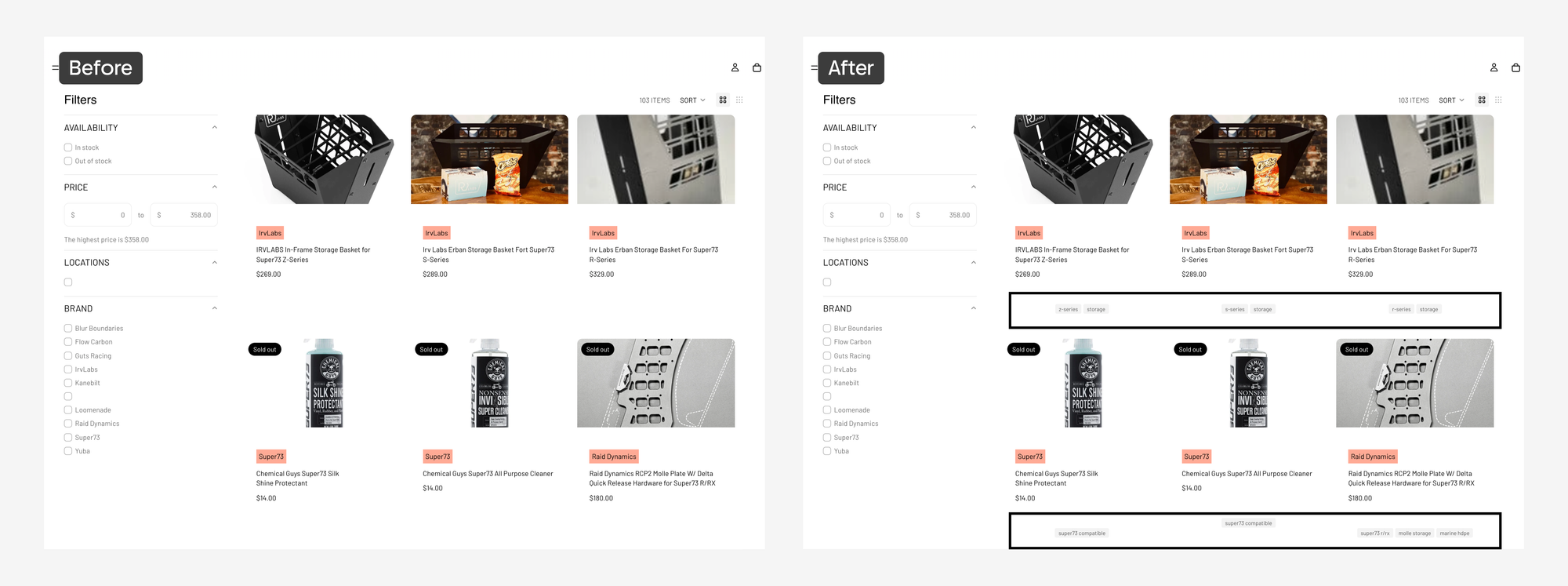
Do filters help shoppers narrow down the right product, or do they create more confusion? The best filtering system depends on the category. Bicycle parts may need filters based on bike type, component type, compatibility, or technical specifications.
5. Product-page value communication
Does the product page explain why the product is worth its price? This is critical for premium products and high-consideration purchases. Features alone may not justify the price. Customers need to understand the product’s value, use case, quality, and difference from alternatives.
6. Product information and proof
Do customers have enough information to make a confident decision? Depending on the product, this may include product images, video, specifications, demonstrations, reviews, user-generated content, comparisons, warranties, delivery information, and returns.
7. Shopify SEO
Can search engines understand which products, collections, and pages matter? Shopify SEO may involve product content, collection pages, internal linking, technical structure, metadata, and matching content to search intent. SEO should not operate separately from the store experience. Search traffic still needs to find the right product and understand why it is relevant.
8. Google Merchant Center and product visibility
Are your product data, pricing, availability, images, and descriptions accurate and complete? Google Merchant Center and related product-discovery surfaces can help qualified shoppers find your products. But better visibility does not automatically create more sales. The product page and shopping experience still need to convert that interest.
9. Mobile experience
Does the store work properly for customers browsing on a phone? Problems may appear in navigation, product images, variant selection, page speed, sticky add-to-cart elements, forms, and cart interactions.
10. Cart-to-purchase nudges
After a customer adds a product to the cart, is there a clear reason to continue? Useful information may include delivery timing, shipping thresholds, returns, product compatibility, payment options, and relevant complementary products. The best nudge depends on the product and the shopper. More discounts are not always the answer.
11. Checkout friction
Are customers encountering unnecessary uncertainty or effort during checkout? Unexpected costs, unclear delivery, payment problems, or mobile input friction can all prevent a completed purchase.
12. Measurement and iteration
Can you tell whether an improvement actually helped? Treat each change as a step you can measure. Use the result to decide what to try next.
What should you fix first?
Use the symptom to form a starting hypothesis:
- Many sessions but few product views: check homepage clarity, navigation, collection hierarchy, and search.
- Many product views but few add-to-carts: check value communication, proof, compatibility, and shipping or returns.
- Many carts but few purchases: check total cost, delivery expectations, cart messaging, payment, and checkout.
Use these patterns as starting points. Check them against the store data and the merchant’s goal before making a change.
How to prioritize Shopify store optimization
Start with a more useful question:
What should I work on next?
It is:
What should I focus on next?
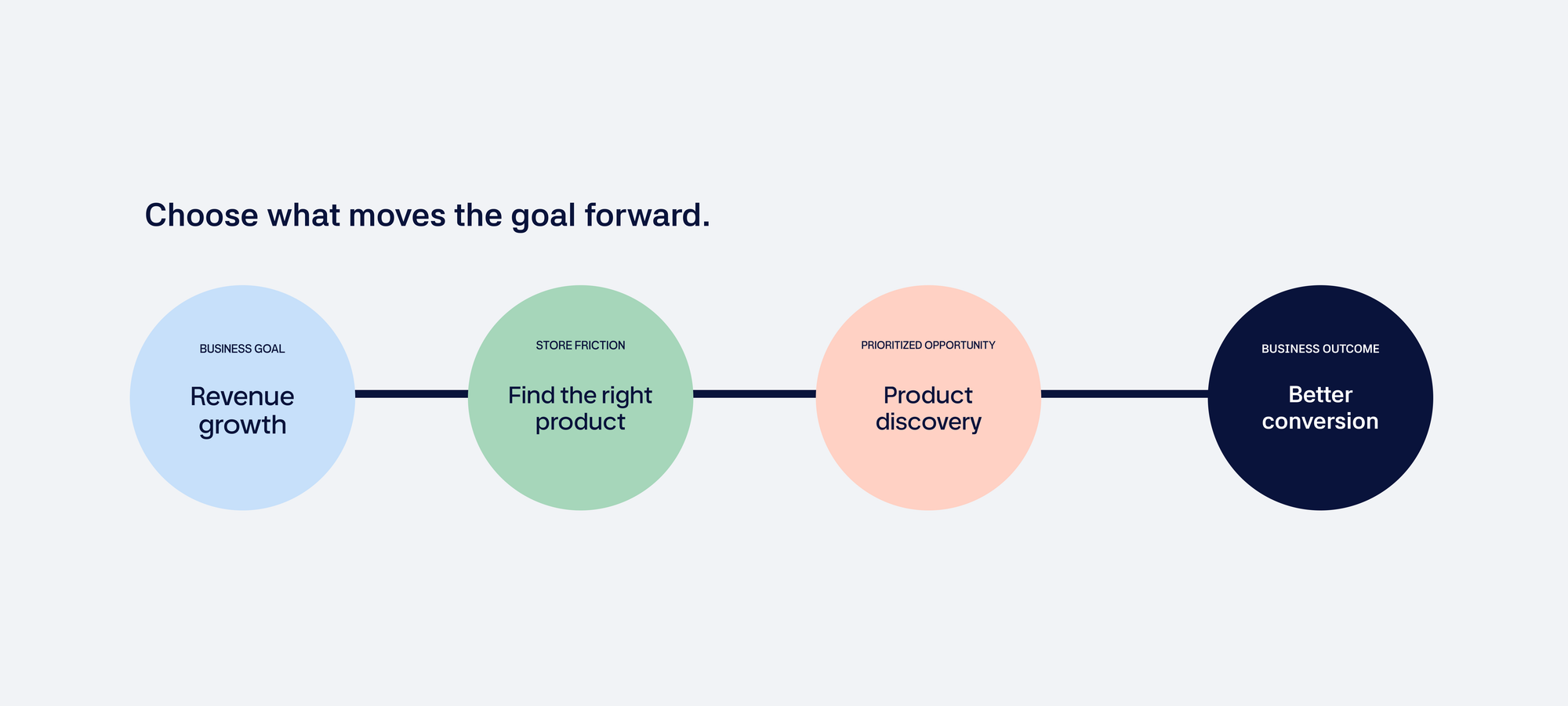
A merchant focused on revenue may need to improve product discovery, product-page conversion, qualified organic traffic, cart recovery, average order value, or repeat purchases. The right place to start depends on the store. Gentoo looks at the store, the merchant’s goal, and the evidence behind the problem. That context determines what is worth doing next. A long audit can leave a merchant with dozens of findings and no clear next step.
🎯 Not sure what to fix first? Your store may have several issues. Gentoo analyzes the store and highlights the three opportunities most closely tied to your current growth goal. See My Top 3 Opportunities
A real example: when product discovery became the priority
One merchant had collected several different diagnoses after working with multiple agencies. Store data pointed to a more specific problem: customers were struggling to find spare parts that matched their bicycles. The problem was more specific than “improve conversion rate” or “get more traffic.” Customers needed a better way to navigate the catalog and find the right parts. After the navigation and product discovery experience improved, sales increased sharply. Navigation is not always the answer. In this case, it was the problem closest to the merchant’s goal.
Why one change rarely solves the entire problem
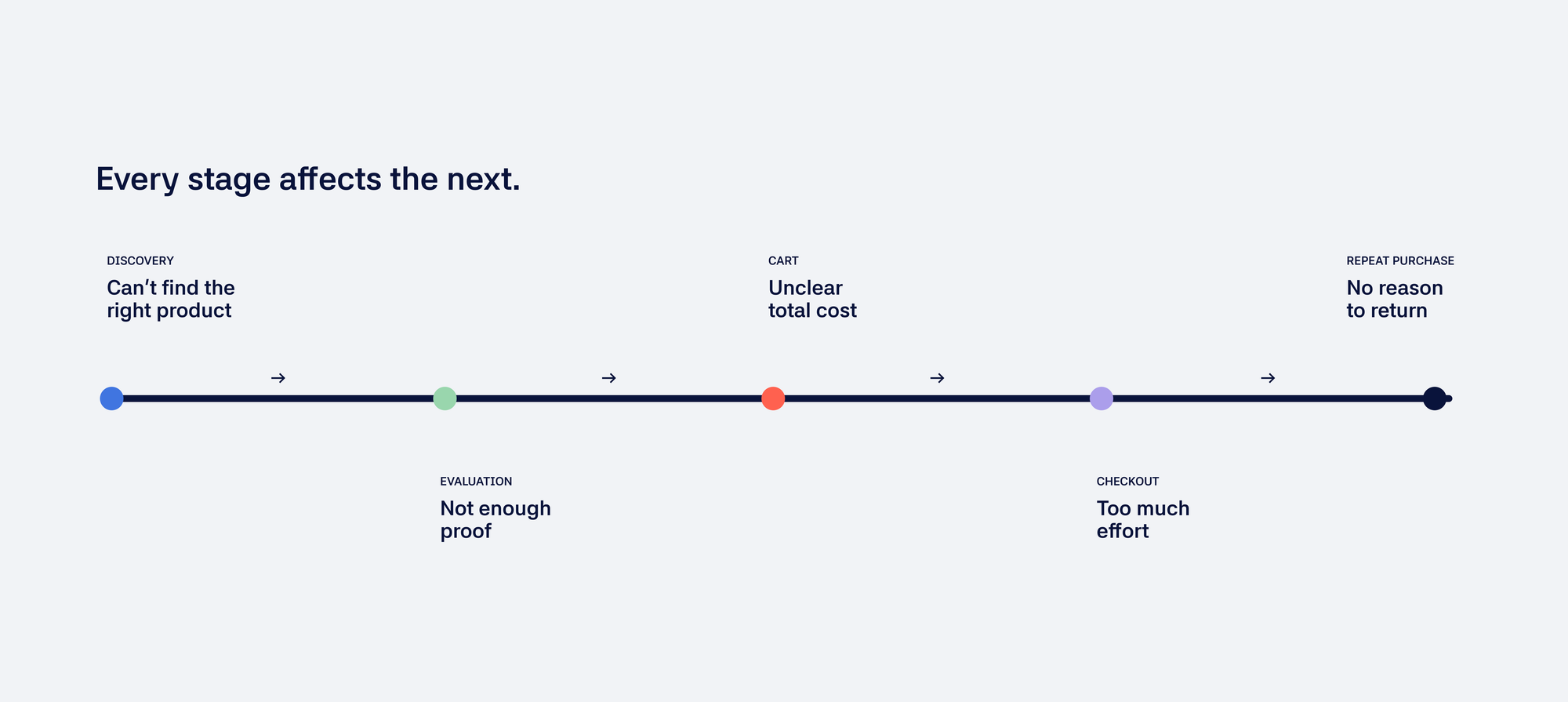
Growth problems are connected. SEO may bring more qualified visitors, but those visitors still need to find the right product. The product page must explain the value clearly. The cart must give them enough confidence to continue. The checkout must not create unnecessary friction. That is why a single tactic rarely solves a growth problem. Better SEO still needs a store that helps visitors find, trust, and buy the right product. A homepage redesign or conversion app may help, but only when it addresses the problem blocking the next step.
How Gentoo approaches store optimization
Gentoo starts with the merchant’s business goal. Then it identifies up to three opportunities that fit that goal and explains why they matter. The merchant can decide whether the recommendation fits the business. If they act on it, Gentoo helps move the work forward and uses the result to choose the next step. The point is to help merchants make progress. Merchants should not have to coordinate every growth task themselves.
Find your next Shopify growth opportunity
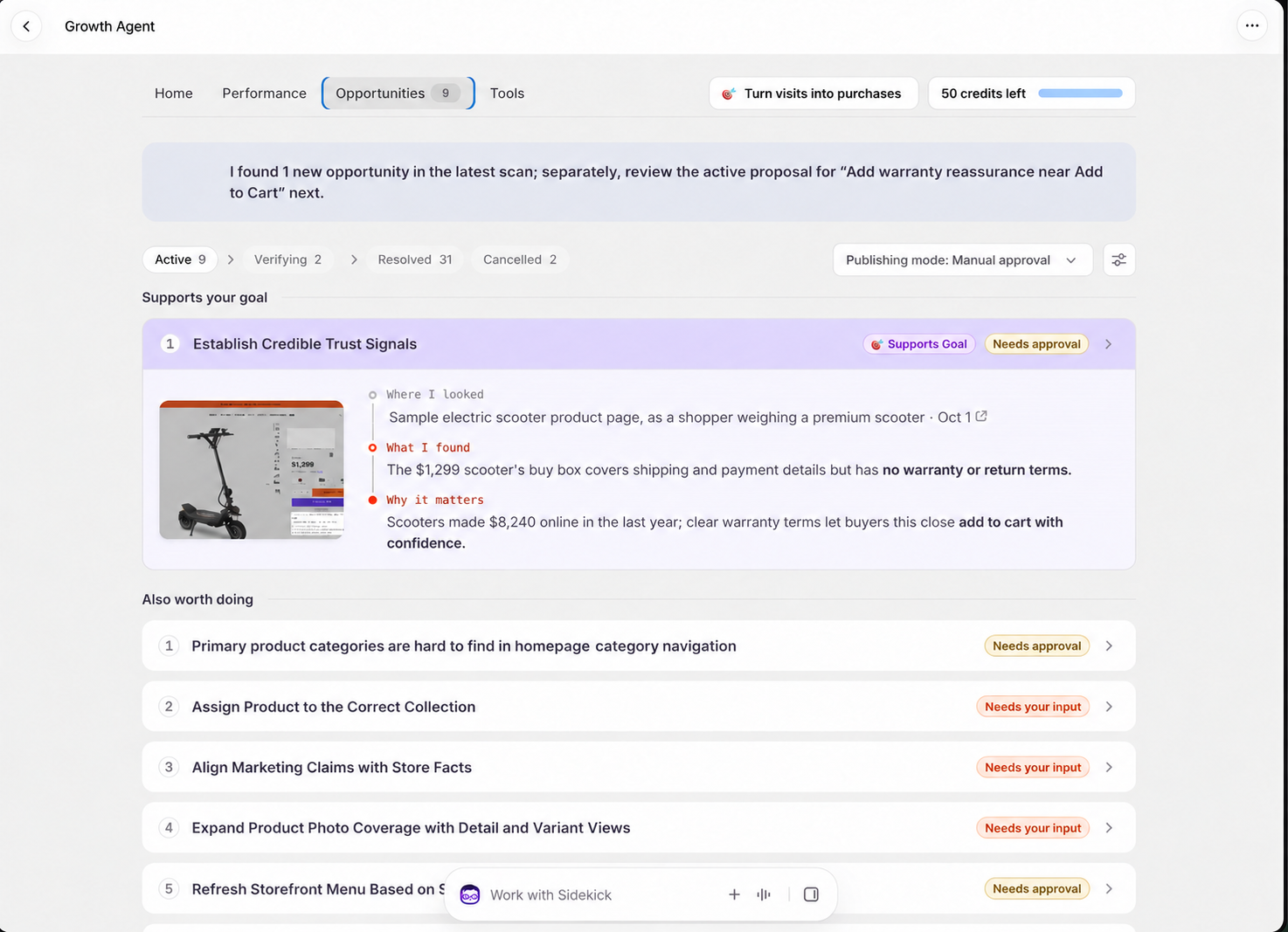
If your Shopify store has a strong product but growth feels unclear, the next move may not be another app, agency, or campaign. Start by finding the problem most worth fixing now. Run Gentoo’s Quick Analyzer to see the top three opportunities in your store, why they matter, and what to consider next.