On this page
How to Reduce Cart Abandonment on Shopify: A Continuous Optimization Framework
Reduce Shopify cart abandonment by locating the drop-off, checking product and delivery questions, prioritizing fixes and measuring purchases.

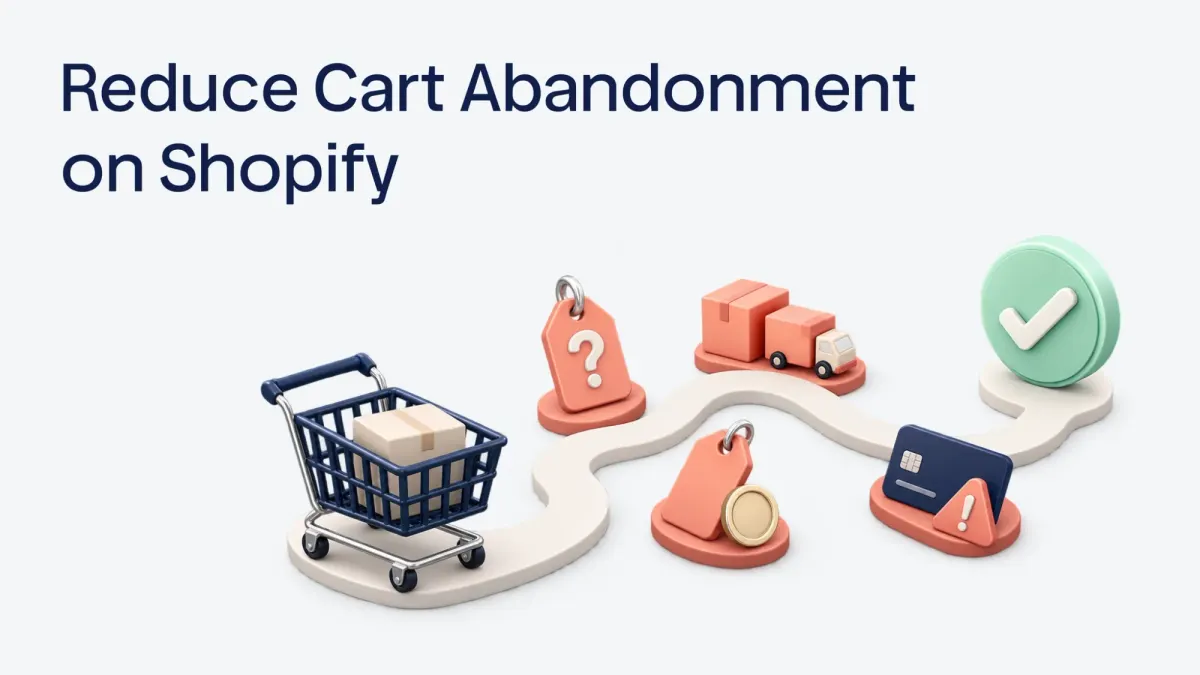
To reduce cart abandonment on Shopify, first separate the shoppers who never reach checkout from those who start checkout but do not buy. Then inspect the question or task that stopped them: total cost, product fit, delivery, trust, mobile input, or payment.
Cart abandonment means a shopper adds a product but does not purchase. Checkout abandonment is a subset, not a separate definition that excludes those shoppers. This guide focuses on preventing those exits; reminders and retargeting are recovery work.
Start with the whole Shopify customer journey
Cart abandonment does not begin when someone opens the cart. It can begin much earlier. A useful journey map includes:
- Discovery: how shoppers arrive through search, ads, social, referrals, or direct visits
- Product understanding: whether the shopper can understand the product, its fit, and its value
- Trust: whether evidence, reviews, returns, and policies answer the shopper's concerns
- Cart confidence: whether price, shipping, delivery timing, and product selections are clear
- Checkout completion: whether forms, payment, and error states allow the shopper to finish
If you only inspect the cart, you may end up treating a product-page or navigation problem as a checkout problem. For example, a shopper may add a product because it looks interesting but leave after realizing that the product is not compatible with their equipment. Improving the cart reminder will not solve that uncertainty. Clear compatibility information earlier in the journey may have a larger effect.
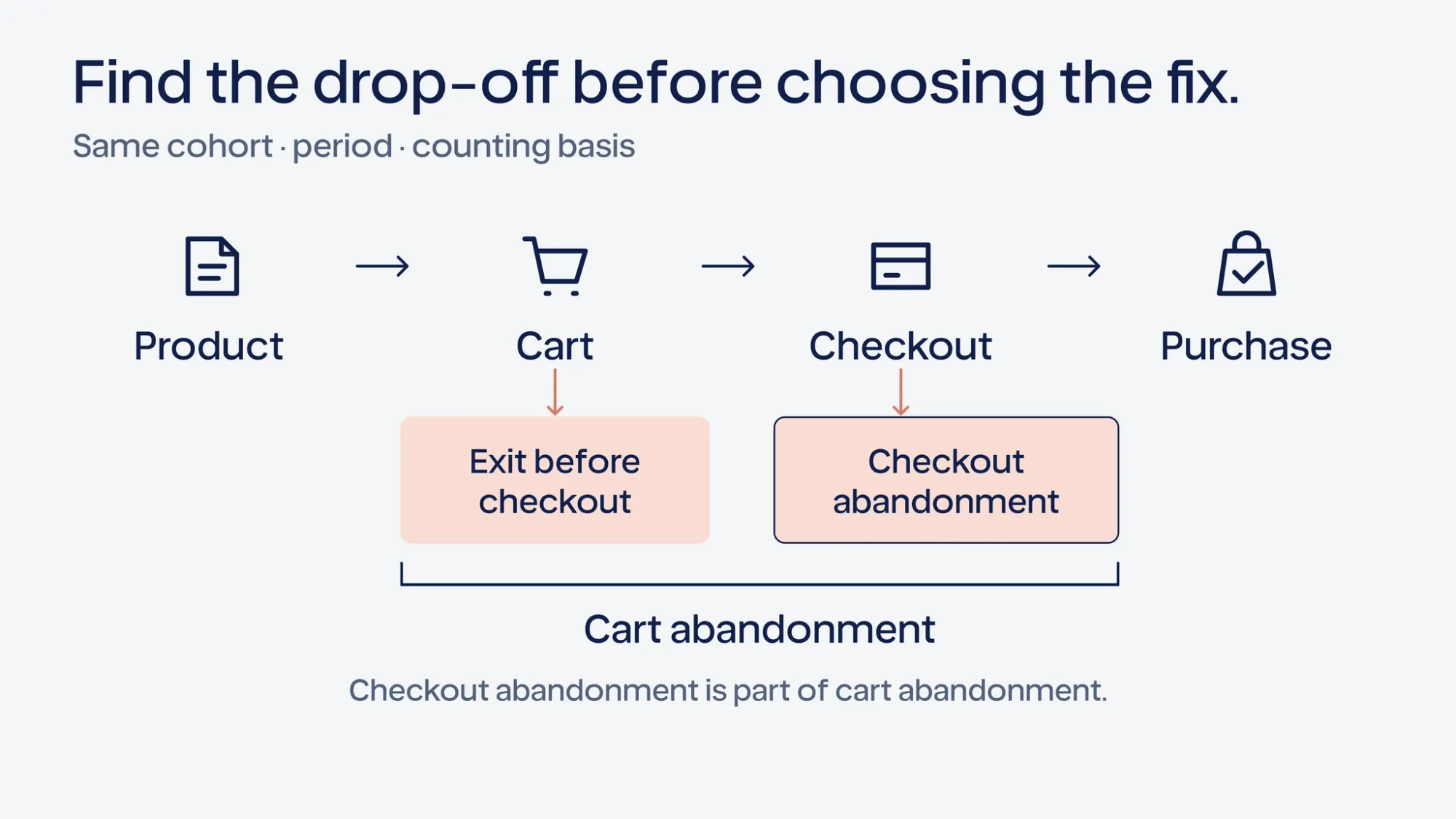
Measure where the drop-off occurs
Begin with the Shopify metrics and analytics already available to you. The goal is not to collect every possible number. The goal is to see where shopper momentum changes. Useful steps include:
- Compare product views with add-to-cart events.
- Compare add-to-cart events with checkout starts.
- Compare checkout starts with completed purchases.
- Segment the journey by device, acquisition source, geography, product, and new versus returning shopper.
- Look for meaningful differences rather than relying on one storewide rate.
A high cart abandonment rate can mean different things in different stores. A premium product may need more time and more proof before purchase. A store with many repeat customers may have a different baseline from a store serving mostly first-time shoppers. The metric tells you where to look. It rarely tells you the complete reason.
Keep the denominator consistent
For a session-based diagnostic, calculate cart-to-purchase completion as sessions with a purchase divided by sessions with a cart addition in the same cohort, period, and segment. One minus that share is a working abandonment measure. It is not the same as an email platform’s abandoned-checkout count.
Check how your tool treats accelerated checkout and returning sessions before comparing rates. Some purchases bypass the ordinary cart path, so do not divide unrelated aggregate counts. Shopify’s conversion reports provide a starting funnel.
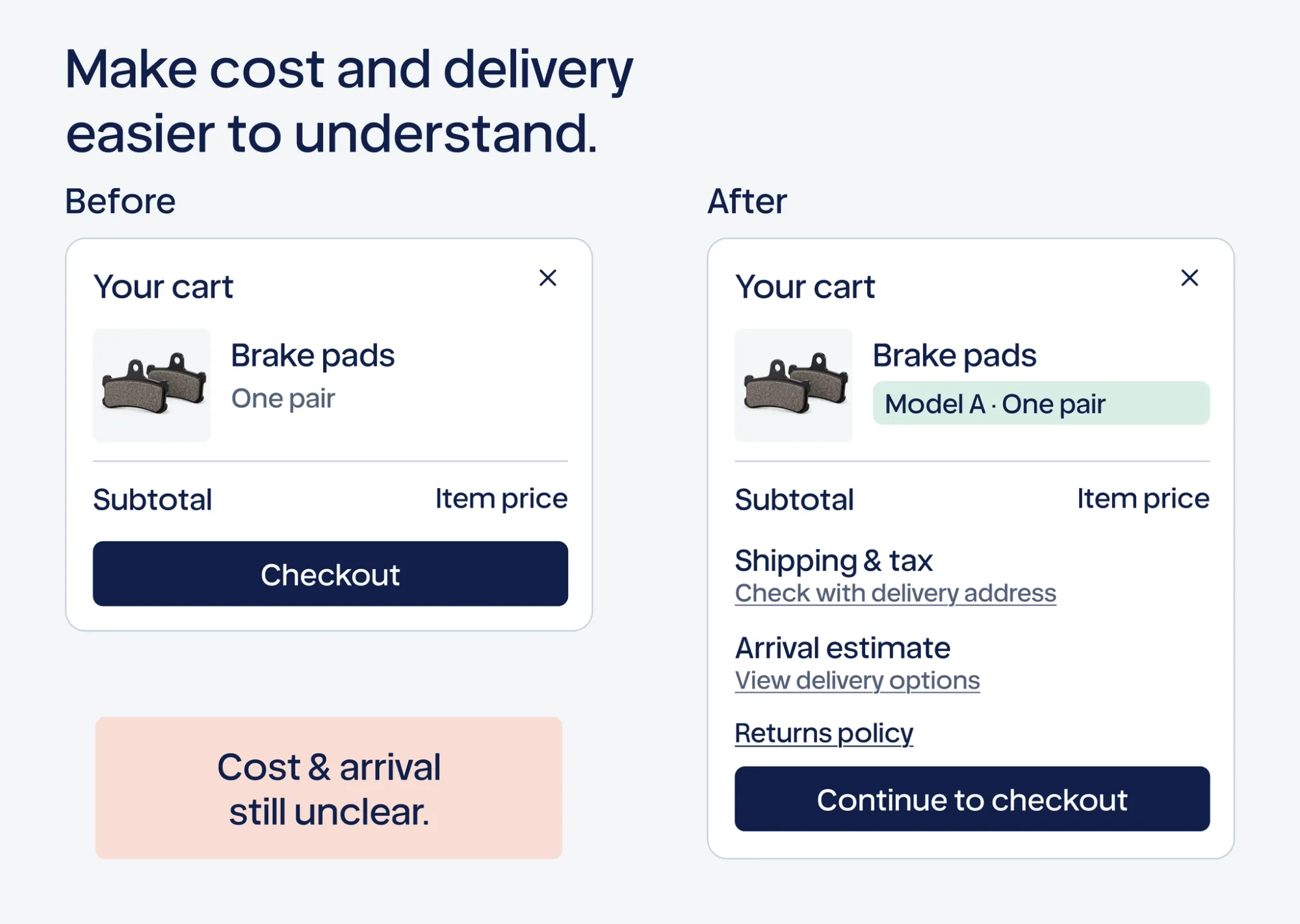
Find the friction behind the number
Once you know where the drop occurs, investigate the shopper experience around that point. Look for friction in five areas.
Product and offer clarity
Can a shopper tell what the product does, who it is for, and why it is worth the price? Are variants, dimensions, compatibility, and availability easy to understand? Unanswered product questions create hesitation that often appears later as cart abandonment.
Shipping and total cost
Unexpected costs are a common reason for leaving. Review when shoppers learn about shipping, taxes, delivery timing, and minimum order requirements. The important question is not only whether the information exists. It is whether the shopper sees it early enough to make a confident decision.
Trust and risk
Returns, warranties, reviews, support options, and delivery promises help shoppers assess risk. Missing or hard-to-find information can make the cart feel like a commitment without enough reassurance. Trust content should support the decision, not bury the purchase action.
Mobile interaction
On mobile, small problems become expensive. A quantity selector may be difficult to use. A discount field may distract from checkout. A sticky button may cover important information. A form may require more typing than necessary. Review the journey on the devices that actually produce your traffic and sales.
Payment and error recovery
A failed payment or unclear error message should not become a dead end. Shoppers need to know what went wrong and how to recover without losing their cart or starting over.
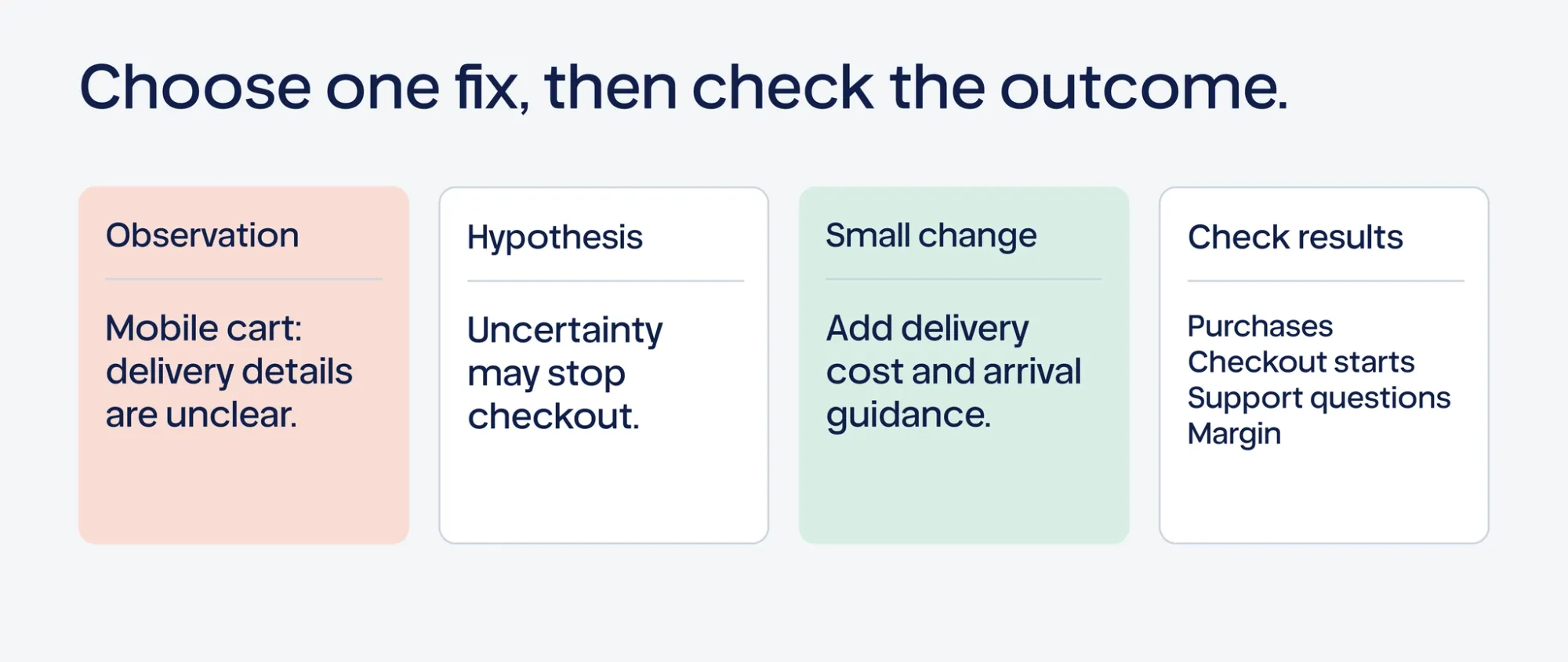
Prioritize the problem before changing the store
There will usually be more than one possible improvement. That does not mean every improvement deserves immediate implementation. Rank opportunities using three questions:
- How closely is the problem connected to the business goal?
- How many high-intent shoppers does it affect?
- Can the team make and measure a meaningful change?
This keeps the team from chasing the most visible issue or installing another app simply because the cart abandonment rate is high. A useful opportunity statement is specific: “Mobile shoppers reach the cart, but delivery information is unclear before checkout. This may be contributing to the drop between add to cart and checkout start. Test clearer delivery messaging in the cart and monitor checkout starts, completed purchases, and support questions.” That statement is more useful than “optimize the cart.”
Prevent abandonment and recover intent
Recovery tactics still matter. Email, SMS, retargeting, saved carts, and onsite reminders can help bring high-intent shoppers back. But recovery works better when it is connected to prevention. If shoppers abandon because they cannot find compatible products, sending more reminders may increase visits without fixing the decision. If they abandon because delivery costs are unclear, a recovery message may need to answer that concern rather than simply repeat the product name.
Use recovery messages to learn as well as to recover. Pay attention to which products, segments, objections, and time windows produce meaningful completed orders.
Measure the business outcome
Do not define success only as more clicks on a cart reminder or a higher add-to-cart rate. Depending on the store's goal, measure:
- Completed purchases
- Checkout completion
- Revenue per session
- Contribution margin
- Average order value
- Refunds or support contacts
- Repeat purchase behavior
The right metric depends on the merchant's constraints. A promotion that raises conversion but damages margin may not be an improvement. A change that slightly increases checkout completion while reducing customer confusion and support load may be more valuable than the first result suggests.
A continuous framework for reducing cart abandonment
A practical cycle looks like this:
- Define the business outcome.
- Map the customer journey.
- Find the largest meaningful drop-off.
- Investigate the shopper and store context.
- Prioritize one opportunity.
- Make the smallest useful change.
- Measure the outcome.
- Use the result to choose the next opportunity.
Keep a short record of the hypothesis, change, dates, and outcome. Otherwise the next review starts with the same guesses.
Gentoo helps identify a useful cart-abandonment goal from store evidence and the merchant's context, then carries the agreed direction, limits and prior work across weeks. It proactively contacts the merchant through iMessage or email with a prepared proposal, so each review does not need a new round of step-by-step prompting.
After approval, Gentoo executes supported improvements and checks the business impact, including orders or revenue where relevant, before choosing what to do next.
If the problem is inside checkout, use the checkout optimization guide; for unanswered product questions, start with product-page optimization.
Find your next Shopify growth opportunity. Run Gentoo’s Quick Analyzer to review the top three opportunities it finds in your store and the reasons to consider them.