On this page
How Gentoo Helped Fandom K Drive 1,453% QoQ Revenue Growth and Capture K-pop Demand
See how Gentoo helped Fandom K improve artist-based discovery, navigation, and merchandising to better convert surging fan demand, contributing to 1,453% QoQ revenue growth.

At Fandom K, Gentoo worked on artist-based discovery, navigation and merchandising during a period of rapidly growing K-pop demand. The changes helped organize the store around how fans search for artists and releases.
Store: Fandom K
Industry: K-pop Ecommerce
🎯 Key Results
Period: Q2 2026 vs. (Q1 2026)
- Revenue: +1,453%
- Orders: +744%
May 2026 vs. (April 2026)
- Revenue: +614%
- Sessions: +610%
The Challenge
In K-pop ecommerce, fans often shop by artist, group, collection, or comeback timeline rather than through general category browsing. That makes artist-based discovery and collection navigation especially important.
At the same time, K-pop sales are influenced by major external factors such as group comebacks, product availability, promotions, and fan events. When traffic spikes, stores need to be ready to convert that attention into actual orders.
The Solution
Gentoo deployed 20+ actions designed to improve the path from discovery to conversion.
Key actions include:
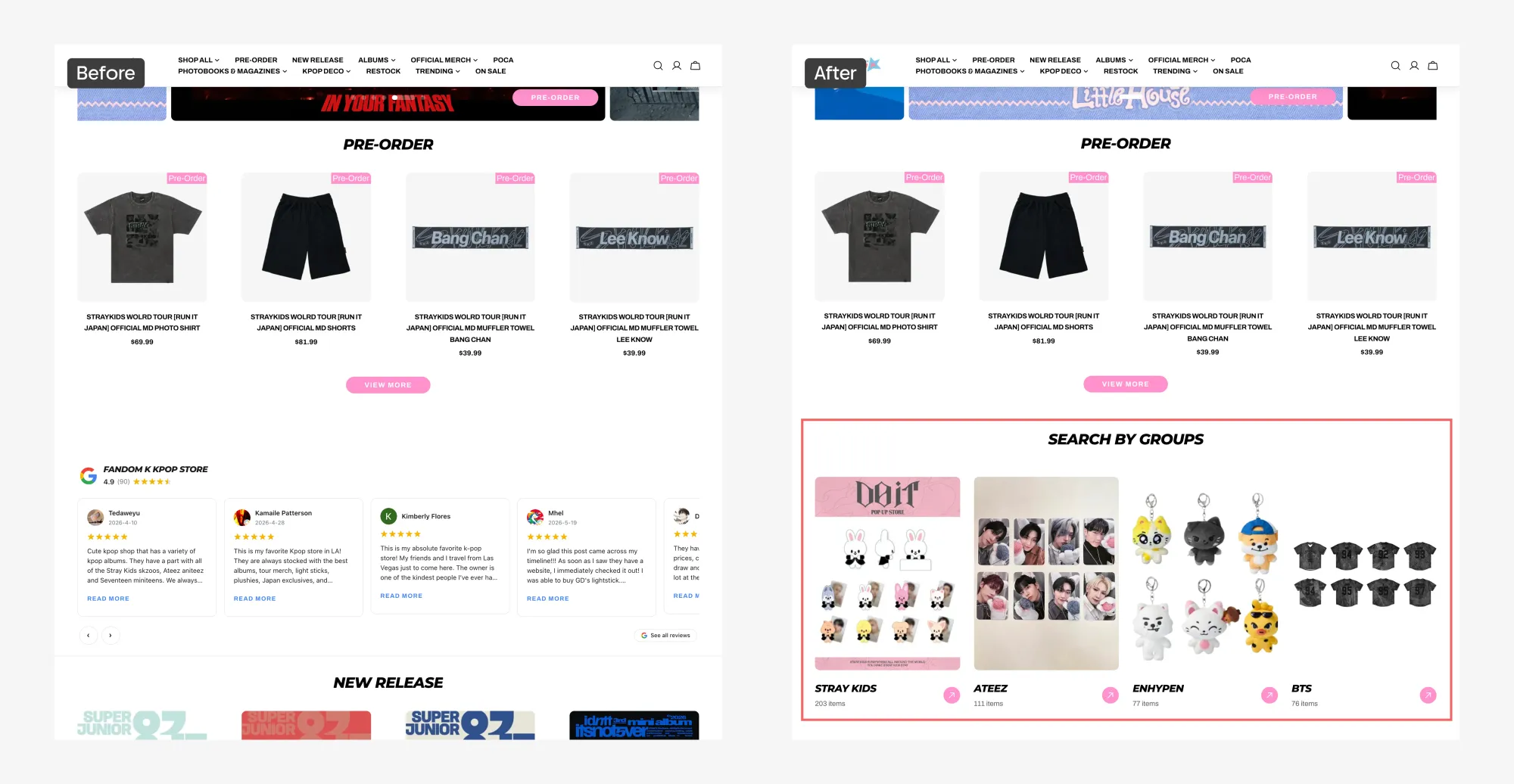
- Action 1 : Added and optimized artist/brand filters and collections
Gentoo improved collection structure and search filters so fans could find relevant products by artist or brand easily.
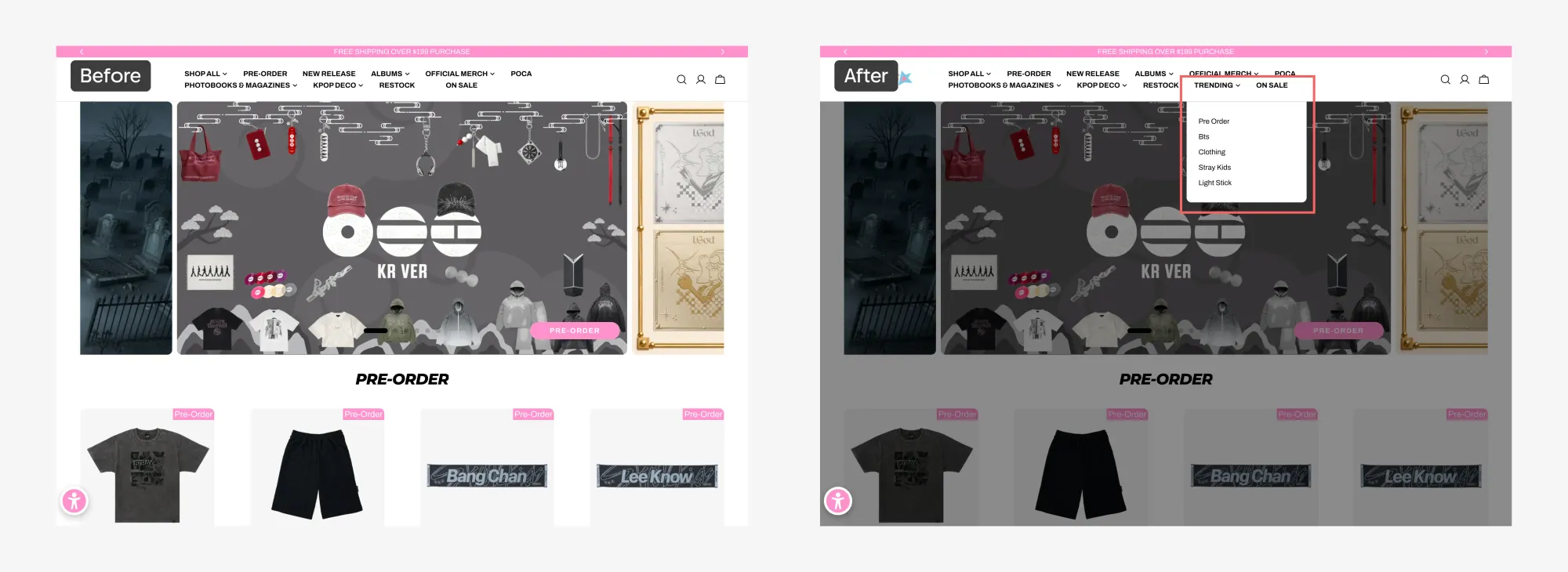
- Action 2 : Enhanced navigation with a Trending mega-menu block and menu-bar optimization
Gentoo made high-interest collections and shopping paths more visible, helping users navigate the store more efficiently during peak demand periods.
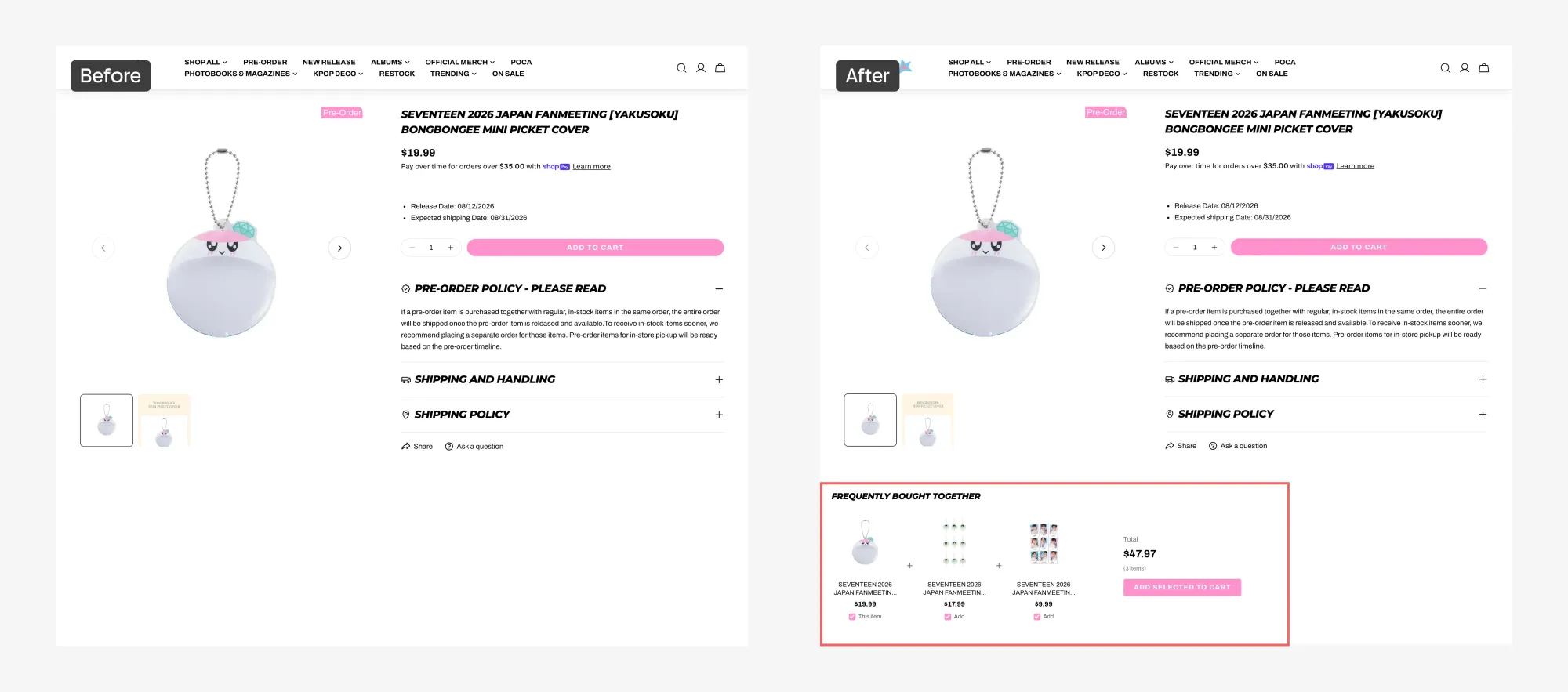
- Action 3 : Added a Frequently Bought Together section
Gentoo introduced cross-sell merchandising to help shoppers build larger carts more naturally.
Additional actions also include:
- SEO improvements across approximately 80 products, including meta tags and alt text
- Search-term highlighting to improve product findability
- Google review embeds to strengthen trust and purchase confidence
Why artist-based discovery was the focus
The work matched the way fans shop: by artist, group and release timing. Filters, collection links and navigation gave those interests a clearer path through the catalog.
The reported growth occurred during multiple store changes and shifts in fan demand, promotions and product availability. These period comparisons cannot isolate how much revenue any one action added.
A release-readiness task for another store
Choose one artist and a release the store actually sells. Follow the campaign or navigation link to the artist collection, find the intended edition, confirm availability and check the option placed in the cart. Include sold-out and preorder items in the inspection if the catalog contains them.
Check that filters do not hide available products and that collection labels lead to the expected items. Recommendations should make their relationship clear without implying that a customer must buy an unrelated item to obtain the release. These are proposed checks for a comparable store, not extra Fandom K results.
Keep release dates, campaigns, promotions and stock changes beside the review. The store optimization checklist helps organize that work, while the AOV guide covers the economics of complementary products.
What to check in a demand-driven store
When a release or event brings traffic, check that shoppers can reach the relevant artist collection, find available products and understand related items. Record the event and stock context with the results so future comparisons remain useful.
For related implementation ideas, see Shopify store optimization and increasing average order value with useful recommendations.
Because K-pop performance is influenced by many external variables, this growth cannot be attributed solely to Gentoo. However, Gentoo played an important role in helping Fandom K maximize the impact of large-scale marketing campaigns, promotions, and demand spikes.
Want to make your store more conversion-ready during high-traffic moments?