The AAARRR Framework for Shopify Growth: How to Optimize Every Stage of the Customer Journey
Learn how the AAARRR framework helps Shopify merchants optimize every stage of the customer journey—from awareness to referrals—to drive sustainable growth.
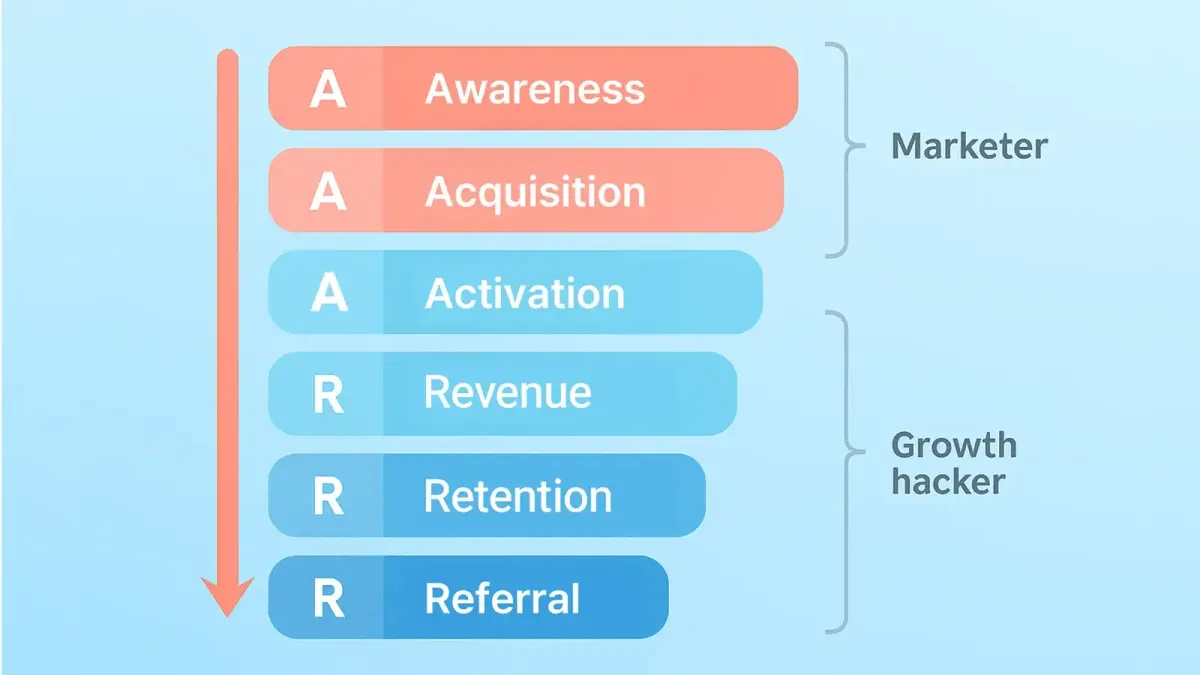
Many Shopify stores attract plenty of visitors but still struggle to generate the revenue they expect. The problem usually isn’t traffic itself. The real challenge is understanding where customers hesitate, lose confidence, or leave before completing a purchase.
The AAARRR framework helps merchants analyze every step of the customer journey—from discovery to repeat purchases and referrals. By identifying bottlenecks at each stage, Shopify merchants can build data-driven strategies that improve conversion rates and drive sustainable growth.
In this guide, we’ll explore what the AAARRR framework is, how each stage works, and the practical strategies Shopify merchants can use to optimize every part of the customer journey.
Understanding the AAARRR Framework
An e-commerce funnel visualizes the journey customers take from discovering your store for the first time to becoming loyal, repeat buyers. By analyzing customer behavior at each stage, you can identify where shoppers convert, where they drop off, and what prevents them from moving forward.
The AAARRR framework was originally introduced by Dave McClure, founder of the global startup accelerator 500 Startups, as a way to measure the key metrics that drive business growth. As brand discovery became increasingly important in online commerce, an additional Awareness stage was added to the beginning of the original AARRR model, creating today’s AAARRR framework.
For Shopify merchants, AAARRR provides a structured way to understand where growth is slowing down and which improvements will have the greatest business impact.
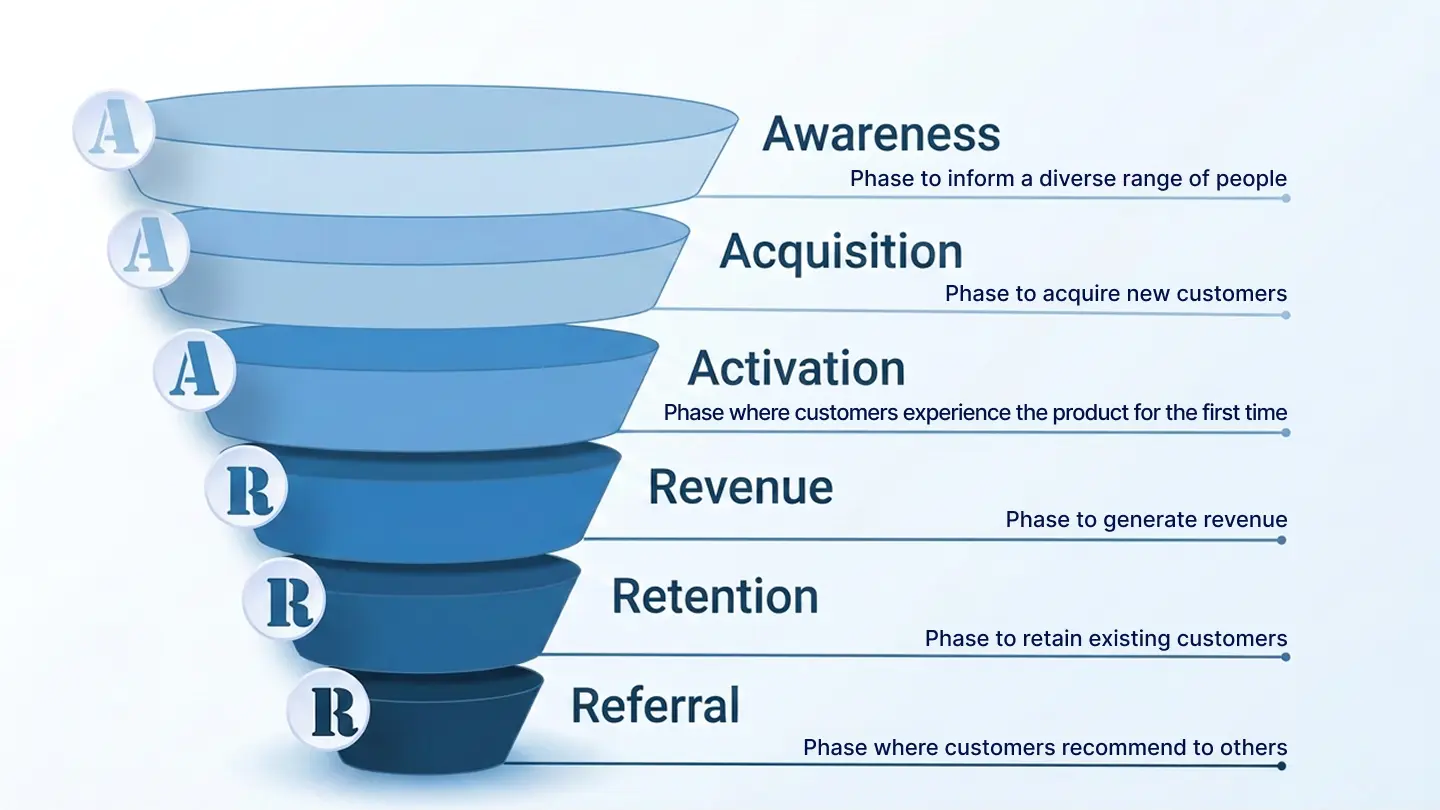
The Six Stages of the AAARRR Framework
The AAARRR framework consists of six stages:
- Awareness — Customers discover your brand.
- Acquisition — They visit your Shopify store.
- Activation — They begin engaging with your products.
- Revenue — They complete a purchase.
- Retention — They return and buy again.
- Referral — They recommend your store to others.
Let’s look at what each stage means for a Shopify business and how you can optimize it.
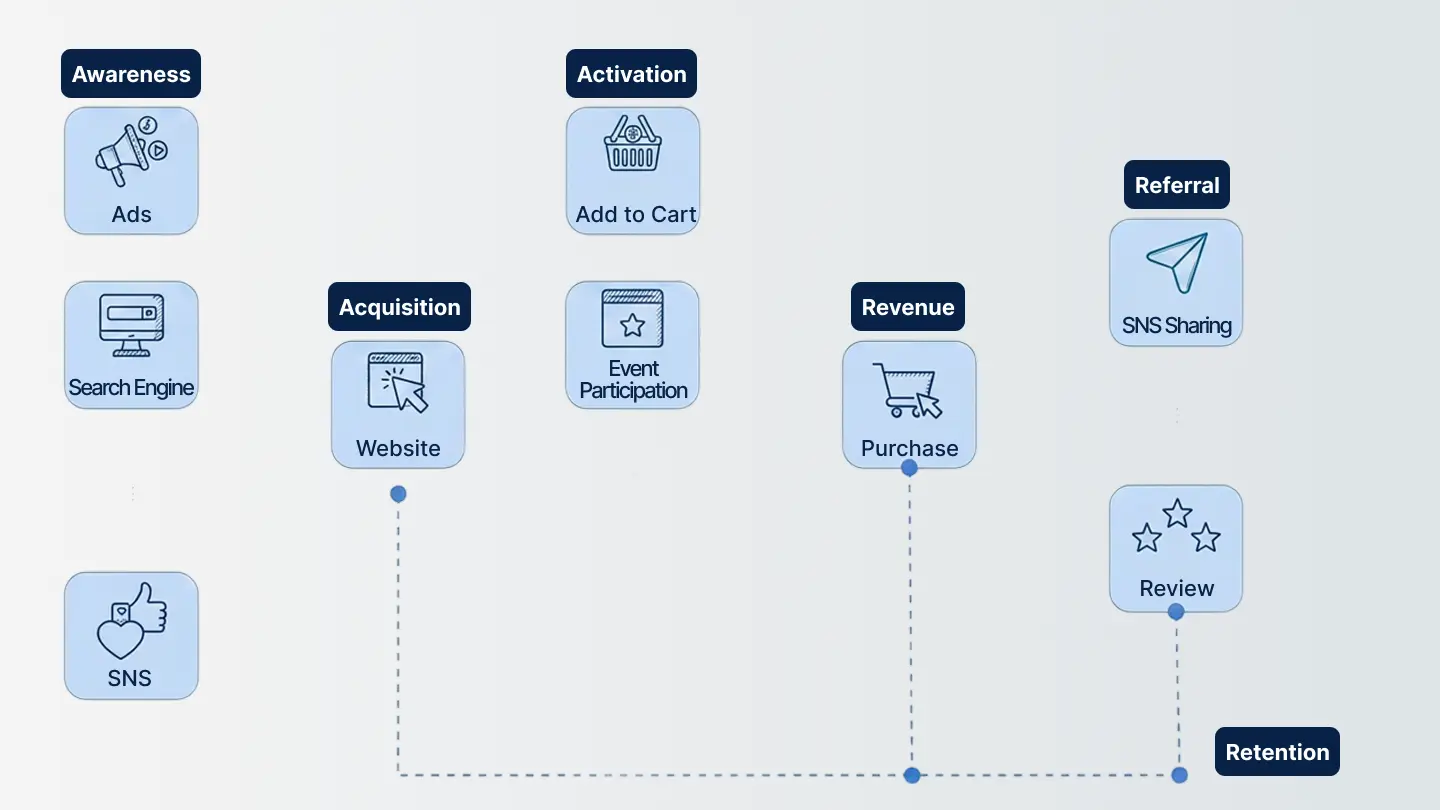
Awareness
❓ How many potential customers are discovering your store?
Awareness is the stage where potential customers first encounter your brand through channels such as Google Search, social media, Meta Ads, Google Shopping, influencer content, email marketing, or even AI search platforms.
The primary objective at this stage is simple: introduce your brand and products to as many qualified shoppers as possible.
- Search engine optimization (SEO)
- Meta Ads
- Google Shopping
- Content marketing
- Influencer marketing
Acquisition
❓ How many people actually visit your store?
Acquisition begins when potential customers arrive at your Shopify store and start exploring your products.
At this stage, it’s important to understand which marketing channels bring visitors and which landing pages generate the best results.
- Sessions
- Landing page views
- Bounce rate
- Product page
- click-through rate
- Improve SEO
- Optimize advertising campaigns
- Improve landing pages
- Increase page loading speed
Activation
❓ Are visitors actually starting to shop?
Activation is the point where visitors begin taking meaningful actions that indicate purchase intent.
Examples include:
- Browsing multiple products
- Using the search function
- Adding products to the cart
The smoother and more enjoyable the shopping experience becomes, the more likely visitors are to complete a purchase.
- Improve UI and UX
- Optimize product discovery and search
- Personalize product recommendations
- Encourage add-to-cart actions
- Provide the information customers need to make purch
Revenue
❓ How many visitors are becoming customers?
Revenue is the stage where customers complete a purchase and generate sales.
Rather than simply increasing traffic, the focus here is improving conversion rates and increasing average order value.
- Conversion rate
- Average order value (AOV)
- Checkout completion rate
- Revenue
- Optimize pricing strategies
- Create product bundles
- Upsell and cross-sell products
- Offer subscription options
Retention
❓ Are customers coming back?
Retention measures how effectively your store encourages customers to return and make additional purchases.
A high repeat purchase rate typically indicates strong customer satisfaction and a healthy long-term revenue base.
- Repeat purchase rate
- Customer lifetime value (LTV)
- Returning visitor rate
- Email marketing
- Personalized product recommendations
- Loyalty and rewards programs
- Personalized promotions
Referral
❓ Are satisfied customers recommending your store?
Referral is the final stage, where existing customers leave reviews, share your products on social media, or recommend your store to friends and colleagues.
Customer recommendations remain one of the most trusted forms of marketing while also reducing customer acquisition costs.
- Encourage product reviews
- Make social sharing easier
- Leverage user-generated content (UGC)
The Key to Maximizing AAARRR: Analyze Customer Behavior
Data is the foundation of every successful ecommerce growth strategy.
To get the most from the AAARRR framework, Shopify merchants need to continuously analyze customer behavior throughout the funnel.
How does the conversion rate change at each stage? Where are customers dropping off? Which experiences are creating friction before a purchase?Answering these questions makes it possible to prioritize improvements that have the greatest impact on growth.
While analytics tools can show what happened, identifying why customers hesitate often requires a deeper understanding of customer behavior. AI-powered Shopify apps are increasingly being used to bridge that gap by continuously analyzing the customer journey and uncovering opportunities for improvement.
Gentoo is one example available on the Shopify App Store. Using AI User Clones, it explores your store like a real shopper, identifies conversion blockers, and recommends improvements across product pages, mobile experiences, SEO, email campaigns, and more.
Why Customer Behavior Analysis Matters
Understand Customer Behavior
Analyzing customer behavior reveals valuable insights into shopping preferences, browsing patterns, purchase intent, and abandonment points.
These insights help you understand what customers are looking for, what influences purchasing decisions, and where they leave your store.
Finding the biggest drop-off point in your funnel is often the first step toward meaningful growth.
Build Personalized Growth Strategies
Understanding the behavior and needs of different customer segments allows you to create more personalized shopping experiences, leading to higher engagement and better conversion rates.
It’s equally important to define which stage of the AAARRR framework each marketing initiative is designed to improve.
Your KPIs should always align with that objective.
Example 1: Meta Ads and Google Ads
Meta Ads and Google Ads primarily improve the Awareness and Acquisition stages.
- Audience targeting
- Visitor behavior data
- Search intent data
- Click-through rate (CTR)
- Cost per click (CPC)
- Website traffic
- Landing page conversion rate
Example 2: Continuous Shopify Store Optimization
A store optimization platform focuses on improving the Activation, Revenue, and Retention stages.
- Analyze product information, customer behavior, and conversion data
- Identify conversion blockers and growth opportunities
- Optimize product pages, mobile experiences, SEO, email campaigns, and more
- Product page conversion rate
- Add-to-cart rate
- Purchase conversion rate
- Revenue growth
- Customer retention metrics
Measure Results and Keep Optimizing
Customer behavior analysis makes it possible to accurately measure the impact of every growth initiative.
With continuous measurement, you can improve customer experiences, identify weak points in your funnel, and optimize them over time.
Reduce Risk with Data-Driven Decisions
Decisions backed by data are far more reliable than those based on intuition or assumptions.
The better you understand customer behavior, the more confidently you can invest in growth strategies that deliver measurable business results.
Closing
Understanding the AAARRR framework is only the beginning.
Sustainable Shopify growth comes from continuously measuring customer behavior, identifying friction throughout the buying journey, and improving every stage of the funnel.
The stores that grow the fastest aren’t necessarily the ones with the most traffic—they’re the ones that consistently remove friction, improve customer experiences, and optimize every step of the journey.
For merchants looking to automate that process, AI-powered Shopify apps such as Gentoo can help turn customer behavior insights into ongoing improvements.